REVIEW · GALLE
Galle Fortt Guided Walking Tour with a Local
Book on GetYourGuide →Operated by Galle Experience · Bookable on GetYourGuide
Galle Fort is best understood on foot. This 1.5-hour guided walking tour takes you around the ramparts and streets of the 17th-century Dutch fortress with a licensed National Tour Guide who’s a master’s degree holder in tourism and a local resident.
I like that the tour is paced for real conversation, not just sightseeing. I also love how Madawa’s very good English and friendly humor turn history into something you can picture.
One thing to keep in mind: it’s a walk through narrow lanes and fort steps, so it’s not a good fit for wheelchair users or babies under 1 year.
In This Review
- Key things I’d prioritize
- Why Galle Fort makes sense as a guided walk
- Starting at the Clock Tower: getting your bearings fast
- Views and ramparts: seeing Dutch defense as real geometry
- Bastions, the Dutch Reformed Church, and Court Square
- Dutch Hospital and old lighthouse remains: how the fort worked day to day
- Flag Rock bastion and narrow streets: where the walk turns intimate
- Ending at Pedlar’s Inn: a colonial house finish you can actually enjoy
- Price and value: why $15 works here
- Who should book (and who should skip)
- Should you book this Galle Fort walking tour?
- FAQ
- Where do I meet for the tour?
- What language is the tour in?
- How long is the Galle Fort guided walking tour?
- What’s included in the price?
- How much does it cost?
- Is there free cancellation?
- Can I pay later?
- Is the tour suitable for wheelchair users?
- Is it suitable for babies?
Key things I’d prioritize
- Meet at the Clock Tower for an easy start and fast orientation
- Ramparts + bastions explained in plain language as you walk
- Dutch Reformed Church and Court Square with clear context for daily life then and now
- Dutch Hospital and lighthouse remains tied to how the fort functioned
- King coconut on availability adds a local refresh moment
- Ending at Pedlar’s Inn in a colonial house setting more than 250 years old
Why Galle Fort makes sense as a guided walk

Galle Fort is one of those places where you can wander for hours and still miss the point. The walls look impressive, sure, but the real value is understanding why they’re shaped the way they are and how people actually lived inside them.
On this tour, you’re not just moving from one landmark to the next. You’re walking the same kinds of routes that would have mattered to Dutch-era planners: along the ramparts, through bastion areas, and then down into the fort’s narrow streets where colonial buildings still shape the neighborhood. That structure helps you connect the dots between military design, trade, religion, and everyday city life.
The guide also brings Sri Lanka into the conversation in a practical way. Instead of treating Galle as an isolated postcard, you get explanations that connect what you’re seeing in the fort to the wider country around it. That’s what makes the walk feel worth doing even if you’ve already seen a few photos online.
Other Galle tours we've reviewed in Galle


Starting at the Clock Tower: getting your bearings fast

You meet at the basement of the Galle Fort clock tower, and from there the tour settles into a comfortable rhythm right away. This matters more than it sounds. The fort can feel like a maze at first, especially once you’re off the main rampart lines and into tighter streets.
At the start, you’ll get:
- A quick orientation to where you are and what you’re about to see
- An introduction to the area’s background and historical themes
- A steady pace that keeps the walk enjoyable for 1.5 hours
The best part of meeting here is timing. You’re close enough to the central fort area that you can begin understanding the layout immediately, rather than spending the first half of your tour trying to figure out direction.
If you’re the type who likes to ask questions, this is a good tour to bring that energy. Madawa’s English is described as very strong, and he’s comfortable fielding questions about history and broader Sri Lanka topics as you move.
Views and ramparts: seeing Dutch defense as real geometry
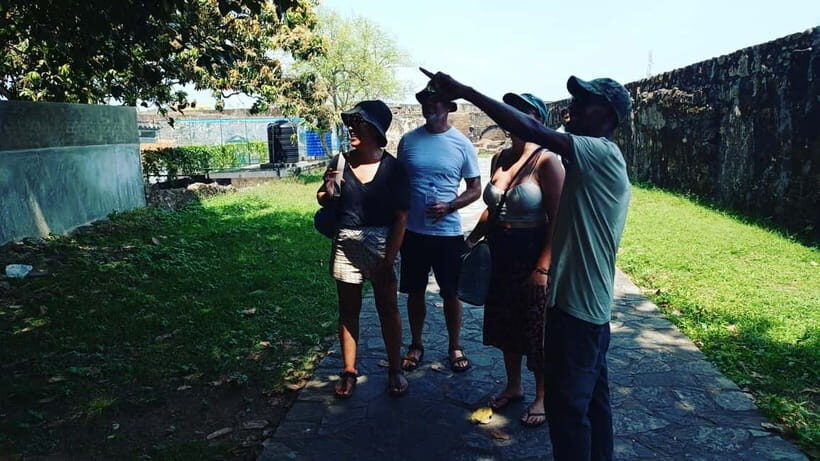
Early on, you’ll head to a viewpoint area and then into the fort walk that focuses on the ramparts and the surrounding defenses. This is where Galle Fort stops being just old walls and starts becoming a readable design.
Here’s what you’ll learn to look for:
- The logic of fortification lines—how ramparts control movement and sightlines
- How bastions function as strategic points rather than just architectural features
- Why certain buildings sit where they do relative to the defense structure
The “walk the ramparts” approach is smart. You naturally get the best sense of scale when you’re above street level. You can see how the fort wraps around parts of the city and coastline area, and it becomes easier to understand how attackers would have faced obstacles.
Also, the tour’s length (about 1.5 hours) means you get a focused version of the fort story. You’re not stuck for half a day. You leave with a mental map—and with the context to make your later self-guided wandering more meaningful.
Bastions, the Dutch Reformed Church, and Court Square
Next, you move deeper into the fort’s core landmarks, including the Dutch Reformed Church and Court Square. These stops are important because they represent more than “pretty heritage buildings.” They show what the Dutch administration cared about: religious life, civic space, and the kind of authority that needs central meeting points.
What I like about this part of the walk is the balance:
- You’re not only told what buildings look like
- You’re told how they were used, and how that meaning carries into today’s usage
At the Dutch Reformed Church, you get explanations that help you understand the structure within the fort’s broader colonial setup. At Court Square, the story shifts from church-centered life to civic and administrative space—where power was organized and where the community would recognize authority.
If you’re a photography person, this part also gives you angles beyond the walls. Court Square and church areas tend to offer more “human-scale” scenes, with streets and building edges that look good even when the fort ramparts are too bright or too windy for comfortable photos.
Dutch Hospital and old lighthouse remains: how the fort worked day to day
One of the strongest segments is the walk that connects the Dutch hospital area with the lighthouse and remaining lighthouse parts. This is the “function” side of the fort story—how a defensive installation also had to support people, health, and navigation.
When you reach the Dutch hospital, you’ll learn about its history and how it was made, not just that it exists. That’s key. Many visitors see old structures and file them away as background. Here, the guide helps you understand the purpose behind the architecture, and why a place like this mattered inside the larger Dutch system.
Then you move toward the lighthouse area and see what remains. Even if you know the word “lighthouse,” seeing old lighthouse remnants inside a historic fort setting hits differently. It connects the fort to movement and maritime needs—because coastal forts weren’t only about land defense. They had to serve the realities of ships, routes, and local geography.
There’s also a nice rhythm here: short walking transitions, then explanations at each meaningful stop. That keeps the experience from feeling rushed, even though the tour totals only 1.5 hours.
Other walking tours we've reviewed in Galle




Flag Rock bastion and narrow streets: where the walk turns intimate
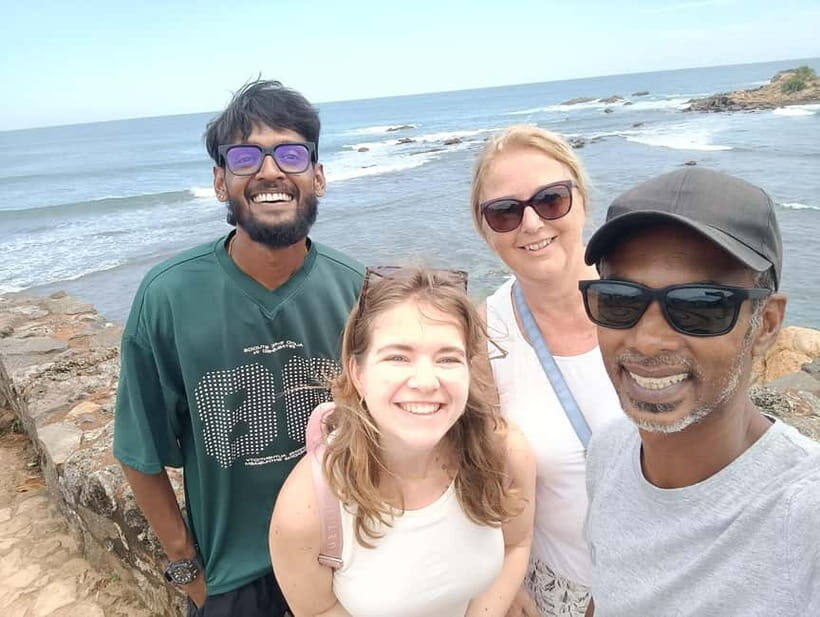
From the lighthouse area, you’ll reach places tied to the Flag Rock Bastion and then continue through narrow streets. This is where Galle Fort shifts from “big walls and viewpoints” to “small passages and close-up textures.”
The narrow streets matter for two reasons:
- They change your perspective from broad defensive overview to how daily life moves through tight space
- They make the fort feel lived-in rather than frozen in time
You’ll also see how the tour route strings together earlier highlights into one story. The ramparts and bastions aren’t random stops; they set up why the streets inside the fort feel the way they do.
And yes, the guide keeps things lively. Several people highlight Madawa’s humor and his willingness to answer questions about history and Sri Lanka generally. That matters in narrow-street sections, because it’s easy for walking tours to become repetitive there. Here, the guide’s talk keeps each turn meaningful.
Ending at Pedlar’s Inn: a colonial house finish you can actually enjoy
The tour ends at Pedlar’s Inn Cafe and Restaurant, in a colonial house more than 250 years old. That’s a great finish point because it lets you stop without needing to “hunt for a place” right after the walk.
This ending also helps you digest what you just learned. You’ll have walked the ramparts, seen church and civic areas, visited hospital and lighthouse-related points, then threaded your way through narrow streets. Sitting down at the end makes the fort’s layout feel coherent, not like a list of attractions.
If king coconut is available, you also get a refreshment moment during the tour. Even if you don’t think you’ll care about a drink, the timing can be perfect: it breaks the walk and gives your brain a small reset so you can absorb the explanations without fatigue.
Price and value: why $15 works here
At $15 per person for about 1.5 hours, this is priced like a high-value guided overview. The main reason it feels like good value is that you’re paying for two things at once:
- Focused access to the fort’s structure (ramparts, bastions, key buildings)
- A guide who can explain the “why” behind what you’re seeing
Without guidance, you can absolutely see the highlights, but you’re left doing your own interpretation. With a licensed National Tour Guide—Madawa, in this case—you get clarity quickly: why particular places matter, how they connect to Dutch-era life, and how the broader Sri Lanka story fits in.
The group walk format also helps. Instead of piecing together multiple entrances or hopping between disconnected sites, you get a single coherent route that hits the key nodes in the fort.
In short: for the time spent, and the depth of explanation included, this is one of the easier buys in Galle Fort.
Who should book (and who should skip)
This tour is a strong match if you:
- Want a short, structured fort experience rather than aimless wandering
- Enjoy hearing history tied to real buildings and how they were used
- Like asking questions as you walk
- Prefer a guide with very good English and a personable style
You might want to skip it if you:
- Need wheelchair access (the tour is not suitable for wheelchair users)
- Travel with babies under 1 year
If you’re visiting Galle Fort in a busy schedule and want to make the fort “click” quickly, this is one of the best ways to do it.
Should you book this Galle Fort walking tour?
If your goal is to leave Galle Fort with a clear mental map—and not just photos—then yes, book it. For a low price, you get a guided route that covers the fort’s most meaningful defensive, civic, religious, and coastal-navigation story points, all in a comfortable 1.5-hour format.
I’d especially recommend it if you care about explanations that connect the fortress to Sri Lanka as a whole. Madawa’s style—good English, humor, and willingness to answer questions—turns the walk into something you can talk about later.
Just plan for the walking: comfortable shoes and an expectation of uneven fort surfaces and narrow lanes will make the experience smoother.
FAQ
Where do I meet for the tour?
You meet at the basement of the Galle Fort clock tower.
What language is the tour in?
The tour is conducted in English.
How long is the Galle Fort guided walking tour?
It runs for about 1.5 hours.
What’s included in the price?
You get a licensed National tour guide, explanations on the history of Sri Lanka, and refreshments of king coconut on availability.
How much does it cost?
The price is $15 per person.
Is there free cancellation?
Yes. You can cancel up to 24 hours in advance for a full refund.
Can I pay later?
Yes. You can reserve now and pay later.
Is the tour suitable for wheelchair users?
No, it is not suitable for wheelchair users.
Is it suitable for babies?
It is not suitable for babies under 1 year.