REVIEW · GALLE
Galle Fort Walk with Glamorous Stories
Book on Viator →Operated by Dilip · Bookable on Viator
Galle Fort feels different when someone narrates it. This 120-minute walking tour turns the UNESCO walls into a clear, story-driven route, from Portuguese clay forts and sieges to Dutch stone bastions. I especially like the tsunami survival details tied to the fort’s defensive design, and the small group (max 6) that keeps the pace relaxed and questions welcome.
One thing to plan for: it is not guaranteed private. If the same time block has multiple parties, you’ll share the experience, and it’s still a walking tour with a moderate fitness level.
In This Review
- Key highlights you’ll actually notice
- Why this Galle Fort tour works so well on foot
- Starting at Flag Rock Bastion and setting the route
- Portuguese-to-Dutch timelines you can feel in the stone
- Bastions, the Clock Tower, and the fort’s built-in viewpoints
- The 2004 tsunami story: what the fort did, and why it mattered
- Trade legends: cinnamon routes, VOC talk, and Dutch ballast bricks
- Ammunition store and tunnelling: where history gets physical
- Dutch Reformed Church and the Dutch Hospital: architecture with a human beat
- Flag Rock lighthouse ruins and finishing near sunset
- Price and value: what $35 buys in real terms
- Logistics that matter: tickets, meeting point, and what to bring
- When to book and who this walk suits best
- Should you book this Galle Fort walking tour?
- FAQ
- Where does the tour start and end?
- How long is the Galle Fort walking tour?
- What is included in the price?
- Is bottled water provided?
- What group size should I expect?
- Is this tour private?
- What are the opening hours?
- What weather items should I bring?
- What is the cancellation policy for a full refund?
Key highlights you’ll actually notice
- Flag Rock Bastion starts and ends the walk, so you’re never hunting for the meeting spot midway.
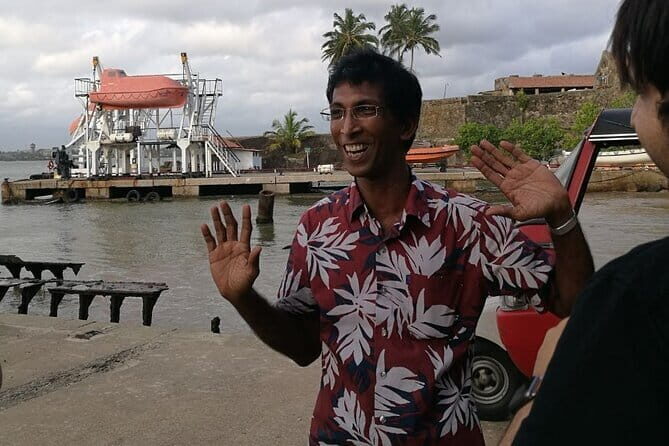
- Dilip (English guide) brings the fort’s Portuguese and Dutch eras to life with specific, memorable stories.
- Moon and Star bastions, Clock Tower, and the front wall help you connect architecture to defense.
- 2004 tsunami survival story is tied directly to why the fort’s walls held while much of Galle City was hit hard.
- Dutch Hospital area is explained as a living space, now used for food and everyday life.
- Tunelling and hidden passage talk gives depth to places you might otherwise just photograph.
Why this Galle Fort tour works so well on foot
Galle Fort is one of those places where “seeing” isn’t the same as “understanding.” The streets are tight, the walls are thick, and the details matter. A guided walk is the easiest way to connect the dots between what you’re looking at and why it exists.
This tour is built around the fort’s layers. You start with the harbor world where Chinese, Arab, and European traders anchored, then move into the colonial showdown. Portuguese influence comes first, then Dutch control, and later English era details show up through landmarks and street patterns. The best part is how the guide links architecture and history, so a bastion is not just a shape on a map. It’s part of a system built to survive sieges and storms.
I also like the tone: it’s not a lecture where you race from one sign to the next. The format is about 1 hour 30 minutes to 2 hours, so you get time to slow down, look up at walls and bastions, and hear the stories that make the place click.
Other Galle tours we've reviewed in Galle


Starting at Flag Rock Bastion and setting the route
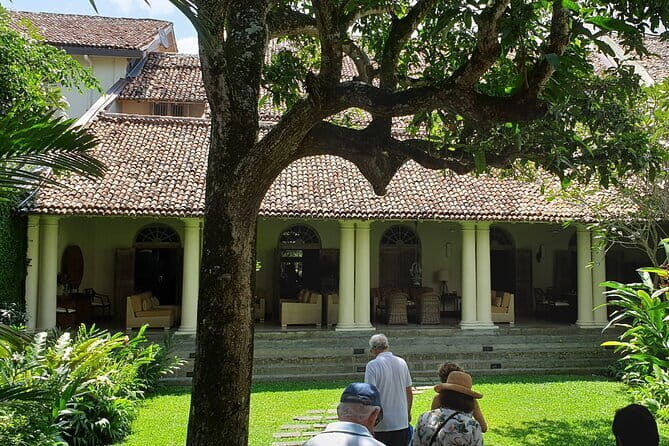
You meet at Flag Rock Bastion (the tour lists the exact location in central Galle Fort). That’s smart for two reasons. First, it anchors you at the fort’s edge where you can sense the defensive geography. Second, because the tour ends at the same point, you can plan transport afterward without guessing where you’ll end up.
From there, the walk is designed to cover iconic positions inside Galle Fort, including street sections and major landmark clusters. Expect a route that keeps you moving through the walls and bastions, rather than bouncing randomly across the city.
If you’re pairing this with other sights nearby, treat it as a “core” activity. You’ll leave with a mental model for the fort: where threats would have come from, where defenders could watch, and how later rulers adapted what they inherited.
Portuguese-to-Dutch timelines you can feel in the stone

The core story line here is colonial competition: Portuguese forts and sieges, then Dutch replacement and fortification. You’ll hear about the Portuguese clay-fort era and how the Dutch later built stone walls that changed the fort’s look and strength.
Some of the most memorable bits are the smaller, human details that make big historical events real. You may hear stories of Portuguese deception during fort-building, including a tale about cheating a local king using a piece of leather. You’ll also hear a siege story that includes extreme hardship for soldiers during a period lasting three months, with the grim detail of surviving by eating cats and dogs.
These are heavy stories, but they’re delivered as part of the “why” behind the fort’s design. When you learn that defenses were built to hold under pressure, it makes you pay attention to the thick structure of walls and the placement of defensive areas. Instead of treating the fort as a static postcard, you start reading it like a defensive map.
Bastions, the Clock Tower, and the fort’s built-in viewpoints
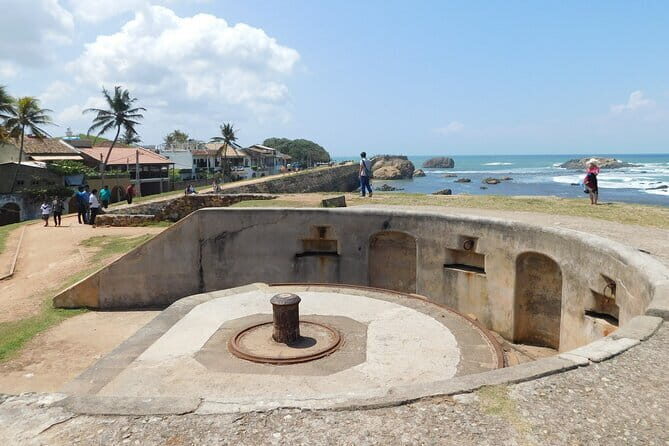
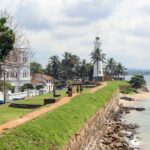
The tour is set up to show you the parts of the fort that control movement and sightlines. You’ll cover the front wall with three bastions, along with stops tied to the Clock Tower area and the streets inside the fort.
Bastions like Moon and Star (mentioned in the tour overview) are where the stories get practical. You can look at their shape and placement and understand why they mattered in older defense systems. Even if you’ve never studied fortifications, you’ll get the logic through the guide’s explanations.
This is also where timing helps. Galle Fort has shifting light, and bastion edges and wall textures can look very different from morning to late afternoon. If you book an early time slot, you’ll likely walk in calmer conditions and can spot details without glare.
The 2004 tsunami story: what the fort did, and why it mattered

One of the defining chapters you’ll hear is about the 2004 tsunami. The fort’s story here isn’t just tragedy. It’s also engineering and location.
You’ll learn how the walls withstood the tsunami waves, sparing Galle Fort while Galle City suffered major destruction. The guide connects this to why the fort’s strong walls and structure held up better than surrounding areas.
This part of the tour changes how you see everything else. After hearing it, you’ll likely pay more attention to wall thickness, the fort’s elevated feel in certain spots, and how older coastal defenses could double as storm barriers. It’s the kind of story that makes the UNESCO label feel less like paperwork and more like a lesson.
Other Galle Fort walking tours we've reviewed in Galle


Trade legends: cinnamon routes, VOC talk, and Dutch ballast bricks

If you only hear “Portuguese vs Dutch,” you’ll miss half the point. This walk also focuses on trade. You’ll hear about cinnamon as a high-value commodity, including the idea that an earlier cinnamon trade dominated by the Chinese was later overtaken by the Portuguese.
Then the narrative shifts toward Dutch and VOC trade. The tour includes stories around hidden tunnels and practical defensive features like coral cooling walls (a detail mentioned in the tour overview). You may also learn about ballast bricks from Dutch ships, which adds a neat, physical way to imagine how ships and trade literally shaped the fort’s building material.
These details are valuable because they turn the fort into a product of global movement, not just a local landmark. If you like history that connects to real objects you can stand beside, this section is for you.
Ammunition store and tunnelling: where history gets physical

You’ll stop at places described as an ammunition store with a tunnel. Even without technical background, you’ll get the sense that these structures weren’t decorative. They were functional spaces tied to survival and logistics in siege conditions.
Tunnels and hidden passages (also mentioned in the overview) matter because they explain how defenders could move, store, and respond when the outside world threatened the fort. If your usual travel style is more “walk and notice” than “read museum panels,” these stops can land really well.
Practical tip: tunnels and enclosed spaces can be cooler and dimmer. Wear shoes with grip, and expect that the light might not be perfect for photos.
Dutch Reformed Church and the Dutch Hospital: architecture with a human beat

Two landmarks are highlighted in the route details.
First is the Dutch Reformed Church (1755). The tour includes a story connected to its building, described as a vow made for a child’s birth. That’s a small detail, but it’s the kind that makes religious architecture feel personal rather than purely political.
Second is the Dutch Hospital, now used as a cuisine hub. You’ll hear how the Dutch left behind buildings that later got reused, and the area is presented as a living part of Galle Fort rather than a frozen ruin.
This is where the tour feels especially useful for your day. After learning about defenses and siege hardships, you see how ordinary life continued and how people repurposed colonial structures.
Flag Rock lighthouse ruins and finishing near sunset
The walk includes the Flag-Rock Bastion area and stories connected to lighthouse ruins. You’ll also get a sense of the fort’s relationship to sea routes.
One detail worth planning around: an earlier start may shift how your final moments feel, but the tour can include ending with a flag-lowering moment and sunset feel depending on timing. If you can, pick a time that gives you light to enjoy the fort as the day cools.
Even if your schedule is tight, treat the ending as a payoff. You’ve spent the last couple hours learning how the fort functioned. Seeing it in late light helps your brain keep the connections.
Price and value: what $35 buys in real terms
At $35 per person, you’re paying for an in-person, English-speaking guide focused on a tight UNESCO site: Galle Fort. For a 1.5–2 hour guided walk that covers multiple named bastions and landmarks, it can be good value, especially compared with tours that skim only the most photographed corners.
Here’s why the pricing works:
- You get a structured route with specific stops, not just a general stroll.
- The guide’s stories include concrete details like names of bastions, the 1755 church, and specific tsunami context.
- The group cap at 6 travelers helps keep the experience personal enough for questions.
The main trade-off is that you’re still walking the fort streets, and the tour is not private if other groups share your block. If you want a quiet, fully tailored route, you’d need a private arrangement elsewhere.
Logistics that matter: tickets, meeting point, and what to bring
A few practical points help you enjoy it more.
You’ll receive confirmation at booking, and the tour uses a mobile ticket. Meet at Flag Rock Bastion, and plan how you get back to your place afterward, since the tour ends at the same meeting point.
What to pack depends on the weather:
- Bottled water is not included, so bring your own.
- Umbrellas are not included. If rain is possible, bring a compact one.
- Hats are not included. If it’s sunny, plan for shade and sun protection.
The tour asks for moderate physical fitness. Galle Fort involves steady walking on uneven surfaces, plus lots of pausing to look and listen. Comfortable shoes make a big difference.
When to book and who this walk suits best
This tour is often booked about 14 days in advance on average, so if you have fixed travel dates, don’t wait until the last minute.
It’s a great fit if you:
- Want architecture and history linked together, not separated into separate activities.
- Like story-driven guides who explain the “why” behind walls, bastions, and landmarks.
- Prefer a small group pace. The max 6 format helps.
It’s less ideal if:
- You hate group situations and want a fully private plan with no shared time block.
- You’re looking for a mostly museum-style experience with seating and minimal walking.
Should you book this Galle Fort walking tour?
If you want the simplest path to understanding Galle Fort, this is a strong choice. The route is concentrated, the guide is named as Dilip, and the tour’s storytelling is anchored to real places: bastions, the Clock Tower, the 1755 Dutch Reformed Church, the Dutch Hospital, and the tsunami survival narrative connected to the fort’s defensive walls.
Book it if you like walking tours where the guide points out details you’d otherwise miss and explains them in plain language. Skip it if you expect a fully private, bespoke experience or if you need lots of breaks and wheelchair-level access.
FAQ
Where does the tour start and end?
The tour meets at Flag Rock Bastion (26F8+FXH, Galle 80000, Sri Lanka) and also ends at the same spot.
How long is the Galle Fort walking tour?
It runs about 1 hour 30 minutes to 2 hours.
What is included in the price?
The price includes an in-person guide in English.
Is bottled water provided?
No. Bottled water is not included, so you should bring your own.
What group size should I expect?
The tour has a maximum of 6 travelers.
Is this tour private?
Not necessarily. It is not private if many tourists are booked for the same time block.
What are the opening hours?
The tour is listed as available Monday to Sunday from 8:30 AM to 6:00 PM.
What weather items should I bring?
Umbrellas and hats are not included, so bring what you need for rain or sun.
What is the cancellation policy for a full refund?
You can cancel for a full refund if you cancel at least 24 hours before the experience’s start time.