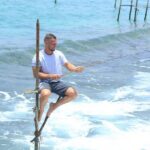
Weligama makes your first ride feel possible. I like the beachside coaching and the way they teach on gentle beginner waves. One thing to watch: transportation and pickup aren’t automatic, so confirm how you’ll get to the surf area before you go.
This is a 1.5-hour, private surf lesson based out of a beachfront setup in Weligama, along Sri Lanka’s Galle coast. You’ll start with a warm-up and a short safety talk on land, then practice the pop-up on sand before anyone asks you to trust the ocean.
The coaching is hands-on in the water, and the pace is designed for first-timers and people moving up from basics. Still, you should be comfortable with moderate physical effort, and if you want photos or video, expect extra cost.
In This Review
- Key highlights
- Weligama’s gentle bay: why this lesson works for first-timers
- Surf and Stay setup: gear, warm-up, and the safety talk
- The lesson flow: from sand practice to your first standing moment
- Phase 1: welcome, sand practice, and rules
- Phase 2: paddling, catching waves, and standing up
- What’s included for $20: value you can actually feel
- Timing and logistics: how the 1.5 hours usually plays out
- Ocean reality check: what to bring and what to expect from the water
- Who should book this lesson in Weligama
- Booking tips and the one thing to double-check
- Should you book Surf & Stay in Weligama?
Key highlights

- 15–20 minute on-land safety briefing focused on currents, board handling, and surf etiquette
- Pop-up practice on sand so your body learns the motion before the water
- Private, in-water coaching with an instructor right beside you
- Gear, rash guards, water, and light refreshments included
- Optional photography/video for an extra fee if you want keepsakes
Weligama’s gentle bay: why this lesson works for first-timers
.jpg)
Weligama is a classic beginner surf base for a reason: the bay setup tends to offer more forgiving learning conditions than many surf regions. Instead of throwing you into a chaotic lineup, this lesson route leans into control. The goal is simple—get your balance first, then get you standing, then help you make sense of waves in a way you can repeat.
I like how the program frames Weligama as both beginner-friendly and still useful once you improve. That matters because you’re not just paying to fall a few times. You’re paying for coaching that can scale—so if you’re already comfortable paddling, you can still benefit from technique tweaks.
Also, the beachfront meeting point keeps things straightforward. You’re not spending your whole day coordinating around distant logistics. You arrive, you get organized fast, and you get to the fun part quickly.
A few more Galle tours and experiences worth a look



Surf and Stay setup: gear, warm-up, and the safety talk
.jpg)
Your lesson starts at Surf and Stay hostel, at the meeting point listed as Surf and Stay hostel, AH 43, Weligama. The session generally runs about 1 hour 30 minutes (approx.), which is a good length for learning without turning the day into a long grind.
Before you even hit the water, you get a beachside warm-up and a structured briefing. Expect 15–20 minutes of theory and safety, focused on real in-ocean skills, not just rules on a poster.
Here’s what that safety chat typically covers:
- How to think about currents and what to do if the water pulls
- How to handle your board safely in the surf zone
- How to communicate in the water so you’re not guessing what others are doing
- Surf etiquette, the lineup rules that keep everyone safe and reduce collisions
One practical detail I really appreciate: you practice the pop-up motion on sand first. This is the part that often gets skipped in rushed lessons. By the time you’re on the board, you’re not starting from zero muscle memory. You’re just transferring a practiced movement to a moving surface—way less scary than learning everything at once.
If you’re traveling with kids, this matters even more. A patient coaching pace and a clear warm-up routine help beginners stay calm instead of getting overwhelmed.
The lesson flow: from sand practice to your first standing moment
.jpg)
Once you’re suited up, you move into the water coaching phase. The instruction model here is very direct: your instructor stays close and guides you step by step.
Phase 1: welcome, sand practice, and rules
You’ll start by meeting your instructor and the other surfers (you’ll be in a private activity with only your group). Then you do the sand-based pop-up practice and get the safety and etiquette rundown.
This is also when you learn the basics of timing—how to set up your body before the wave does the hard work. Surfing rewards timing more than strength, and the sand practice helps you feel that rhythm.
Phase 2: paddling, catching waves, and standing up
When it’s time to ride, the coaching focuses on three building blocks:
1) Paddling and balance
Your instructor helps you find stability on the board. Instead of telling you to just try harder, they work on positioning: how your weight sits, how you move your arms, and how you keep your line steady.
2) Catching a wave at the right moment
You don’t get left alone waiting for a random set. The instructor guides you to catch waves gently, aiming for that moment where you’re ready to stand rather than when you’re already too late.
3) The pop-up to your feet
This is the moment you remember. You feel the wave take you, then with the instructor’s cues, you pop up and get your first ride.
I also like that the lesson is designed around the ocean experience. Surf isn’t just technique; it’s awareness. The coaching links the two so you learn to read what’s happening, not just copy a movement.
And yes, you may meet instructors with real local credibility. One instructor name that comes up is Danny, praised for being helpful and supportive with basics—exactly what you want when you’re learning something new under pressure.





What’s included for $20: value you can actually feel
.jpg)
The listed price is $20.00 per person, and for that you get a lot that usually costs extra elsewhere.
Included:
- Surf gears
- 1–2 hour private surf lesson (the overall experience runs about 1 hour 30 minutes approx.)
- Surf instructor
- Beachside warm-up and safety briefing
- Bottled water and light refreshments
- Optional photography and video (available, but extra cost)
Not included:
- Transportation to and from the surf spot (available upon request for an additional fee)
- Gratuities (optional)
Here’s why that matters for value. If you’ve ever done an activity where you show up and then find out you need to rent gear, buy water, or pay for transfers, it can turn a simple trip into a shopping list. This setup is already thinking about the basics: boards, safety gear needs, and keeping you hydrated after you’ve been working hard in the sun.
Also, the lesson being private for your group is part of the value. Even if you’re not going to learn everything perfectly in one session, you’ll get more hands-on coaching than you would in a big crowd class.
If you want photos/video, decide before you arrive. It’s a nice add-on, especially if you’re learning and want proof that you actually stood up (and not just survived the wipeouts).
Timing and logistics: how the 1.5 hours usually plays out
.jpg)
Because the experience is about 1.5 hours, you’ll feel the session is tightly managed. That’s good. Surf lessons can balloon when groups shuffle gear slowly or spend too much time waiting. Here, the flow is built to get you from briefing to water coaching quickly.
A typical rhythm looks like this:
- Meet at the Surf and Stay hostel area
- Quick warm-up and safety briefing on land (15–20 minutes)
- Sand practice for pop-up mechanics
- Then into the water for paddling and wave riding, with your instructor right there
Since the meeting point and the end point are the same, you don’t lose time tracking down a new location afterward. You finish back at the start point, which helps if you’ve got plans in Weligama later.
One small planning note: if you’re expecting pickup from your accommodation, don’t assume. Pickup can be offered, but transportation to and from the surf area is listed as available upon request for an additional fee. I’d treat it like a must-confirm detail, not a casual preference.
Ocean reality check: what to bring and what to expect from the water
.jpg)
Even with gentle waves, you should expect a real workout and some time getting used to how the ocean moves. You’re learning balance on a board that moves with the water. The program is designed for beginners, but it’s still the sea, not a simulator.
A few practical tips that will make your lesson smoother:
- Wear swimwear you feel comfortable getting wet and sandy in
- Bring a dry shirt or towel for after the session since you’ll want to rinse off and cool down
- If you’re prone to motion discomfort, take that seriously and pace yourself during paddling drills
- Listen carefully during the safety and etiquette chat. Those points are there to prevent common beginner mistakes
The coaching style also helps you avoid getting stuck. If you’re not popping up yet, the instructor can adjust your setup so you’re not repeating the same mistake over and over.
And if you’re learning with kids, the structure helps. The lesson format—briefing, sand practice, then short coached attempts—keeps kids from spiraling into frustration.
Who should book this lesson in Weligama
.jpg)
This surf lesson is a strong match if you want a guided first step into surfing on the Galle coast side, and you’d like coaching that focuses on safety plus technique.
You’ll likely enjoy it if:
- You’re a beginner who needs clear steps and close instruction
- You want a private experience with only your group
- You’re happy to do moderate physical effort (paddling counts)
- You’d like beachside organization without complicated logistics
You might pause and rethink if:
- You expect a totally hands-off experience where you just rent a board and go
- You need guaranteed pickup included without any extra steps—because transportation is offered separately upon request
- You’re not comfortable being in the water long enough to practice waves
Also, this is a good option for travelers who want a single activity that doesn’t swallow an entire day. The session is short enough to fit into a travel schedule, but long enough to feel like you actually learned something.
Booking tips and the one thing to double-check
.jpg)
Most lessons go smoothly when expectations are clear. The main detail I’d double-check before you show up is how pickup and transport are handled.
Because transportation to and from the surf spot is listed as available upon request for an additional fee, I recommend you:
- Confirm whether you’ll meet directly at Surf and Stay hostel
- If pickup is important, request it in advance and make sure it’s included in your plan
- Keep your confirmation handy so you’re not trying to solve logistics on surf-tired nerves
That small bit of checking can save you from the most frustrating outcome: arriving ready to surf, then discovering you’re at the wrong place at the wrong time.
Should you book Surf & Stay in Weligama?
If you’re aiming for a beginner-friendly surf lesson with strong safety coaching, I think this is worth booking. The value is solid for the price: gear included, a real safety briefing, and close instructor guidance in the water, all wrapped into a tight 1.5-hour session.
I’d especially book it if you want your first surf experience to feel organized instead of chaotic. The sand-based pop-up practice and the emphasis on ocean safety are the kinds of details that make learning faster and more confident.
Book it if:
- You want a structured beginner lesson
- You prefer private coaching for your group
- You like the idea of optional photos/video as a memory
Skip or re-check expectations if:
- You need guaranteed pickup without arranging it
- You’re not up for moderate physical effort
If you like learning with clear instruction and you want to leave Weligama with at least one standing moment, this lesson fits the bill.