REVIEW · GALLE
Paradise Turtle Watching Tours
Book on Viator →Operated by Paradise Tuk Tuk Tours · Bookable on Viator
Rekawa turtle nights are the real deal. This trip takes you from Tangalle after dark to the protected nesting zone at Rekawa, where green turtles come ashore to lay eggs. What makes it click is the way your guide, Sujith, helps you understand what you’re seeing while you’re out there in the sand.
I especially liked two things. First, the experience is built around the timing that matters for a turtle encounter: you’re collected at 8:00 PM and you stay at the beach long enough to actually catch behavior, not just a quick peek. Second, Sujith’s calm, practical guidance makes the whole night easier—he helps with what to look for and how not to interfere, including solid tips for photos.
One thing to consider: the main entrance fee for the turtle watching area is not included in the $9 tour price, and you’ll want good weather because the experience runs based on conditions.
In This Review
- Key highlights you’ll feel during the night
- Why Rekawa turtle nights feel different than daytime wildlife
- Getting there from Tangalle: the 8 PM pickup and return rhythm
- What you do at the protected nesting beach (and what to bring)
- The role of Sujith: English, explanations, and real-world guidance
- Tuk-tuk transport that actually fits the schedule
- Price and value: $9 for the ride, plus the turtle entrance ticket
- Timing, expectations, and how to improve your odds
- Who should book this tour (and who might skip it)
- Should you book Paradise Turtle Watching Tours from Tangalle?
- FAQ
- What time is pickup in Tangalle?
- How long do I spend at the turtle watching place?
- Does the $9 tour price include the turtle watching entrance ticket?
- What is the entrance ticket price for Turtle Watch Rekawa?
- What should I bring for photography at Rekawa?
- Is this tour private or shared with strangers?
- What’s included in the tour?
- How long is the overall tour?
- What happens if weather is bad or I cancel?
Key highlights you’ll feel during the night

- 8:00 PM Tangalle pickup by tuk-tuk keeps you aligned with the evening turtle window
- Rekawa is a protected turtle area, where green turtles often come ashore to lay eggs
- Photography rules that help turtles: use red polythene over a flash or bring a red light
- Sujith’s help is part of the value, with clear explanations and smooth communication
- About 3 hours at the turtle watching place so you’re not rushed
- Entrance ticket is extra, while the tour covers private transport by tuk-tuk
Why Rekawa turtle nights feel different than daytime wildlife
This isn’t a drive-by animal stop. It’s a slow, nighttime watch in a protected area where sea turtles do their nesting work. If you’ve never seen a turtle settle into a spot in the sand, it’s strangely focused—like watching a job being done, not a show.
Rekawa is known for green turtles coming to lay eggs. That matters because the whole experience is timed around night behavior, not “maybe you’ll see something.” You’re there long enough to see more than one moment, and that’s what turns it from a photo mission into a genuine nature encounter.
Other snorkeling with turtles tours we've reviewed in Galle
Getting there from Tangalle: the 8 PM pickup and return rhythm
You start with an evening hotel pickup in Tangalle at 8:00 PM. From there, you transfer about 40 minutes to the turtle watching place. Then you spend the bulk of the night on-site, and you’re back in Tangalle around 12:00 AM.
That schedule is simple, but it has consequences. You’ll plan for a late night, and you’ll want to eat something earlier (not during the tour), because you’re out there in the dark for several hours. The good part: the timing lines up with why turtles come ashore in the first place.
What you do at the protected nesting beach (and what to bring)
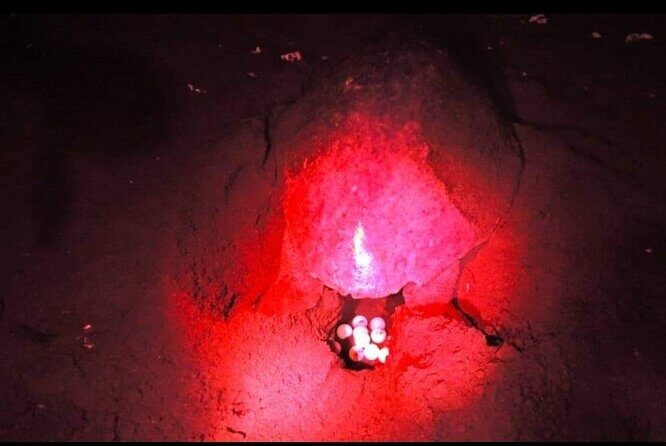
Once you reach Rekawa, the focus is waiting and watching. Green turtles may come ashore to lay eggs, and if conditions are right, you might also see the turtle cover the eggs afterward. That sequence is exactly the kind of behavior your guide tries to help you spot without rushing you.
Photography is where you’ll want to be prepared. Flash can disrupt animals at night, so the practical rule here is clear: if you’re taking photos, cover your flasher with red polythene, or use a red light instead. It’s a small thing, but it affects both your results and the comfort of the nesting area.
Comfort counts too. You’ll be standing or sitting outdoors at night for a while. Wear clothes you don’t mind getting sandy, and keep your hands free. If you want, plan to capture short video moments—your guide Sujith is the kind of person who helps people record what’s happening.
The role of Sujith: English, explanations, and real-world guidance
The strongest praise for this experience centers on Sujith. People describe him as informative, enthusiastic, and good at explaining what’s happening in plain language. That’s not fluff. When you understand what turtle behavior looks like—what to watch for and what not to do—you get more out of the night.
He’s also described as reliable and punctual, which matters when you’re traveling at night. You’re trusting someone to get you safely there and keep things moving at the right pace. In a place where darkness limits everything, that sense of “we’re in good hands” makes the experience feel easier and calmer.
One more detail I really like: Sujith is noted for making videos and photos for people. Even if you’re bringing your own camera, it helps to have someone who knows how to frame a turtle moment in low light.
Tuk-tuk transport that actually fits the schedule
This tour includes private transportation by tuk-tuk. That sounds simple, but in practice it’s a big deal at night. You’re not trying to coordinate shared transport after dark, and you’re not negotiating with multiple strangers about pickup timing.
Because it’s private, only your group participates. That means you can move at the same pace and avoid the awkward feeling of being stuck behind someone who’s decided to stay on the road while you’re trying to watch. It also tends to make it easier for your guide to answer questions as they come up.
Another helpful note: pickup is offered, and the listing indicates it’s near public transportation. So if your plans change slightly, you’re not completely cut off from the area.




Price and value: $9 for the ride, plus the turtle entrance ticket
The tour price is listed at $9.00 per person, with group discounts and a mobile ticket. But the key value point is this: the turtle watching entrance fee is not included.
The entrance ticket is priced around SLR 2000 for 1 person, SLR 4000 for 2 persons, and SLR 6000 for 3 persons (with a note showing about $6.70 per person). In other words, you’re really paying two parts:
- your transport and tour service (the $9)
- the turtle watching admission fee (the separate entrance ticket)
Is that fair? For what you’re getting—private night transport in a tuk-tuk and a few hours focused on the nesting beach—it’s a strong deal, especially if Sujith’s guidance is helping you get a real turtle encounter. Still, do the math before you book so you don’t get surprised at the entrance.
If you’re traveling as a couple or small group, the entrance fee structure shown here can help your planning. Just make sure you know your group size in advance so you buy the correct ticket category.
Timing, expectations, and how to improve your odds
Sea turtle nights aren’t something you can guarantee like a museum visit. What you can control is how you show up. The biggest lever here is the start time. You’re picked up at 8:00 PM, which keeps you at Rekawa when turtles are most likely to behave naturally.
Also, follow the photo guidance. Using red light or covering your flash helps keep the scene calm. It’s better for the animals and it often gives you a cleaner view because you’re not triggering attention-flash chaos.
When it goes well, you may see a green turtle lay eggs in a hole it dug into the sand, and you may even witness the effort of covering the eggs before it returns to sea. Those are the kinds of moments people remember for years, and the tour is designed to put you there for the full arc of the action—not just the first glimpse.
Who should book this tour (and who might skip it)
This is a great fit if you want a nature-focused night activity near Tangalle and you enjoy guided explanations while you wait. You’ll get more out of it if you’re patient and comfortable with a dark beach setting for a few hours.
It also suits couples, friends, and small groups since it’s private for your group. If you like the idea of a calm guide who speaks good English and helps you make sense of wildlife behavior, this experience has that energy.
If you’re the kind of traveler who hates late nights, this might not be your best match. You’ll be out from roughly 8:00 PM until around midnight. Also, because it’s weather-dependent, you might need to accept that nature has its own schedule.
Should you book Paradise Turtle Watching Tours from Tangalle?
If you want a low-cost way to do serious night wildlife watching, I think this is worth considering. The main value is the mix of private night tuk-tuk transport plus a guide like Sujith who helps you understand turtle behavior in real time. When you follow the photo rules and show up ready for the schedule, you give yourself the best chance at a meaningful encounter.
Just go in with two realistic expectations: the turtle entrance fee is separate, and you’re relying on conditions at Rekawa. If you can handle that, booking this tour is an easy yes for most people in the Tangalle area who want an authentic, hands-on wildlife night.
FAQ
What time is pickup in Tangalle?
Pickup is at 8:00 PM from your hotel in Tangalle.
How long do I spend at the turtle watching place?
The time at Turtle Watch Rekawa is listed as 3 hours.
Does the $9 tour price include the turtle watching entrance ticket?
No. The turtle watching place entrance ticket is not included in the tour price.
What is the entrance ticket price for Turtle Watch Rekawa?
The entrance fee is listed around SLR 2000 for 1 person, SLR 4000 for 2 persons, and SLR 6000 for 3 persons (noted as about $6.70 per person).
What should I bring for photography at Rekawa?
For photos, the guidance is to cover your flash with red polythene or use a red light.
Is this tour private or shared with strangers?
It’s private. Only your group participates.
What’s included in the tour?
The tour includes private transportation by tuk-tuk.
How long is the overall tour?
The duration is listed as about 4 hours.
What happens if weather is bad or I cancel?
The experience requires good weather. If it’s canceled due to poor weather, you’ll be offered a different date or a full refund. You can cancel up to 24 hours in advance for a full refund; within 24 hours, you don’t get a refund.