REVIEW · SIGIRIYA
Private Polonnaruwa Sightseeing Day Tour from Sigiriya
Book on Viator →Operated by Sinhagiri Tours · Bookable on Viator
Polonnaruwa is easier than you think. This private day tour from Sigiriya (also picking up in Dambulla and Habarana) strings together the main sites in a smooth loop, with a written guide you can use at your own pace. I love that you can focus on photos and atmosphere without a frantic group schedule, and I also like the built-in context start at the Archaeological Museum. One thing to consider: entrance fees and the optional site guide cost extra, so your final spend can be more than the tour price.
What makes this work on the ground is the practical setup. You get picked up in a comfortable vehicle, you’re given bottled water, and you can move between stops without worrying about navigation or timing. I also appreciate the flexible feel—this isn’t a stopwatch contest.
If you’re lucky, you may be matched with a driver like Shahiru from Sinhagiri Tours, who’s known for being patient and cheerful while helping you get where you need to go. Just keep in mind you’re still doing a lot of walking inside the archaeological zone, so comfortable shoes matter.
In This Review
- Key things I’d circle before you book
- Why Polonnaruwa is a great match for a private day
- Getting from Sigiriya into Polonnaruwa smoothly
- The stop-by-stop flow: what you’ll actually see
- Archaeological Museum: start with context (30 minutes)
- Parakramabahu I statue: granite scale shock (15 minutes)
- Pothgul Viharaya: a calm text-preserving temple (15 minutes)
- Royal Palace: brick-era power (30 minutes)
- Vatadage and Shiva Devalaya: sacred structures with different vibes (15 + 15 minutes)
- Veheras and dagobas: Rankoth, Manik, and Kiri (15 minutes each)
- Lankathilaka Image House: a big brick profile (15 minutes)
- Gal Vihara: where art and devotion meet (30 minutes)
- The written guide vs. paying for a site guide
- Price and value: $71.43 per group of up to 4
- Pacing, comfort, and what to expect during the 3–6 hours
- When this tour is the right fit (and when it’s not)
- Should you book this Polonnaruwa private day tour?
- FAQ
- Is pickup included?
- How long is the Polonnaruwa sightseeing day tour?
- What is the price?
- Is this tour private?
- Do I need to pay entrance fees during the tour?
- Is lunch included?
- Do I get a guide?
- Is a mobile ticket included?
- Where does the tour start and end?
- What if the weather is bad?
- Is cancellation free?
Key things I’d circle before you book
- Private vehicle from Sigiriya, Dambulla, or Habarana to cut down transit stress
- Written guide provided free, so you can self-explore without needing a pro guide
- Fast entry points to major highlights, including the museum and the big temple sites
- Optional professional site guide for 5000 LKR if you want deeper explanations
- Tons of photo moments across statues, dagobas, and image houses
- Most tours run 3 to 6 hours, depending on how long you linger
Why Polonnaruwa is a great match for a private day
Polonnaruwa rewards patience. It’s not just “one monument,” it’s an entire ancient city site where statues, temples, and sacred buildings sit close enough that you can see a lot in one outing. Doing it as a half-day or full morning-afternoon combo is the sweet spot, especially if you’re already based around Sigiriya.
This tour format makes the day feel manageable. Instead of piecing together tuk-tuks or buses, you get a private vehicle and a driver who takes you from stop to stop, then lets you slow down where your attention lands. If you like ruins but hate logistics, this is the kind of plan that lets you enjoy the place.
Other Sigiriya tours we've reviewed in Sigiriya



Getting from Sigiriya into Polonnaruwa smoothly
Your day starts at Sinhagiri Tours on Thalkotta Rd in Sigiriya. From there, the tour can pick you up from your preferred location in Sigiriya, Dambulla, or Habarana, which is a real time-saver if you’re staying a bit outside the main hub.
You’ll receive a mobile ticket, which is helpful when you’re trying to keep everything simple on the morning of your outing. And since the tour ends back at the meeting point, you’re not stuck hunting down a ride at the far end of the archaeological area.
Practical note: you’ll still be walking between major viewing areas. The vehicle handles the transfers; you handle the steps. Pack light, hydrate, and wear shoes you’re happy to get dusty.
The stop-by-stop flow: what you’ll actually see
This tour is built around a classic “start with context, then hit the icons” rhythm. It moves from the museum to major statues and temples, then finishes with some of the most memorable image-house and rock-art-style impressions in the complex.
Archaeological Museum: start with context (30 minutes)
You’ll first go to the Polonnaruwa museum. The goal here is simple: get your bearings before you start looking at stone from every angle.
Plan on about 30 minutes for the museum visit, and remember the admission ticket is not included, so you’ll want to budget for it. If you’re the type who likes to understand what you’re seeing (and not just snap photos), this stop makes the later ruins feel more meaningful.
Parakramabahu I statue: granite scale shock (15 minutes)
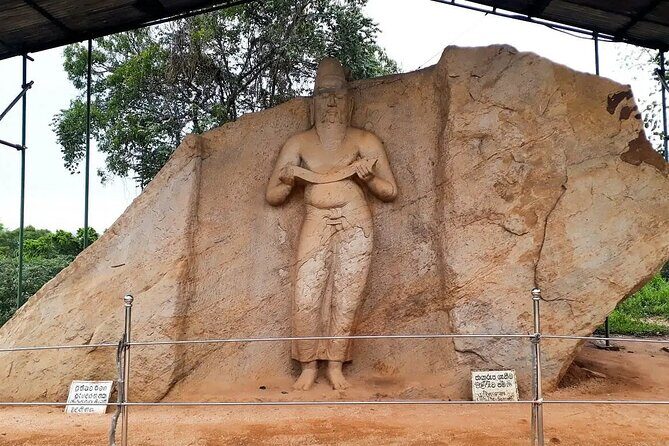
Next comes the Statue of Parakramabahu I. The description calls it a 12-foot-tall colossus carved from a single block of granite. Even if you only spend a short time here, the scale is the point—it’s hard to look at that stone craftsmanship and not feel a little amazed.
This is a good “quick but memorable” stop. It’s also a nice break from walking-heavy sections, so it works well if you’re pacing yourself.
Other private tours in Sigiriya


Pothgul Viharaya: a calm text-preserving temple (15 minutes)
Then you’ll visit Pothgul Viharaya, presented as a place dedicated to safeguarding sacred Buddhist texts, sutras, and commentaries. That means you’re not just looking at architecture—you’re visiting a site tied to preservation of ideas, not only buildings.
This stop is shorter, so don’t treat it like a skip. Even in 15 minutes, it helps you shift from “ruins as scenery” to “ruins as living cultural practice.”
Royal Palace: brick-era power (30 minutes)
After that, you move to the Royal Palace. It’s described as a prime example of architectural prowess for its time, built using brick. That “built using brick” detail matters because it hints at the engineering and planning behind what you’re seeing.
You’ll get around 30 minutes here, which is the right length for looking at forms, walking the viewing areas, and getting a feel for how the palace layout might have worked.
Vatadage and Shiva Devalaya: sacred structures with different vibes (15 + 15 minutes)
Your next two stops are the Polonnaruwa Vatadage and then Siva Devalaya (No 1).
- Vatadage (15 minutes): described as a testament to cultural and architectural heritage. It’s the kind of site where spending a little time helps you notice symmetry, placement, and how the structure frames religious meaning.
- Siva Devalaya (No 1) (15 minutes): a temple dedicated to Lord Shiva. This adds a different religious thread to the day, so the experience doesn’t become one-note.
If you like variety, these two stops keep the day moving while still letting you slow down.
Veheras and dagobas: Rankoth, Manik, and Kiri (15 minutes each)
Now you’re in the portion of the day with multiple major religious monuments: Rankoth Vehera, Manik Vehera, and Kiri Vehera (the Milk White Dagoba).
Each stop is about 15 minutes, which means you’re seeing them as highlights rather than doing an all-day temple study. Still, they’re worth it because the differences in the monuments’ style and presentation help you build a mental map of Polonnaruwa’s sacred architecture.
- Kiri Vehera is specifically described as the milk white dagoba, so it’s one of those “look for the famous feature” stops.
- Rankoth Vehera is noted for grandeur and deep religious and cultural significance.
- Manik Vihara is described as enduring spirituality and architectural prowess.
Lankathilaka Image House: a big brick profile (15 minutes)
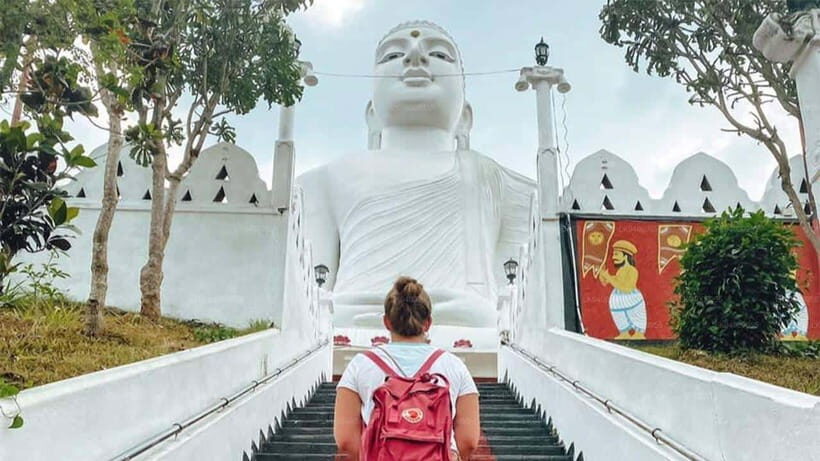
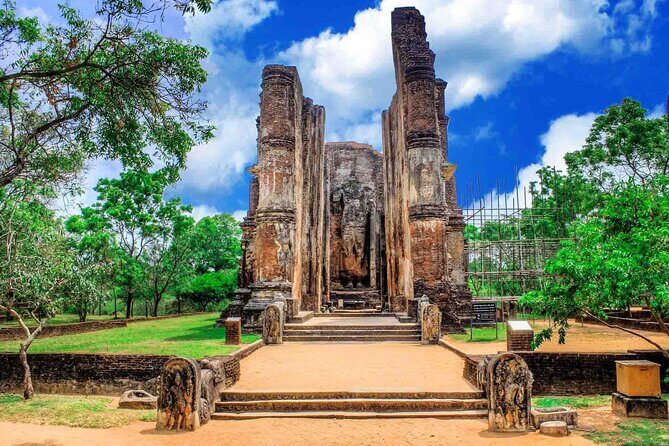
Next is Lankathilaka Image House. This one is all about size and form: towering brick walls, a colossal Buddha statue, and detailed painted elements (the description cuts off mid-word, but it clearly points to visual decoration).
Fifteen minutes is enough time to take in the main structure and get a couple of strong photos from sensible angles.
Gal Vihara: where art and devotion meet (30 minutes)
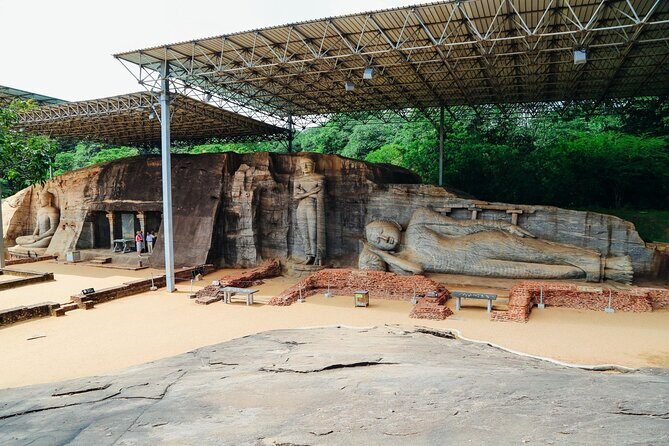
Finally, you’ll visit Gal Vihara. It’s described as a place where history, art, and spirituality converge, and it’s given 30 minutes, making it your longest stop at the end of the day.
This is usually the part of the outing where you want to slow down—stand back, look at the overall composition, then move closer if you’re allowed. It’s also a good moment to rely on the written guide you were given, since the museum context helps you connect the dots.
The written guide vs. paying for a site guide
This is one of the most important value points in the plan.
You’ll receive a detailed written guide free of charge, which is designed to help you explore the sites and understand the basic story behind what you’re seeing. If you don’t want the cost and pace of a professional guide, this can be plenty—especially if you’re the sort of person who spends 15 minutes learning the basics before you go.
If you want deeper stories, there’s an option to hire a professional site guide for an extra 5000 LKR. That can be worth it if you care about context, symbolism, and how the monuments fit together beyond the obvious visuals.
A small tip: if you choose the self-guided route, do a quick read the night before. You’ll enjoy the ruins more when you already recognize the names you’ll be seeing the next day.
Price and value: $71.43 per group of up to 4

The price is $71.43 per group (up to 4), which means your real value depends on how you split the cost.
For a group of four, this can be a very efficient way to get private transport, bottled water, and a written guide—without worrying about getting stuck at the wrong time in the archaeological area. If you’re traveling as a couple, it can still make sense, but you’ll feel the per-person cost more, especially because entrance fees and lunch are not included.
Also remember the optional site guide is 5000 LKR, so if you go that route, treat the tour price as the base and plan a bit of extra budget for the day.
One more value angle: Polonnaruwa is spread out enough that a private vehicle can remove a lot of day-friction. If you’ve ever tried to coordinate transport while also managing entrances, timing, and heat, you’ll understand why paying for the easy transfer can be worth it.
Pacing, comfort, and what to expect during the 3–6 hours
The duration is listed as 3 to 6 hours, and in practice that range matters. The tour includes short stops at several monuments and longer time at the museum and Gal Vihara. That means you can get a solid overview without feeling like you’re trapped on a timeline.
What I like about this setup is the “no pressure” feel. You can take your time when a view catches your eye, and the driver helps manage movement between sites so you’re not constantly asking for directions.
Comfort-wise:
- You’ll have a private vehicle
- You’ll get bottled water
- You’ll still be doing walking inside the complex, so bring sun protection and good shoes
When this tour is the right fit (and when it’s not)
This tour is a strong match if you:
- Want private transport from the Sigiriya area without doing logistics
- Prefer a light self-guided approach using a written guide
- Are okay paying entrance fees separately
- Like the idea of seeing major Polonnaruwa highlights in one organized loop
It may be less ideal if you:
- Want a full-time spoken guide included in the base price
- Don’t want to pay any extras beyond the tour cost (entrance fees are not included, and lunch isn’t included)
- Expect the vehicle to accompany you inside every viewing spot—this is still a monument-walking day
Should you book this Polonnaruwa private day tour?
Yes, if you want an efficient, low-stress way to experience Polonnaruwa’s big-name highlights from the Sigiriya area, this is a smart booking. The combination of private vehicle, written guidance, and flexible pacing is the kind of setup that keeps the day enjoyable instead of chaotic.
My checklist before you say yes:
- You’re comfortable paying entrance fees separately.
- You either want self-guiding with the written guide or you’re willing to add the 5000 LKR for a pro site guide.
- You’ll wear shoes for walking and bring sun protection.
If that all sounds like you, book it. Polonnaruwa is better when you’re not wrestling transport—so let the vehicle do its job and you can do yours: look closely, take photos, and soak up the quiet scale of all that carved stone.
FAQ
Is pickup included?
Yes. Pickup is offered from your preferred location in Sigiriya, Dambulla, and Habarana.
How long is the Polonnaruwa sightseeing day tour?
It runs approximately 3 to 6 hours.
What is the price?
It’s $71.43 per group, up to 4 people.
Is this tour private?
Yes. It’s a private tour/activity, and only your group participates.
Do I need to pay entrance fees during the tour?
Yes. Entrance fees are not included. This includes the Archaeological Museum ticket.
Is lunch included?
No. Lunch is not included.
Do I get a guide?
You’ll receive a detailed written guide free of charge. You can also hire a professional site guide for an extra 5000 LKR.
Is a mobile ticket included?
Yes, a mobile ticket is included.
Where does the tour start and end?
It starts at Sinhagiri Tours, Thalkotta Rd, Sigiriya, Sri Lanka, and ends back at the meeting point.
What if the weather is bad?
This experience requires good weather. If it’s canceled due to poor weather, you’ll be offered a different date or a full refund.
Is cancellation free?
Yes, free cancellation is available. You can cancel up to 24 hours in advance for a full refund.