REVIEW · SIGIRIYA
Day tour sigiriya to anuradhapura
Book on Viator →Operated by Ishan Tours and Holidays · Bookable on Viator
Anuradhapura feels bigger than the drive. You get a focused day through Sri Lanka’s old Buddhist core, with an intimate max-3-person group and the kind of stops you usually only see when you linger longer. I especially like the chance to see Jaya Sri Maha Bodhi, a living sacred connection to Buddha Gaya, not just another statue photo-op.
The one thing to weigh is the timing. This runs about 8 to 10 hours, and the main sites are scheduled in chunks, so you’ll want to be ready to move and keep your expectations realistic. Also, entrance fees are at your own expense, and all fees/taxes aren’t included in the price.
In This Review
- Key things I’d bet you’ll care about
- Day Trip From Sigiriya to Anuradhapura: What You’re Paying For
- Getting Picked Up in Sigiriya (And How to Plan Your Day)
- Thuparamaya and Ruwanwelisaya: The Early Sacred Core
- Jaya Sri Maha Bodhi: A Sacred Tree You Can Actually Stand Near
- Abayagiriya/Jetavanaramaya and Abhayagiri Dagaba: Big Ruins With Big Meaning
- Isurumuniya, Twin Baths, and Moonstone: The Detail Stops That Make the Day Worth It
- Mihintale: Moving Beyond the City Ruins
- Price and Logistics: Entrance Fees, Water, and a Smooth Day
- Who This Tour Suits Best
- Should You Book This Sigiriya to Anuradhapura Day Trip?
- FAQ
- How long is the Sigiriya to Anuradhapura day tour?
- Is the entrance fees included in the price?
- What group size is this tour limited to?
- What’s included in the tour price?
- Where does the tour start and end?
- What if the weather is poor?
Key things I’d bet you’ll care about
- Max 3 people total means you’re not packed into a big group bus
- Direct transfers from your Sigiriya address keeps the day simple
- Jaya Sri Maha Bodhi is a sacred fig tree, not a quick viewpoint
- Kuttam Pokuna Twin Baths shows ancient “practical beauty” in pool form
- Moonstone (Sandakada pahana) is the kind of detail you’ll miss without a plan
- Mihintale adds a temple-and-peak change of pace outside the city ruins
Day Trip From Sigiriya to Anuradhapura: What You’re Paying For
At $120 for an 8 to 10 hour day, this tour is mainly about structure. You’re paying for a driver-and-guide style outing that takes you from your Sigiriya address to major Anuradhapura holy places, without making you figure out routes, timing, or multiple ticket counters.
Two included touches help a lot: you get 2 bottles of bottled water, and you’ll use a mobile ticket. Neither sounds exciting, but on a full day in Sri Lanka heat, small comforts matter.
Now the honest part: entrance fees are not included. The itinerary has nine stops, and each has its own ticketing reality. If you’re sensitive to total day cost, it’s smart to budget extra from the start for site entries. Still, with the transfer convenience and the small group limit, the value feels solid for people who want Anuradhapura to be the main event.
If you’re also planning the classic Sigiriya climb, this tour is designed to pair with it. Even if this day doesn’t include the fortress itself in the listed stops, it fits the way many people build their Sigiriya schedule: do the fortress, then spend the rest of the day moving through Anuradhapura’s temples and monuments.
Other Sigiriya tours we've reviewed in Sigiriya


Getting Picked Up in Sigiriya (And How to Plan Your Day)
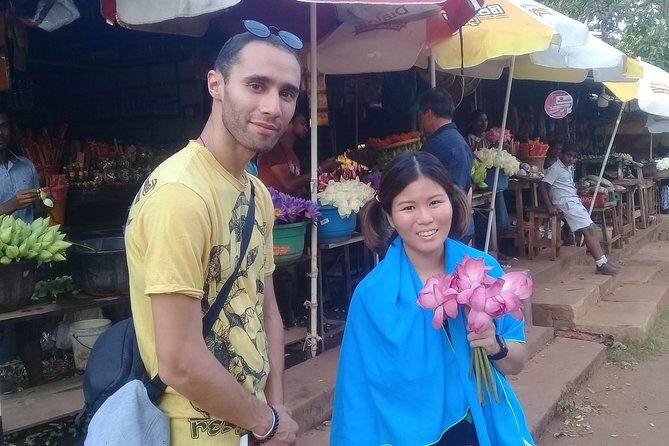
The biggest logistics win here is the pickup style. You’ll get round-trip transfers direct from your chosen Sigiriya address, and the tour ends back at the same meeting point. That matters in practice because it keeps your day from turning into a scavenger hunt for the right bus stop.
Another small detail: the start location is described as near public transportation. Translation: you’re not stuck in a remote “nowhere” meeting point. It’s usually easier to coordinate if you’re using a tuk-tuk or already in town.
Timing tip (useful if you’re also doing Sigiriya Rock Fortress): one Sigiriya guide experience shared that an early start around 6:30am makes climbing feel more manageable, and that fits the same logic for any full-day plan in Sri Lanka. If your day begins later, expect it to feel warmer by mid-afternoon.
Thuparamaya and Ruwanwelisaya: The Early Sacred Core
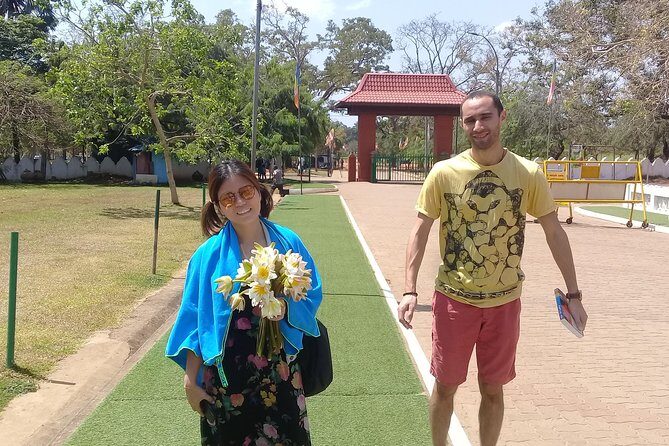
Stop 1: Thuparamaya
This is where the day earns its historic weight quickly. Thuparamaya is described as the first Buddhist temple in Sri Lanka, located in the sacred area of Mahamewna park. The Thuparamaya Stupa is noted as the earliest dagoba constructed on the island, dating back to the reign of King Devanampiya Tissa (247–207 BCE).
What I like about a stop like this is the way it reframes the whole trip. Instead of treating Anuradhapura like one big ruin field, you start with a clear “origin point.” The drawback: you only get about 30 minutes, so don’t plan to sit and study everything. Use the time to orient yourself—then enjoy the later stops with more context.
Stop 2: Ruwanwelisaya
About an hour here is a better rhythm. Ruwanwelisaya is a stupa and hemispherical structure said to contain relics, and it’s considered sacred across Buddhists globally. It’s tied to King Dutugemunu, built around 140 BCE, following his rise after a war.
This stop works best if you’re observant rather than rushed. Watch for how a place like this functions: it’s a monument, but it’s also a living religious site in daily use. The main tradeoff is the same as the first stop—time. You’ll see a lot, but you won’t get a slow, museum-like experience.
Jaya Sri Maha Bodhi: A Sacred Tree You Can Actually Stand Near
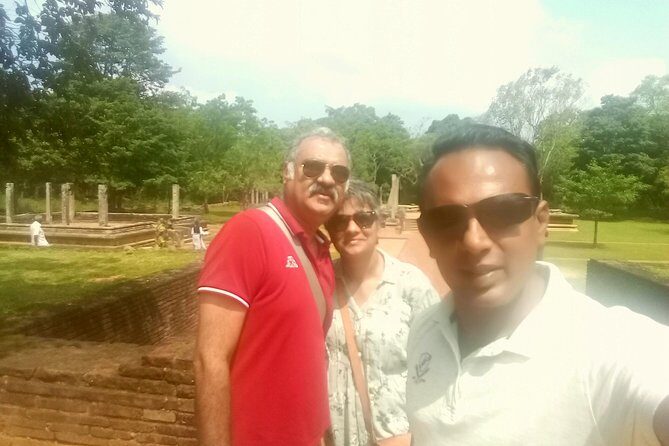
Stop 3: Jaya Sri Maha Bodhi
For many people, this is the emotional center of the day. The tree is described as a sacred fig tree in the Mahamewna Gardens, and it’s said to be the southern branch of the historical Sri Maha Bodhi at Buddha Gaya under which Lord Buddha attained enlightenment.
A tree like this changes how you experience Anuradhapura. You’re not just looking at stone monuments—you’re looking at something alive that carries devotion across centuries. It’s scheduled for about 1 hour, which is enough to slow down a bit, take in the atmosphere, and notice the small details your brain usually skips.
Possible consideration: sacred sites ask for a quiet, respectful pace. If you’re the kind of person who likes to talk loudly and dash between photos, this stop won’t feel as rewarding.
Abayagiriya/Jetavanaramaya and Abhayagiri Dagaba: Big Ruins With Big Meaning
Stop 4: Abayagiriya Stupa (Jetavanaramaya ruins)
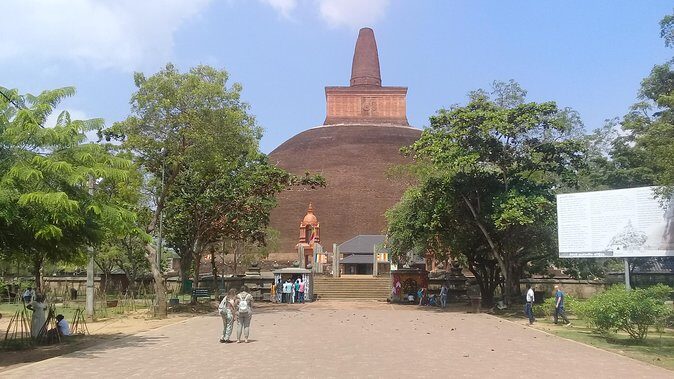
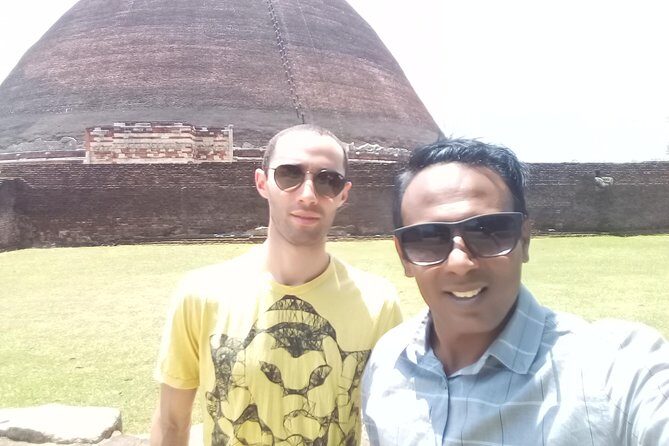
The description here points to the Jetavanaramaya stupa located in the ruins of Jetavana monastery in Anuradhapura. The important detail: it’s listed as 122 meters (400 ft) and described as the world’s tallest stupa at one time, plus the third tallest structurally in its era.
This is a stop that rewards imagination. When you stand among the ruins, it’s hard to feel how “tall” ancient monuments must have been, so I recommend leaning into the numbers and letting your mind do the missing work. You have about 30 minutes, which is fine if you stay focused and don’t overthink every carved fragment.
Stop 8: Abhayagiri Dagaba
This one expands the story beyond one stupa. Abhayagiri Vihāra is described as a major monastery site associated with Mahayana, Theravada, and Vajrayana Buddhism, and it’s described as one of the most extensive ruins and one of the most sacred pilgrimage sites in Anuradhapura.
You get about 1 hour here, and that extra time helps because large ruin sites are mentally tiring. You need a little patience to understand what you’re looking at—structures, foundations, and the scale of a place that once functioned as a serious religious hub.
A practical note: ruin complexes can mean uneven walking surfaces. If you’re sensitive to that, wear shoes you trust.



Isurumuniya, Twin Baths, and Moonstone: The Detail Stops That Make the Day Worth It
Stop 5: Isurumuniya Temple
Isurumuniya is listed with a heavy mix of legend and long timelines. The place is described as where Pulasthi Rishi lived, and it’s described as the place of which King Ravana was born. It also claims written history of about 5,000 years and mentions it as one of the 3 star gates in the world. The description also says it was built by King Devanampiya.
This is one of the stops where a guide (and your willingness to listen) really matters. The legends make the stones feel less random. The tradeoff is still time: it’s about 1 hour, so you’ll likely focus on highlights rather than trying to read everything.
Stop 6: Twin Baths (Kuttam Pokuna)
The description calls Kuttam Pokuna one of the best examples of ancient Sri Lanka’s bathing tanks or pools, and it notes the pair of pools were built by the Sinhalese in ancient Anuradhapura.
I like this stop because it’s not only religious—it’s practical. You get to see ancient design thinking in an everyday setting: water management, function, and form. It’s also a mental breather after stupa and temple stops, scheduled at about 30 minutes.
Stop 7: Anuradhapura Moonstone (Sandakada pahana)
This is the moment you realize Anuradhapura wasn’t just about big monuments. The moonstone is described as a semi-circular stone slab with intricate carving, usually placed at the bottom of staircases and entrances. It’s noted as a unique feature of Sinhalese architecture and called Sandakada pahana or Moon-stone.
If you’re the kind of person who loves details, this is a perfect “zoom in” stop. If you’re not, you’ll still appreciate it when you spot the recurring patterns and learn that the architecture had meaning at foot level, not just above your head. Time here is around 30 minutes, so again: quick, focused attention wins.
Mihintale: Moving Beyond the City Ruins
Stop 9: Mihintale
Mihintale sits about 8 miles (12.875 km) east of Anuradhapura, near the Anuradhapura–Trincomalee Road. It’s described as being on the “Missaka Pabbata,” a peak roughly 1,000 feet (300 m) high, part of a mountainous range.
This stop gives you a different energy than the flat ruins and temple courtyards. It’s scheduled for about 1 hour, which suggests a short visit designed to break up the day rather than turn it into an all-day hike. I’d plan for some walking, and I’d keep your water handy.
Price and Logistics: Entrance Fees, Water, and a Smooth Day
Here’s the value picture in plain terms.
What you get in the tour price ($120):
- Round-trip transfers from your Sigiriya address
- Mobile ticket
- 2 bottles of bottled water
- A structured day that hits major sites
What’s not included:
- All fees and taxes
- Entrance fees are at your own expense
That means your real “all-in cost” depends on ticket prices at each stop. So I suggest you treat the $120 as the transportation-and-guide fee, then add the site entries on top.
What to bring:
- Comfortable walking shoes (you’ll be hopping between multiple sites)
- Sunscreen and a hat are smart, even if you don’t usually pack them
- Extra water if you know you drink a lot; you only get two bottles included
- A small cash buffer for entry fees, since ticketing can be separate per site
One more practical note based on a Sigiriya experience someone shared: they noted international ticket handling and basic facilities weren’t great there. Even though that’s not this Anuradhapura day specifically, it’s a good reminder to pack your own small essentials (tissues, hand wipes). Sri Lanka sites can vary a lot.
Who This Tour Suits Best
This day trip is a strong fit if:
- You want Anuradhapura’s main Buddhist sites without planning a route
- You like an intimate group vibe rather than a crowd
- You’re interested in the mix of stupas, monasteries, sacred trees, and architectural details like moonstones
- You want the day structured so you actually connect the dots from Thuparamaya to Abhayagiri Dagaba
It’s not the best match if:
- You expect entrance fees to be included in the tour price
- You want long, slow stays at each monument
- You hate moving through multiple stops in one day
Should You Book This Sigiriya to Anuradhapura Day Trip?
If you want Anuradhapura as a focused, organized day, I think this is worth booking. The high satisfaction signal—4.7 rating and 93% recommended—lines up with what this tour is built for: clear transfers, a small group size, and a route that hits the big names plus detail stops.
Book it if you’re comfortable paying site entrance fees separately and you like the idea of seeing a lot in one day without the stress of logistics. Skip it only if you prefer fully independent pacing or you’re trying to keep the day cost tightly predictable.
FAQ
How long is the Sigiriya to Anuradhapura day tour?
It runs about 8 to 10 hours.
Is the entrance fees included in the price?
No. All fees and taxes are not included, and entrance fees are at your own expense.
What group size is this tour limited to?
The tour has a maximum of 3 travelers in total.
What’s included in the tour price?
You get bottled water (2 bottles). A mobile ticket is also provided.
Where does the tour start and end?
It starts in Sigiriya, Sri Lanka, and ends back at your meeting point.
What if the weather is poor?
The tour requires good weather. If it’s canceled due to poor weather, you’ll be offered a different date or a full refund.