REVIEW · SIGIRIYA
Private Polonnaruwa Ruins & Minneriya Safari Tour from Sigiriya
Book on Viator →Operated by Haven Lanka Tours · Bookable on Viator
Two UNESCO stops, one full-day plan. This private tour pairs the storytelling power of Polonnaruwa’s ruins with real wild elephant time in the Minneriya area. I like the door-to-door pickup from Sigiriya/Habarana (or Dambulla), and you get a 4×4 safari jeep setup when it’s time to look for elephants.
The schedule runs about 8 to 10 hours, so it’s a long day. Also, entrance fees and lunch are not included, so you’ll want to budget for tickets and a meal stop.
In This Review
- Key things I’d zero in on before you book
- Polonnaruwa Meets Elephant Country: The appeal of this private day
- Getting picked up in Sigiriya (and choosing between NV200 or Suzuki Estilo)
- Polonnaruwa starts with context: Archaeological Museum
- Parakramabahu’s power on display: statue, palace, and royal remnants
- Sacred Quadrangle highlights: Vatadage and the big religious monuments
- The tank stops: Parakrama’s water system and Giritale Tank
- The Minneriya safari: planning for wild elephants
- Price and logistics: what $55 per group really gets you
- What the private format feels like in real life
- Weather timing: when Hurulu Eco Park guidance can help
- Who this tour suits (and who might want a different plan)
- What to bring for a smooth day
- Should you book this Polonnaruwa Ruins & Minneriya Safari Tour?
- FAQ
- How long is the private Polonnaruwa and Minneriya day?
- Where does pickup happen for this tour?
- Is this tour private or shared with other groups?
- What is included in the $55 per group price?
- Are entrance fees included?
- Is lunch included?
- How long do you spend in the safari area?
- What vehicle options are available?
- Is there seasonal guidance for elephant viewing?
Key things I’d zero in on before you book
- Private door-to-door pickup from Sigiriya/Habarana or Dambulla
- Polonnaruwa in one efficient run, from the museum to Gal Vihara
- About 3 hours in elephant country with a safari-jeep style experience
- Vehicle choice options (Suzuki Estilo or NV200), plus safari transport with driver
- Photo-minded timing with multiple short stops so you don’t feel rushed
- Cost clarity: $55 per group for the tour, then entrance fees and lunch on you
Polonnaruwa Meets Elephant Country: The appeal of this private day
If you like ancient cities but also want a living wildlife moment, this day does both. Polonnaruwa gives you the big “how did they build this?” feeling—ruins tied to King Parakramabahu’s era. Then you switch gears to the grass-and-water world that brings elephants in.
What makes it work so well for a practical traveler is the private format. You’re not sharing the day with a crowd, and your driver can shape the pace around your interests and photo stops. And since it’s built around a single full day, you’re not guessing how to stitch together ruins plus safari transport.
Other Sigiriya tours we've reviewed in Sigiriya

Getting picked up in Sigiriya (and choosing between NV200 or Suzuki Estilo)
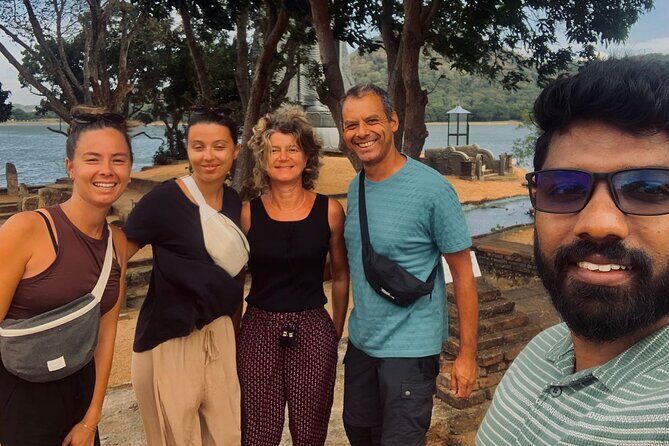
Pickup is one of the strongest value points here. You can be collected from Sigiriya or Habarana, and pickup is also offered from Dambulla. That matters because Polonnaruwa isn’t right next door, and minimizing transfers saves energy for the day itself.
Transport choice is also clear. For the private tour side, you can select between Suzuki Estilo (budget friendly) and NV200 (luxury mini van). That’s a real comfort decision if you’re doing this with family, with more luggage, or if you simply want easier seating for the drive.
One more practical note: this is marketed as a Polonnaruwa and wild safari package, and the safari part is done with a safari jeep with a driver. In other words, you’re not stuck watching elephant country from the same vehicle you used for ruins.
Polonnaruwa starts with context: Archaeological Museum

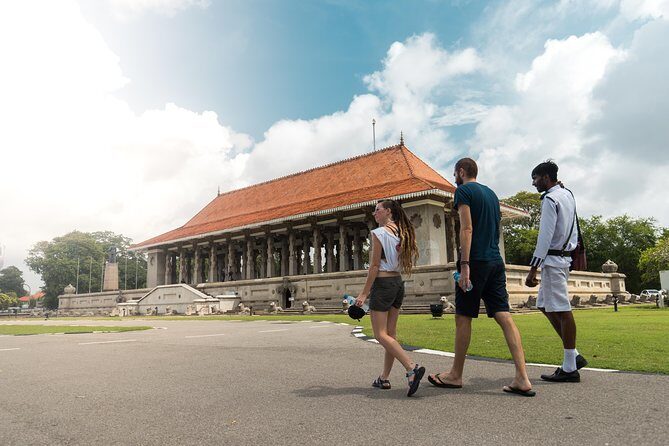
Most ruin tours start with temples and skip the why. This one begins with the Archaeological Museum near the UNESCO site entrance. You get about 30 minutes here, and entrance fees are not included.
Why it’s worth your time: the museum helps you connect names and monuments you’ll see later. Even a short visit can make the Sacred Quadrangle stops land harder, because you’ll recognize what you’re looking at: the royal and religious layout, and the scale of the 12th-century world.
If you’re the type who likes seeing ruins with a bit of backbone (not just “pretty stones”), this first stop sets the tone.
Parakramabahu’s power on display: statue, palace, and royal remnants
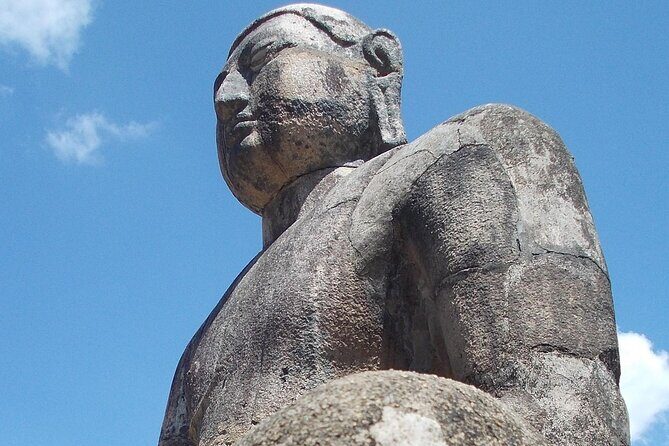
You’ll next hit the political core of Polonnaruwa. The Statue of Parakramabahu I gives you a direct link to Sri Lanka’s Golden Age and the legendary ruler tied to the city’s grandeur. This stop is short (about 15 minutes), and entry is free.
Then it’s on to the Royal Palace of King Parakramabahu. You get around 30 minutes here, and it’s also free. The description points to what this palace once was, including that it was a seven-story architectural masterpiece. Even if only parts remain today, you still get a sense of how designed the space was for authority—stone work meant to impress.
A quick travel tip: wear shoes you trust. Polonnaruwa is a lot of uneven ground and walking paths. Good footing makes the palace area feel less tiring, and you’ll have more energy for the photo stops.
Sacred Quadrangle highlights: Vatadage and the big religious monuments
Polonnaruwa’s religious core is where the day can feel like “wait, this is all here?” You’ll pass through several key sites, most of them free, each with a clear identity.
- Pothgul Viharaya (about 15 minutes, free): described as a unique 12th-century monastic complex and thought to have served as a Buddhist learning center or library.
- Royal Palace area (already covered, but it sets up the next set of sacred spaces).
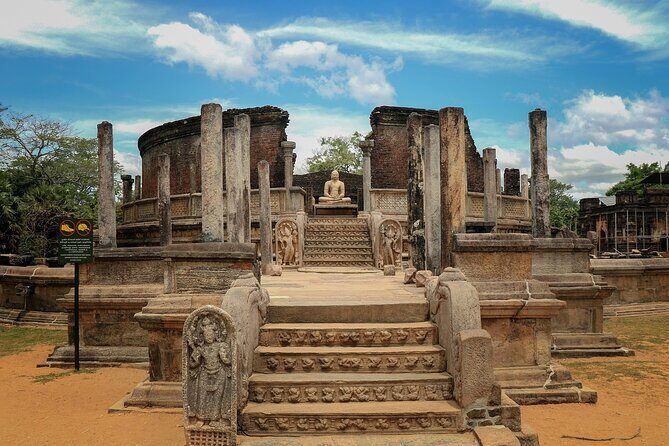
- Polonnaruwa Vatadage (about 15 minutes, entrance not included): this is the circular shrine that anchors the Sacred Quadrangle. Since the entry fee is not included, plan for paid access if you want to go in fully.
- Siva Devalaya (No. 1) (about 15 minutes, free): an older Hindu temple, which is a reminder that Polonnaruwa wasn’t only Buddhist.
Then the stupas come in sequence—smaller stops, similar timing, and all worth a moment to compare shapes and carvings.
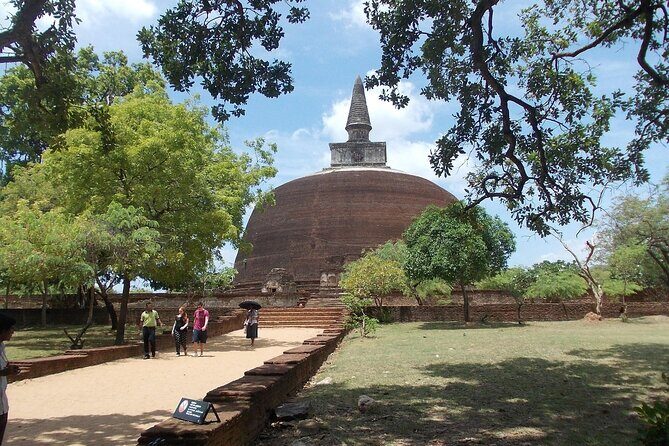
- Rankoth Vehera (Golden Pinnacle Stupa), Manik Vehera, and Kiri Vehera (Milk White Stupa), each about 15 minutes and free.
- Lankathilaka Image House (about 15 minutes, free): described as the pinnacle shrine house from the 12th century within the Alahana Pirivena complex.
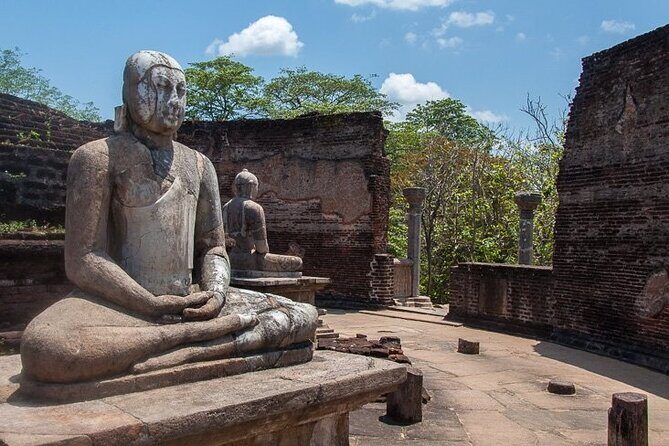
- Gal Vihara (about 30 minutes, free): often the highlight for sheer sculptural impact. The stone-carved Buddha statues here are the kind of sight you’ll remember long after the drive back.
What I like about this structure is that you aren’t stuck with one long stop that drains you. The short timing keeps you moving, but each place still gets enough time for photos and a real look.
Other Minneriya safari tours we've reviewed in Sigiriya


The tank stops: Parakrama’s water system and Giritale Tank
Not every Polonnaruwa tour spends time on the waterworks, but this one includes two tank moments.
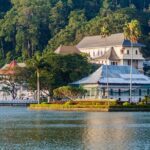
You’ll pass by the sea of Parakrama, a large 2,500-hectare tank linked to King Parakramabahu’s advanced hydraulic civilization. You’ll also pause at Giritale Tank, built by Parakramabahu I. This part of the day works as a visual break from stone architecture.
Why it matters: the tanks are the “infrastructure behind the art.” When you see the scale of water management in the region, you start to understand how a city could thrive at that level. Even if you don’t nerd out on irrigation, you’ll probably feel the logic of a kingdom powered by water.
The Minneriya safari: planning for wild elephants
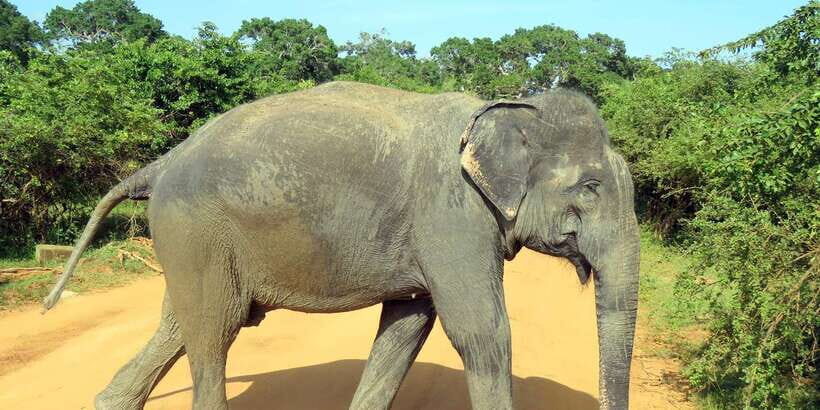
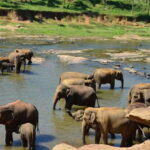
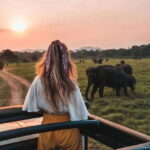
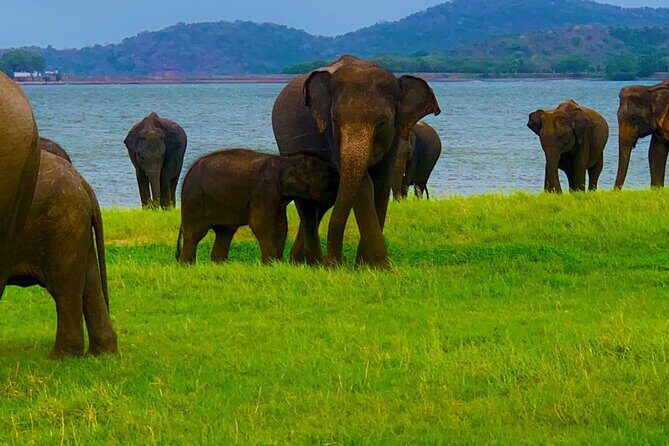
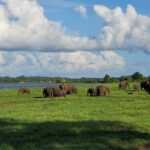
After the ruins, the day shifts to wildlife mode. The safari portion is about 3 hours at Minneriya National Park. Entrance fees aren’t included, and that’s another line-item to plan for.
Elephants are the headline, but the real question is how reliable sightings feel on the day you go. The tour information you’ll get with this experience points out seasonal guidance: during the wet season (May–September), the best elephant odds can be around Hurulu Eco Park as herds migrate there. That’s a useful detail, because it tells you the operator is thinking about timing, not just driving to one spot and hoping.
Practical safari advice that fits this exact kind of day:
- Bring a camera lens you can handle fast moments with, since elephant sightings can happen suddenly.
- Wear light, breathable clothes, and keep something for sun and sweat. You’ll be outside for the long stretches.
- Keep your expectations flexible. In elephant country, one good sight often changes the whole vibe of the afternoon.
Price and logistics: what $55 per group really gets you

At $55 per group (up to 2), the best way to think about value is: you’re paying for a private day with pickup, a driver, and a tight itinerary that avoids you trying to organize all the transport yourself.
Included highlights:
- Private tour
- Hotel pickup and drop-off (Sigiriya/Habarana or Dambulla)
- Complimentary water bottles
- Expert driver with photo spots and shortcuts
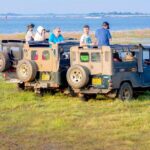
- Safari transport setup, with a safari jeep with driver for the wild part
Not included:
- All entrance fees
- Lunch
That last line matters. If you budget only the $55, you might get surprised when it’s time to pay tickets at monuments or in the park. Still, compared to many “ruins plus safari” days that sell as one package but don’t clarify what you’ll pay at the gate, this one is pretty straightforward about what’s included versus what you handle on-site.
What the private format feels like in real life
A private day isn’t just about comfort. It’s also about rhythm.
You’ll likely appreciate the shorter, move-along stops in Polonnaruwa. Instead of standing in one spot until you’re restless, the schedule moves you between museum context, royal monuments, the Sacred Quadrangle sights, and then sculptural highlights. That pacing makes it easier to handle the physical reality of a full day in the sun.
And in the safari portion, it’s the difference between “one more jeep in the mix” and “your group is set up and your driver is focused on your experience.” You’re paying for that focus.
In the feedback I took note of, a driver named Rashith stood out for being attentive and making sure everything went smoothly. That’s the kind of service that turns a good itinerary into a day that feels calm instead of chaotic.
Weather timing: when Hurulu Eco Park guidance can help
If you’re traveling between May and September, the tour info specifically calls out Hurulu Eco Park as a better elephant-viewing option during wet season because elephants may move there. That matters because it can change what you see and how crowded it feels in a given window.
If you’re traveling outside that wet season window, the information doesn’t claim the same thing, so you should treat it as seasonal guidance rather than a guarantee. Either way, the main value is that the operator is thinking in terms of migration patterns and practical sightings.
Who this tour suits (and who might want a different plan)
This tour is a strong match if you:
- Want one private full-day plan that covers both ruins and elephants
- Prefer pickup and driving handled for you
- Like photo-friendly pacing without a constant “wait for the group” feeling
- Are okay paying entrance fees and lunch separately to keep the base package price lower
You might want to look at another format if you:
- Hate long days. 8 to 10 hours is substantial, especially if you’re sensitive to heat.
- Want a tour where meals and all entry tickets are bundled into one flat price. Here, those extras are not included.
- Expect a guaranteed elephant lineup. Wild sightings aren’t guaranteed, even when elephant density is high.
What to bring for a smooth day
Since water bottles are provided, you can start lighter. Still, I’d plan around sun, walking, and safari timing:
- Comfortable walking shoes for Polonnaruwa paths
- A hat or sun protection
- A camera and charged battery/power bank
- Cash for entrance fees and lunch (since they aren’t included)
- Lightweight layers, because weather and shade can change fast through the day
Should you book this Polonnaruwa Ruins & Minneriya Safari Tour?
If you want a private day that turns into two different stories—ancient engineering and living wildlife—this one is an easy yes. The value sits in the mix of door-to-door pickup, a well-paced Polonnaruwa route with major sites like Gal Vihara, and a focused safari block of about 3 hours in elephant country.
Book it if you’re traveling as a small group (up to 2), want flexibility without logistics stress, and you can handle the reality that entrance fees and lunch are on you. Skip it if you want everything included in one price, or if an 8–10 hour day will wear you down.
If you do book, I’d go in with one mindset: Polonnaruwa first for context, then safari with patience for the wild part. That combination is why this day tends to work so well.
FAQ
How long is the private Polonnaruwa and Minneriya day?
The tour duration is approximately 8 to 10 hours.
Where does pickup happen for this tour?
You can be picked up from Sigiriya/Habarana or from Dambulla.
Is this tour private or shared with other groups?
It’s a private tour/activity, so only your group participates.
What is included in the $55 per group price?
Hotel pickup and drop-off, a private tour, complimentary water bottles, an expert driver, and safari-jeep style transport with driver for this Polonnaruwa and wild safari package.
Are entrance fees included?
No. All entrance fees are not included.
Is lunch included?
No. Lunch is not included.
How long do you spend in the safari area?
You’ll have about 3 hours at Minneriya National Park.
What vehicle options are available?
You can select transportation as either a Suzuki Estilo compact car or an NV200 van, and the safari portion is done with a safari jeep and driver.
Is there seasonal guidance for elephant viewing?
Yes. In the wet season (May–September), the tour info suggests Hurulu Eco Park as the best option for elephant sightings.