REVIEW · ANURADHAPURA
Half day tour – in Sacred city of Anuradhapura Or sacred city of Mihintale.
Book on Viator →Operated by Travel With Lampa · Bookable on Viator
Anuradhapura hits fast. This half-day private tour turns a pile of ancient Buddhist sights into a story you can actually follow, with a licensed Sri Lankan guide explaining what each place means and how it fits into Buddhism and local history. I love the chance to pause at Jaya Sri Maha Bodhi, a sacred living Bo tree, and I love the English explanations (the guide’s storytelling style is a big part of why this tour scores well).
One possible drawback: it’s a tight 3–4 hours with lots of quick stops, so you won’t linger forever. Also, admission tickets for the main sites are not included, so you’ll want a little cash plan.
In This Review
- Highlights that make this Anuradhapura route worth it
- Sacred city energy in 3–4 hours: what you’re really buying
- The 8:30 start, quick tempo, and where you begin
- Stop 1: Jaya Sri Maha Bodhi and why a tree can feel huge
- Lovamahapaya (Lohaprasadaya): the brazen palace between the big names
- Ruwanwelisaya: reading a relic stupa without getting lost
- Jetavanarama ruins and Abhayagiriya: when scale tells the story
- Thuparama Dagoba and the Samadhi Buddha: the quieter, teachable moments
- Isurumuniya and Kuttam Pokuna: monuments plus daily life
- Wessagiriya and the Moonstone: look down, not only ahead
- Price and value: $30 for a lot of organized meaning
- Who this tour fits best (and who should look for another option)
- Should you book Travel With Lampa for Anuradhapura?
- FAQ
- How long is the half-day tour?
- What time does the tour start, and where does it meet?
- Is pickup included?
- What’s included in the price?
- Are entrance fees or admission tickets included?
- Is this a private tour?
Highlights that make this Anuradhapura route worth it
- Jaya Sri Maha Bodhi: a sacred Bo tree in Mahamewna Gardens, treated as a living link to the Buddha’s presence in Sri Lankan Buddhism
- Lovamahapaya (Lohaprasadaya): the brazen palace idea—why people connect it to the great temple zones nearby
- Ruwanwelisaya’s relic logic: how a hemispherical stupa is understood in Buddhist tradition
- Abhayagiri scale: jet-black ruins you read like a map of multiple Buddhist eras
- Kuttam Pokuna (Twin Baths): old bathing tanks that help you picture daily life, not just ceremonies
- Moonstone (Sandakada pahana): a carved architectural feature you’ll never unsee once you spot it
Sacred city energy in 3–4 hours: what you’re really buying
This tour is built for people who want the big “Anuradhapura picture” without spending the whole day hopping around and guessing. You get pickup offered, a private group only, and an efficient route through the monuments that most visitors come to see.
The value is the guide. The experience description is clear that the guide is a licensed tour professional who explains monuments and historical places across Sri Lanka, with extra focus on Buddhism and how it shaped what you see. The reviews also back up that this guide—named Lampa—communicates in strong, clear English and keeps the mood friendly and fun, not lecture-y.
If you’re the type who likes to understand what you’re looking at before you take photos, this format usually clicks.
Other Anuradhapura tours we've reviewed in Anuradhapura

The 8:30 start, quick tempo, and where you begin
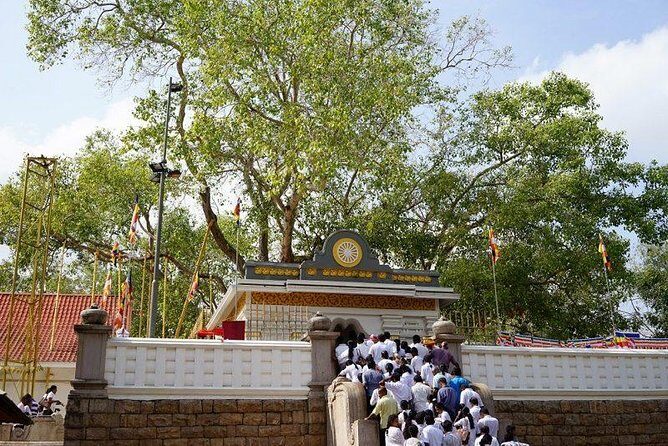
You start at 8:30 am at Jaya Sri Maha Bodhi (the meeting point is listed at 89VW+VV5, Anuradhapura). The tour ends back at the meeting point, so you don’t have to reorganize transport at the end.
The timing is the main thing to plan around. With roughly 3–4 hours and around 10+ stops, the stops are designed as short viewing moments plus explanation—not long museum-style wandering. If you like to sit quietly for 30 minutes per site, choose a slower day or add extra time on your own afterward.
Also note that good weather matters. If conditions are poor, the tour can be rescheduled or refunded.
Stop 1: Jaya Sri Maha Bodhi and why a tree can feel huge
Most visits to Anuradhapura begin with a simple truth: you can’t understand this sacred city without starting at the Jaya Sri Maha Bodhi. It’s a sacred Bo tree (Ficus religiosa) in Mahamewna Gardens, and the key idea is that it’s treated as a living link connected to Gautama Buddha in Sri Lankan Buddhist tradition.
In a half-day tour, this first stop is what sets your brain to the right mode. Instead of just looking at ruins, you start thinking about continuity—how belief stays rooted in living things, even when the surrounding buildings change.
Expect time for reflection and photos, but don’t expect admission to be included here. The tour doesn’t list site tickets as part of the package, so budget for entry fees as you go.
Lovamahapaya (Lohaprasadaya): the brazen palace between the big names
Next comes Lovamahapaya, often called the Brazen Palace or Lohaprasadaya, located between Ruwanweliseya and Sri Mahabodiya. Even if the original structure isn’t fully intact, the location matters: it sits right in the temple-zone geography that helps you see how Anuradhapura was planned.
The “brazen palace” nickname isn’t random. The idea people take from it is that temple complexes weren’t only for worship—they were also statements of power, craft, and religious purpose. Your guide’s job here is to connect the name to the broader monument cluster so it feels like a place, not just a photo stop.
Time at this stop is short, so if there’s a detail you want to study carefully, do it efficiently. Quick focus works better than trying to read everything at once.
Ruwanwelisaya: reading a relic stupa without getting lost
Ruwanwelisaya (also known as the Ruwanweli Maha Seya or Mahathupa) is one of the most important stupas in Anuradhapura. It’s described as a hemispherical stupa containing relics, and that “relic logic” is the concept that makes the structure meaningful.
When you stand in front of a big stupa, it’s easy to see shape and miss meaning. The value of a good guide is that you understand what you’re looking at: this isn’t just architecture. It’s a reliquary concept tied to Buddhist teaching and sacred memory.
Again, admission tickets aren’t included, so plan for separate entries. The upside is that Ruwanwelisaya is a high-impact stop, so the extra cost usually feels fair.
Other city tours we've reviewed in Anuradhapura

Jetavanarama ruins and Abhayagiriya: when scale tells the story
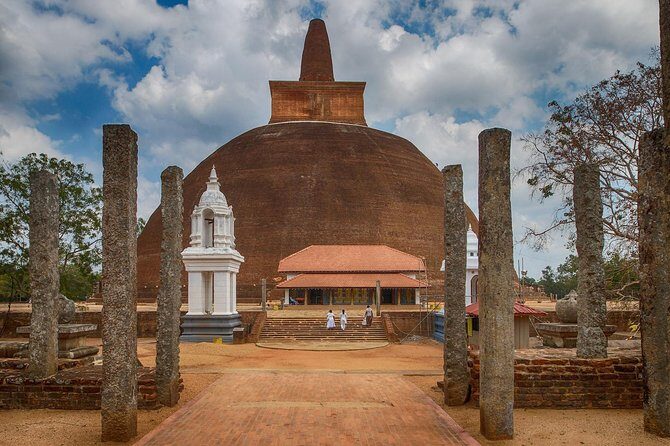
As you move onward, the monuments start to feel like a puzzle made of stone. Abayagiriya Stupa (also referenced with Jetavanarama/Jetavanaramaya in the information) and Abhayagiri Dagaba take your attention from single structures to wide ruins.
The standout here is the sense of scale, especially at Abhayagiri Dagaba. The information describes Abhayagiri Vihāra as a major monastery site with connections to Mahayana, Theravada, and Vajrayana Buddhism, and as one of the most extensive ruins in the world. Whether you’re a Buddhism newcomer or you’ve read a few books, that multi-era detail is the kind of context that makes ruins more than rubble.
This is also where a licensed guide earns their keep. You want help spotting how the site’s religious importance changed over time—why different traditions could matter in the same larger sacred zone.
Thuparama Dagoba and the Samadhi Buddha: the quieter, teachable moments
Dagoba of Thuparama (Thuparamaya) is described as the first Buddhist temple constructed after Mahinda Thero’s arrival in Sri Lanka (Mahindagamanaya). That’s a big claim, and it matters because it frames Thuparama not just as another stop, but as a milestone.
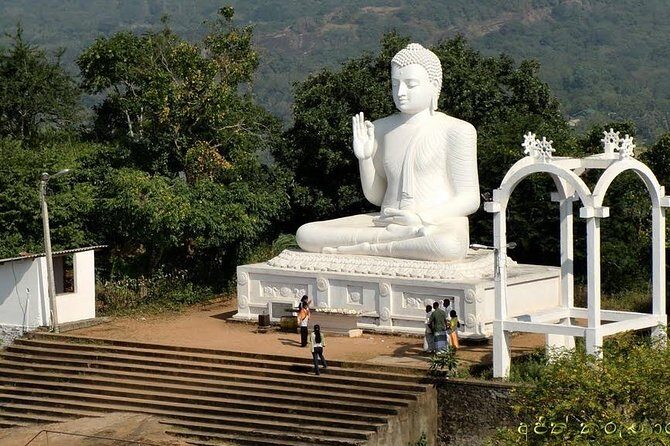
Then there’s the Samadhi Statue, showing the Buddha in Dhyana Mudra, the meditation posture associated with the Buddha’s first sermon. That kind of detail is exactly why short tour explanations can still be powerful. Even in a brief stop, you get a “what to notice” cue: not only the statue, but the posture and what it’s supposed to represent.
If your brain is tired, these two stops can actually be a relief. They’re less about massive scale and more about specific symbols.
Isurumuniya and Kuttam Pokuna: monuments plus daily life
Isurumuniya Temple (also identified as Isurumuni Vihara / Meghagiri Vihara in the details) gives you a sense of how temples also connect to older royal and devotional stories. The information mentions it was built by King Devanampiya Tissa, which helps you link religious sites to named rulers rather than vague “ancient times.”
Then the tour hits Twin Baths (Kuttam Pokuna)—a pair of well-preserved bathing tanks or ponds. This stop is special because it pulls you toward everyday functions in the ancient city. You’re not only looking at ceremony spaces; you’re picturing routine, water use, and how people moved through sacred daily life.
This is also one of the best spots for photo composition. The pools and stone edges give strong shapes, but the real win is understanding what they were for.
Wessagiriya and the Moonstone: look down, not only ahead
Wessagiriya is described as an ancient Buddhist forest monastery part of Anuradhapura’s ruins, located about half a mile south of Isuru. Even if you don’t have time to walk deep into a forested feel, the explanation helps you treat the ruins as a place where monastic life happened, not just an open-air ruin field.
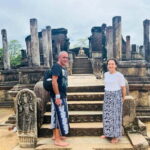
Finally, you’ll get to Moonstone (Sandakada pahana), a distinctive semi-circular carved slab with a strong Sinhalese architectural identity. These stones are typically placed at the bottom of stairways into sacred spaces, and that gives you a practical lesson for your own future visits: once you know what a moonstone is, you start seeing the culture in the doorway design.
In other words, this is a stop that changes how you look at the rest of Sri Lanka’s temple entrances.
Price and value: $30 for a lot of organized meaning
At $30 per person, this half-day tour is priced like a budget-friendly way to get a guided route through major sights. You also get snacks and water included, plus a mobile ticket and pickup offered, which matters in a place where coordinating your own transport for many short stops can become annoying fast.
What’s not included is important. The tour doesn’t include all fees and taxes, and the information also says admission tickets aren’t included for the stops. So your real cost is usually: $30 for the guided route, plus whatever entrance fees apply at each site.
The other “not included” item is an air-conditioned vehicle. Pickup is offered, but if AC is a must for you, you should plan to ask ahead or be ready for non-AC comfort in Sri Lanka’s heat. For a morning start at 8:30, that’s often less of a problem, but it still matters.
The reason I think this price can feel like good value is that it’s not just transport. It’s a licensed guide with focused Buddhism explanations, and the route hits the most recognizable Anuradhapura landmarks plus a few elements many self-guided plans forget, like the Moonstone and Twin Baths.
Who this tour fits best (and who should look for another option)
This works best for you if:
- You want an organized route through top Anuradhapura sites in a half-day
- You care about understanding Buddhist symbols and monument meaning, not only collecting photos
- You like private group pacing, where you can ask questions without slowing everyone down
- You prefer a guide who speaks clear English and tells stories in a fun way (Lampa is specifically praised for that)
It may feel less ideal if:
- You want long quiet time at each stop
- You hate paying separate entrance fees
- You’re sensitive to a fast schedule with many short visits
If you’re the first type, I’d consider adding a little extra time on your own after the tour to revisit the one site that really grabs you.
Should you book Travel With Lampa for Anuradhapura?
If you want the best “bang for your brain,” I’d book it. The combination of a licensed guide, strong English explanations, and a focused route through the key spiritual and architectural landmarks is exactly what makes Anuradhapura easier to enjoy.
Given the 4.6 rating and 92% recommendation signal, you’re not gambling on a random guide. The bigger risk isn’t quality—it’s pace. If you can handle a packed half-day, this is a smart, practical way to see why Anuradhapura is still so important.
If you’re unsure between Anuradhapura and Mihintale, the tour’s description suggests your booking confirmation will clarify the exact sacred-city plan. Choose the option that matches your schedule, then show up ready for symbolism, stupas, and a lot of meaning packed into a few hours.
FAQ
How long is the half-day tour?
It runs about 3 to 4 hours.
What time does the tour start, and where does it meet?
The start time is 8:30 am, and it meets at Jaya Sri Maha Bodhi (meeting point listed as 89VW+VV5, Anuradhapura). The tour ends back at the meeting point.
Is pickup included?
Pickup is offered.
What’s included in the price?
Snacks and water are included, and you’ll receive a mobile ticket.
Are entrance fees or admission tickets included?
No. The tour information states that all fees and taxes are not included, and admission tickets are not included at the listed stops.
Is this a private tour?
Yes. It’s a private tour/activity, and only your group will participate.