REVIEW · ANURADHAPURA
Private City Day Tour in Anuradhapura
Book on Viator →Operated by Navin Lanka Tours · Bookable on Viator
Anuradhapura feels huge when you have a guide. This private half-day tour loops through the most famous ruins with hotel pickup and your own pace, so you can linger, ask questions, and reset without the stress of figuring out transport.
I especially like having Navin as your guide, because the stories behind each site make the stones feel connected instead of random. I also like the practical touches like bottled water, which keeps the day easy.
One thing to watch: the $30 tour price does not include the Old Town entrance fee, which you pay on-site.
In This Review
- Key things that make this tour work
- Anuradhapura in Half a Day, Private and Thoughtful
- Price and Logistics: The $30 Tour Plus On-Site Entrance
- How the Route Stays Manageable for 4 to 5 Hours
- Stop 1: Jaya Sri Maha Bodhi in the Mahamewna Gardens
- Lowamahapaya and the Great Stupas: Dutugmunu to Mahasena
- Stop 2: Brazen Palace (Lowamahapaya)
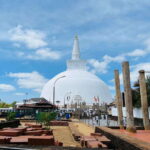
- Stop 3: Ruwanwelisaya
- Stop 4: Abayagiriya Stupa
- Twin Baths, Samadhi Statue, and the Moonstone Details
- Stop 5: Twin Baths (Kuttam Pokuna)
- Stop 6: Samadhi Statue
- Stop 7: Jethawanaramaya
- Stop 8: Moonstone (Sandakada Pahana)
- Jethawanaramaya’s Neighborhood: Guardstones and Elephant Pond
- Stop 9: Rathna Prasadaya & Guardstone (po(h)oy ge and muragala)
- Stop 10: Eth Pokuna (Elephant Pond)
- Thuparama and Isurumuniya: Oldest Stupa and Rock Carvings
- Stop 11: Dagoba of Thuparama
- Stop 12: Isurumuniya Temple
- What to Bring: Socks, Shoes, Water, and Heat
- Who Should Book This Private Anuradhapura Tour
- Should You Book This Private City Day Tour in Anuradhapura?
- FAQ
- How long is the private city tour in Anuradhapura?
- Is hotel pickup included?
- Is this a private tour?
- What does the tour price include?
- What is not included?
- How much is the Old Town entrance fee?
- Do I need to bring anything for the sites?
- Is a mobile ticket provided?
- Is free cancellation available?
- What if the weather is bad?
- Is the tour suitable for most people?
Key things that make this tour work
- Private guide and driver with hotel pickup so you don’t waste time getting oriented
- A tight 4 to 5 hour circuit through the Ancient City highlights
- Navin’s explanations plus plenty of Q&A time keeps the sites understandable
- Short visits with relaxed pacing so you can actually enjoy the day, not just rush through it
- Temple logistics matter since shoes may not be permitted and paving can get hot
- Entrance fee is extra on top of the tour price
Anuradhapura in Half a Day, Private and Thoughtful

If Anuradhapura is on your list, you already know the problem: the ruins are spread out, the history is big, and the best parts are not always obvious from street level. A private day tour fixes that fast. You get a guide who can translate what you’re seeing, plus a driver so you spend your energy on the sights instead of haggling, mapping, and waiting.
This is the kind of tour that works well for both first-timers and repeat visitors. First-timers get the must-see framework. Returners usually appreciate the extra layer: why each place matters, how the Buddhist sacred landscape was shaped, and what to notice while you’re standing there.
Other Anuradhapura tours we've reviewed in Anuradhapura

Price and Logistics: The $30 Tour Plus On-Site Entrance
The headline price is $30 per person, and it covers the experience basics: private transportation, bottled water, and a professional licensed tourist guide. That is a solid deal for a half-day in a spread-out heritage area.
The catch is the admission fee. The Old Town entrance is listed as not included, payable on-site by cash or card, and it’s $30 per person. So budget for about $60 per person total when you add the on-site fee to the tour price.
Also note the format: it’s a private tour for your group only, and you’ll receive a mobile ticket. Hotel pickup is offered, and the tour ends back at the meeting point in Anuradhapura.
How the Route Stays Manageable for 4 to 5 Hours
This tour is designed around short, focused stops. The listed pacing shows about 25 minutes at each major site, and with transfers between them, the full day lands around 4 to 5 hours.
That timing matters. Anuradhapura can overwhelm you if you try to do it all on your own in a single day. Here, you get a structure: see, absorb, ask questions, move on. Many people like that it feels like a guided walk through highlights without turning into a marathon.
The private format also helps. If it’s quiet and cool in the morning, you’ll likely take advantage of that. If it’s hotter later, you’ll still have enough control to slow down and rest when you need to.
Stop 1: Jaya Sri Maha Bodhi in the Mahamewna Gardens
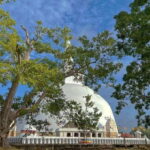
You start at Jaya Sri Maha Bodhi, a sacred fig tree (Ficus religiosa) in the Mahamewna Gardens. This isn’t just a pretty tree stop. It’s a religious anchor point. The listing notes it as the closest authentic living link to Gautama Buddha, which instantly gives the visit weight.
What I like about this stop for your first hour: it sets the tone. Before you see stupas and elaborate stonework, you understand the idea of living continuity—how sacred belief is carried in a living thing, not only through monuments.
Practical tip: treat this as a slow, respectful stop. It’s easy to snap photos quickly, but you’ll get more out of it if you pause and listen to your guide’s framing before you move on.
Lowamahapaya and the Great Stupas: Dutugmunu to Mahasena
Next come three heavyweight sites that let you see how different royal eras shaped Anuradhapura.
Other city tours we've reviewed in Anuradhapura


Stop 2: Brazen Palace (Lowamahapaya)
This is the site of the Lowamahapaya, the location of a nine-story monastic structure built in the 2nd century BC by King Dutugmunu. The listing also notes that it was said to include spaces like a refectory, assembly hall, and chapter house.
Standing here is an imagination exercise. You’re not looking at a complete building anymore, but you are looking at an organized religious setting from long ago. Your guide helps you picture how such structures worked, which makes the ruins feel intentional rather than lost.
Stop 3: Ruwanwelisaya
Then you head to Ruwanwelisaya, a major stupa in the ancient Sinhala capital. It was built by King Dutugamunu and completed by his younger brother, Ki… (the name appears truncated in the details, but the point is clear: it was a dynastic project).
Why this stop is a good use of time: it shows you the stupa tradition as a living part of the city’s religious identity. Even if you’re not a Buddhism specialist, the scale and symbolism read clearly once someone puts it into context.
Stop 4: Abayagiriya Stupa
Finally in this cluster: Abayagiriya Stupa. At 122 metres (400 ft), it’s described as having been the world’s tallest stupa when built, and the third tallest structure in the world at the time. It was built by King Mahasena.
This is your “scale shock” moment. It’s hard to grasp height from the ground, so I’d focus on what you can verify visually: the monument’s presence, the way the ruins signal ambition, and the fact that this wasn’t a small local project.
Twin Baths, Samadhi Statue, and the Moonstone Details
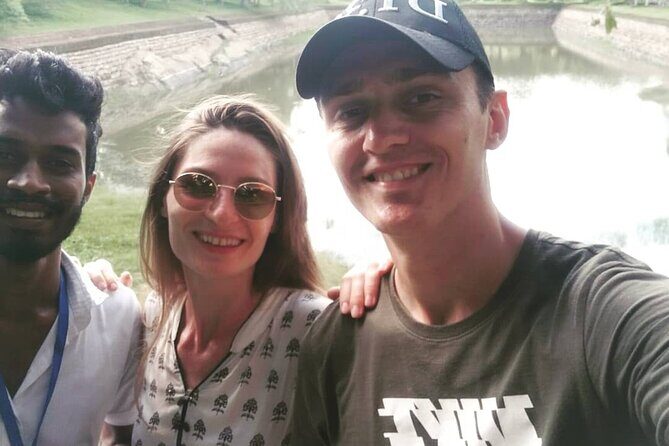
This part of the tour shifts from big stupa drama to smaller, tactile details that most people miss when they rush.
Stop 5: Twin Baths (Kuttam Pokuna)
At Kuttam Pokuna (the Twin Baths), you’ll see well-preserved ancient bathing tanks or ponds. The listing explains they were built by the Sinhalese in the ancient Anuradhapura Kingdom and are part of the broader bathing-water heritage of the city.
I like this stop because it broadens your view. Anuradhapura isn’t only about sacred monuments. It also reflects daily life and practical needs—water, cleanliness, and designed spaces tied to religious life.
Stop 6: Samadhi Statue
Next is the Samadhi Buddha statue in Mahamevnāwa Park. The Buddha is depicted in Dhyana Mudra, the meditation posture associated with Buddha’s earliest teachings.
This is a calm contrast to the towering stupas. If you’ve been walking and staring at stone monuments, this stop gives your brain a different kind of focus: gesture, posture, and the idea of meditation as a centerpiece of practice.
Stop 7: Jethawanaramaya
Now you’re back to monumental scale at Jethawanaramaya Stupa, described as one of the most iconic and sacred Buddhist monuments in Anuradhapura. It was built during the reign of King Mahasena and once rose over 120 metres. The listing notes it was among the tallest brick stupas.
This stop is great when you’re ready to compare. After Abayagiriya, you can look at how different stupas communicate power in different ways. Your guide can connect the dots between the eras and the building ambitions.
Stop 8: Moonstone (Sandakada Pahana)
Then you shift into detail work: Sandakada Pahana, also called a Moonstone. The listing describes it as an elaborately carved semi-circular stone slab placed at the bottom of staircases and entrances.
This is one of those stops where your camera gets used differently. Instead of photographing a whole monument, you’ll want close-up angles. The carvings are the point, and they reward patience.
Jethawanaramaya’s Neighborhood: Guardstones and Elephant Pond
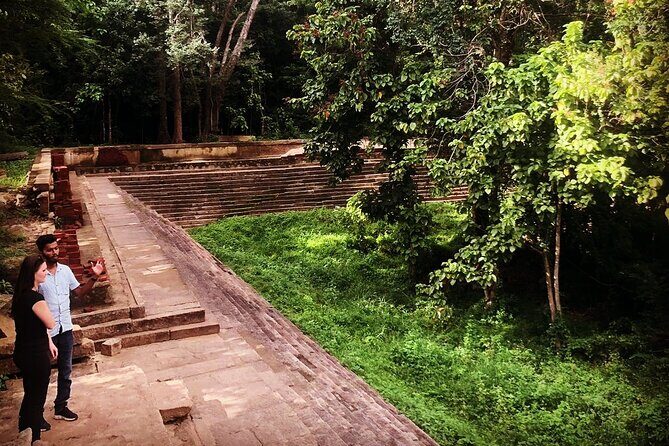
Two more stops bring you back to the “how it functioned” side of ancient Anuradhapura.
Stop 9: Rathna Prasadaya & Guardstone (po(h)oy ge and muragala)
At Rathna Prasadaya & Guardstone, you’re looking at stone architectural elements used across time. The listing explains that Anuradhapura architects used stone instead of wood for guard stones, moonstones, and balustrades because stone lasted longer.
Why it matters: it’s a reminder that what survives is not only religion. It’s also engineering choices. Your guide can help you notice the logic in the stonework rather than treating it as decorative only.
Stop 10: Eth Pokuna (Elephant Pond)
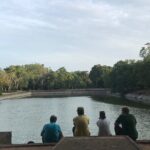
Next comes Eth Pokuna, the Elephant Pond, described as a massive ancient reservoir built during the kings of the Anuradhapura Kingdom. It’s listed as about 159 metres long.
This is a good mid-to-late tour stop. Water areas can feel cooler, and reservoirs add a practical layer to the sacred city. When you see a pond like this in the context of the monuments, Anuradhapura stops being only a temple complex and becomes a planned world.
Thuparama and Isurumuniya: Oldest Stupa and Rock Carvings
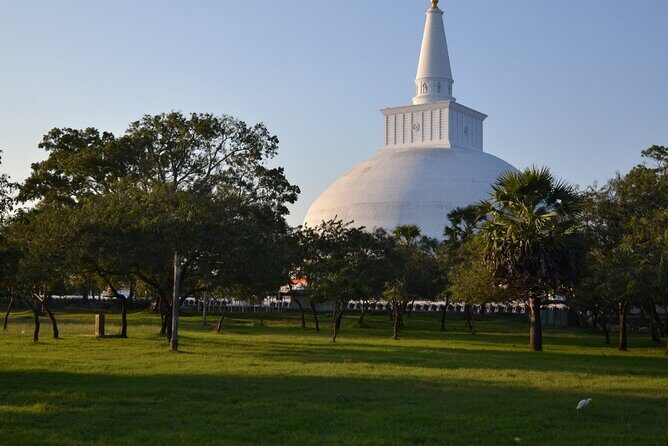
You wrap with two sites that feel ancient in different ways.
Stop 11: Dagoba of Thuparama
The Thuparamaya Stupa is described as the oldest stupa in Sri Lanka, dating back to the 3rd century BC, built by King Devanampiya Tissa. It enshrines the sacred collarbone relic, according to the listing.
This is the stop that gives you a clear timeline anchor. You’re seeing a monument tied to one of the earliest layers of Buddhist history in the region, so it helps you understand why Anuradhapura is so important beyond just being old.
Stop 12: Isurumuniya Temple
The final stop is Isurumuniya Temple, a rock temple with intricate stone carvings. The listing says it was built in the 3rd century BC and was originally a sanctuary for Buddhist monks.
This is a fitting finish because rock temples and carvings show craftsmanship up close. After seeing stupas and structural architecture, you get the human touch: carved details that likely demanded skill, time, and devotion.
What to Bring: Socks, Shoes, Water, and Heat
The tour includes bottled water, which is a real help in the Ancient City area. Beyond that, plan like you’re visiting working religious sites.
A key tip from real-world experience here: bring thick socks or two pairs. Some temple areas can involve hot paving and shoes may not be permitted, so your comfort plan matters. If you go in with thin socks and slick footwear, you’ll feel it fast.
Also bring:
- A light layer for shade and comfort
- Sunscreen and a hat, since you will be outside between stops
- A small day bag for water and essentials
Even though the tour is private and paced, your feet will still do the work. Smart clothing keeps the experience enjoyable.
Who Should Book This Private Anuradhapura Tour
This is a strong pick if you want structure and meaning in a short amount of time. It fits well if:
- You’re seeing Anuradhapura for the first time and want the main sites in a sensible order
- You like asking questions as you go, because your guide can explain religion, culture, and what to notice
- You’re traveling with family. The guide experience is set up for people of different ages, and the pacing is built for manageable attention spans
It might be less ideal if you already have deep interest and you prefer wandering slowly without a set route. But even then, having a guide for the sacred context often makes independent exploring easier later.
Should You Book This Private City Day Tour in Anuradhapura?
If you want the highlights without the logistics headache, I’d book it. The value is strongest when you count what you’re buying: not just transport, but a guided, organized way to understand major Buddhist monuments, carved details, and ancient water engineering in one half-day.
Be realistic about the total cost. The $30 tour fee plus the $30 Old Town entrance means you’re paying extra on-site. Still, for a private, guided circuit with hotel pickup, bottled water, and a licensed guide, it stays good value.
My decision rule:
- Book if you want a guided route that teaches you what you’re seeing and keeps the pace easy.
- Skip or reconsider if you truly don’t want to pay on-site entry fees or you’d rather design your own route.
FAQ
How long is the private city tour in Anuradhapura?
The tour runs about 4 to 5 hours.
Is hotel pickup included?
Yes. Hotel pickup is offered for ease.
Is this a private tour?
Yes. It’s private, and only your group will participate.
What does the tour price include?
Included items are private transportation, bottled water, and a professional licensed tourist guide.
What is not included?
Admission fees are not included. The Old Town entrance fee is payable on-site by cash or card.
How much is the Old Town entrance fee?
It is listed as $30.00 per person and is paid on-site.
Do I need to bring anything for the sites?
You’ll want to be prepared for temple visiting conditions. The tour provides bottled water, but it is smart to have comfortable socks since shoe rules can apply in some places.
Is a mobile ticket provided?
Yes, the tour includes a mobile ticket.
Is free cancellation available?
Yes. You can cancel for a full refund up to 24 hours in advance.
What if the weather is bad?
If it’s canceled due to poor weather, you’ll be offered a different date or a full refund.
Is the tour suitable for most people?
Most people can participate, and service animals are allowed.