REVIEW · ANURADHAPURA
Anuradhapura Heritage Mountain bike / bicycle Tour
Book on Viator →Operated by Rides Hub · Bookable on Viator
Two wheels through sacred ruins. Saranga leads a 10 km loop that strings together Anuradhapura’s key heritage moments with quieter back-lane riding at a relaxed, steady pace. I love the English-speaking guide who turns Buddhism and temple architecture into clear, human stories, and I love that you’re on a proper mountain cycle from brands like Giant, Trek, and Louis Garneau. One thing to plan for: the UNESCO ticket isn’t included, so you’ll want to budget for that before your ride turns into a ticket scavenger hunt.
This tour feels built for balance. You get a guided circuit that keeps you moving, yet still leaves time at each stop to look closely, ask questions, and cool down with breaks that aren’t rushed. I also like that the basics are handled: bottled water, parking fees, and a local vegetarian meal at Hela Bojun are included, so you’re not draining your day chasing logistics.
It’s a private tour for your group, which usually means fewer pauses for confusion and more time for conversation with Saranga. Just remember the physical side: it’s designed for moderate fitness, and since you’ll visit temples, bring a wraparound cloth if your knees aren’t covered.
In This Review
- What Makes This Anuradhapura Bike Tour Worth Your Time
- Starting in Anuradhapura: Where to Meet and How the Ride Gets Going
- Price and Tickets: What You Pay, What You Don’t, and How to Budget Smart
- Your 10 km Loop: How the Pace Works for First-Timers
- Stop-by-Stop: From Jetavanaramaya to the Sacred Fig Tree
- Stop 1: Jetavanaramaya Stupa, the towering giant of its time
- Stop 2: Samadhi Statue at Mahamevnāwa Park
- Stop 3: Abayagiriya Stupa and the vast monastery ruins
- Stop 4: Twin Baths (Kuttam Pokuna)
- Stop 5: Eth Pokuna (Elephant Pond) and the scale of ancient reservoirs
- Stop 6: Moonstone (Sandakada Pahana) details at stair entrances
- Stop 7: Basawkkulama Tank and the logic of irrigation
- Stop 8: Abayagiriya’s Main Refectory, where monastic meals scaled up
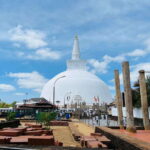
- Stop 9: Ruwanweli Maha Seya, the major stupa of Dutugamunu’s era
- Stop 10: Sri Maha Boodhi Temple, the living link to Buddha
- Food and Breaks: The Included Vegetarian Meal at Hela Bojun
- Bikes, Comfort, and Temple Etiquette (The Stuff That Actually Affects Your Day)
- Who Should Book This Tour (and Who Might Prefer Something Else)
- Should You Book Anuradhapura’s Heritage Mountain Bike Tour?
- FAQ
- How long is the Anuradhapura heritage mountain bike tour?
- How far do you ride?
- What is the price per person?
- Is the tour a private experience?
- What does the tour include?
- What is not included in the price?
- Do I need to cover my knees for temples?
- What fitness level do I need?
- Where do I meet the guide?
- What happens if weather is bad?
What Makes This Anuradhapura Bike Tour Worth Your Time
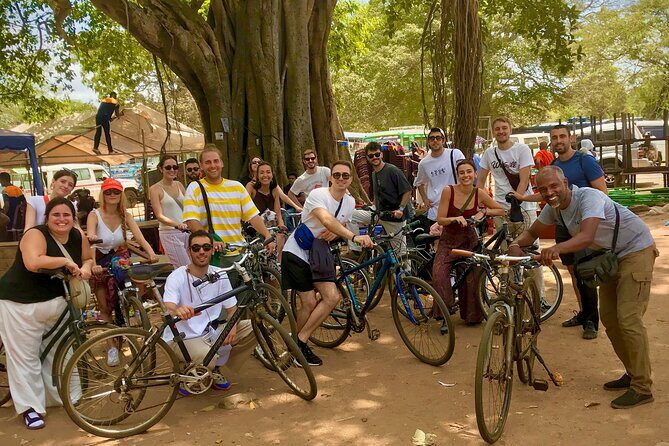
- Hidden-route riding: you’re not just rolling between monuments; you’re also moving through calmer stretches that help the city feel lived-in.
- A guide who explains what you’re seeing: Saranga’s Buddhism-focused perspective makes the stupa and statue details easier to grasp.
- Proper mountain bikes: you’ll be on quality bikes from trusted brands, not a tired rental that fights you on uneven paths.
- A stop-by-stop pace: each heritage site gets a realistic time window, so you’re not forced into the quick-photo rhythm.
- Included fuel: bottled water and a local vegetarian meal at Hela Bojun keep the ride comfortable and steady.
Starting in Anuradhapura: Where to Meet and How the Ride Gets Going
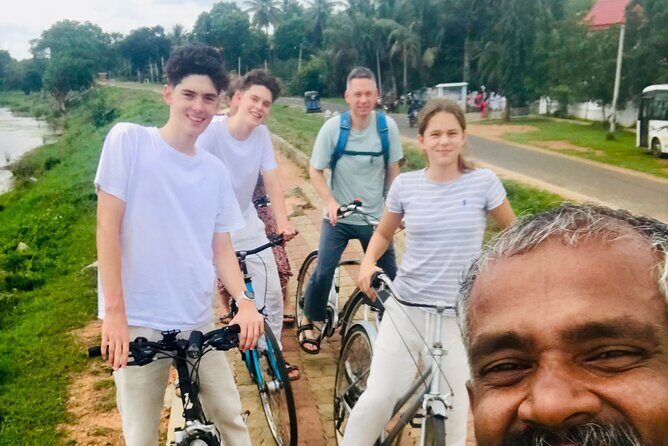
The meeting point is at Rides Hubwela mada gedara, Garage waththa near the old car park (No:116/1 Watawandana Rd). The tour ends back at the same place, so you don’t have to worry about getting yourself across town afterward.
This matters more than it sounds. A heritage bike ride lives or dies by timing, and starting and ending at one point usually means the day runs smoother. It also helps you manage your energy: you’re not saving strength for a final stretch that nobody planned.
You’ll receive a mobile ticket, and the tour is near public transportation. That’s handy if you’re mixing this with other things in Anuradhapura. And because it’s a private tour/activity, your group rides together rather than being blended into a larger crowd with different speeds.
Other Anuradhapura tours we've reviewed in Anuradhapura

Price and Tickets: What You Pay, What You Don’t, and How to Budget Smart
The price is $25.00 per person for about 4 hours 30 minutes (approx.) and a 10 km loop. For that, you get the guide, mountain bike use, parking fees, bottled water, and a local vegetarian meal at Hela Bojun.
That’s the real value story: you’re paying for a guided ride plus transportation on a real mountain bike plus food. For many city tours, the guide is the main draw, but you’d still have to work out bike logistics yourself. Here, you’re not doing that math.
The catch is the UNESCO ticket. Entrance fee is listed separately as 30 USD per person (and 15 USD for children under 13). The tour includes admission for some specific stops, and a couple are marked free, but the UNESCO ticket line item is still something you should expect to cover as part of your overall day planning.
Practical tip: when you budget for the day, treat the UNESCO ticket as the variable and the $25 as the ride package.
Your 10 km Loop: How the Pace Works for First-Timers
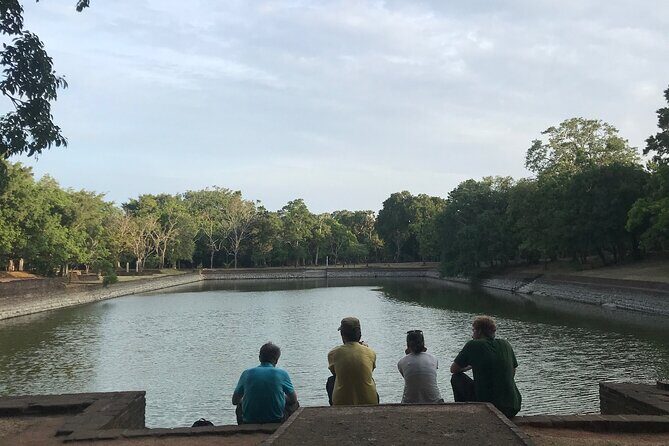
This tour is designed around an easy-going rhythm. You’ll cover enough distance to feel like you’re biking through the city, yet each heritage stop gets time for proper looking and short explanations.
I like that the tour doesn’t treat speed as the goal. In Anuradhapura, many of the most interesting details are visual and architectural. Slow enough gives you the chance to notice things like carvings, placement of stones, and the way monasteries and stupas sit within the landscape.
If you have moderate fitness, you’ll be in the right zone. Still, mountain bikes can feel different from flat-road bicycles, especially when paths aren’t uniform. If your legs tire quickly, plan to take it easy at the start. Once you settle into the cadence, the day becomes more enjoyable.
Stop-by-Stop: From Jetavanaramaya to the Sacred Fig Tree
This is where the tour earns its keep. Instead of skipping around randomly, you hit the major heritage anchors in a logic that keeps your attention pointed in the right direction.
Stop 1: Jetavanaramaya Stupa, the towering giant of its time
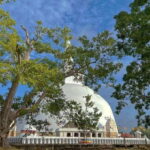
Jetavanaramaya comes first, and it makes a statement. It was built by King Mahasena of Anuradhapura (273–301) and is listed at 122 metres (400 ft). At the time it was built, it was the world’s tallest stupa and also the third tallest structure in the world.
What I’d look for here is scale. A place this tall changes how you interpret everything around it. Even if you’re not a history person, the sheer size helps you understand why Anuradhapura became such a major Buddhist center.
A small consideration: this is the kind of stop that rewards standing back for a moment. If you rush in with a camera only, you’ll miss the full impact.

Stop 2: Samadhi Statue at Mahamevnāwa Park
Next up is the Samadhi Buddha statue at Mahamevnāwa Park. The key detail is the posture: it shows the Dhyana Mudra, the meditation hand position associated with Buddha’s meditative state.
This stop is good because it shifts the day from monuments-as-objects to Buddhism-as-practice. You’re seeing how religious meaning gets expressed through body language.
Give yourself the full time here. If you’re like me, you’ll notice how the statue invites quiet stillness compared to the bigger, more imposing structures.
Stop 3: Abayagiriya Stupa and the vast monastery ruins
Abayagiriya Stupa ties the day to monastic life. Abhayagiri Vihāra was a major monastery site connected with Mahayana, Theravada, and Vajrayana Buddhism. It’s also described as one of the most extensive ruins in the world.
This is a stop where ruins can either feel overwhelming or enlightening. The difference is whether you have someone to translate what you’re looking at. With Saranga, you’re not just walking around stones—you’re learning how a major monastery worked, who it served, and why the site mattered.
Possible drawback: ruins take patience. If you’re short on attention span, focus on a few features rather than trying to process every wall and foundation at once.
Stop 4: Twin Baths (Kuttam Pokuna)
Kuttam Pokuna, the twin ponds or bathing tanks, are surprisingly moving once you stop seeing them as just a sightseeing object. They’re described as well-preserved ancient bathing tanks built by the Sinhalese in the Anuradhapura Kingdom.
The reason this works on a bike tour is simple: it breaks the stupa pattern. You shift from worship structures to daily ritual life—how people washed, gathered, and maintained spiritual and physical cleanliness.
If you’re taking photos, remember that details matter here. The “twin” part is easy to miss if you rush through.
Stop 5: Eth Pokuna (Elephant Pond) and the scale of ancient reservoirs
Eth Pokuna, the Elephant Pond, is an ancient reservoir described at approximately 159 metres in length. It’s part of the irrigation story of the Anuradhapura Kingdom.
This stop helps you understand that ancient Sri Lanka wasn’t only about temples. It was also about managing water at a serious level—because water management makes cities possible.
A consideration: if you’re expecting another religious building, you might feel a slight change in vibe. That’s normal. Treat it like a chance to widen your view of what heritage means.
Stop 6: Moonstone (Sandakada Pahana) details at stair entrances
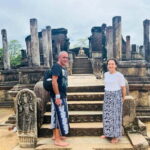
Sandakada Pahana, also known as Moonstone, is a signature element of ancient Sri Lankan architecture: an elaborately carved semi-circular stone slab placed at the bottom of staircases and entrances.
This is a “slow your eyes down” stop. The carving style and placement are part of how the space is meant to be approached. On a bike tour, it’s the perfect moment to slow down and really look.
Bring your phone camera stance, but don’t stay in rush mode. A good moonstone shot includes context, not just the carving.
Stop 7: Basawkkulama Tank and the logic of irrigation
Basawkkulama Tank is connected to some of the most complex irrigation systems of the ancient world. The description points to earliest examples of irrigation works in Sri Lanka around 430 BCE, during the reign of King Pandukabhaya.
This stop is useful because it reframes Anuradhapura as a living system. Water engineering is hard to “see” unless you understand what you’re looking at. With a guide, you get the meaning behind the stones.
A small practical note: since this is part of the irrigation story, it’s helpful to keep an open mind. You’re learning infrastructure, not only sacred architecture.
Stop 8: Abayagiriya’s Main Refectory, where monastic meals scaled up
The main refectory of the Abayagiri monastery is tied to a famous visitor: the Chinese monk Fa-Hien, who visited in the 5th century. He stated that the monastery housed up to 5,000 monks at that time.
That number changes how you think about the space. A refectory for thousands of monks implies supply chains, routines, and an organized religious community—more than a quiet temple corner.
Time here is brief, so if you have questions, ask early. It’s the type of stop where one good answer can turn confusion into clarity.
Stop 9: Ruwanweli Maha Seya, the major stupa of Dutugamunu’s era
Ruwanweli Maha Seya is another essential stupa landmark. It was built by King Dutugamunu (137 BC–119 BC) and completed by his younger brother, Ki… (the record provided cuts off the name, but the point stands: the building is tied to royal leadership).
This stop has “anchor” energy. After going through statues, ponds, and irrigation references, Ruwanweli brings you back to the center of Buddhist monument-making.
I’d use this time to stand back for a second. With big stupas, the best impression comes from your body noticing the scale before your mind tries to categorize it.
Stop 10: Sri Maha Boodhi Temple, the living link to Buddha
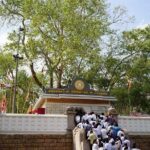
The finale is Sri Maha Boodhi Temple with the Jaya Sri Maha Bodhi sacred fig tree (Ficus religiosa). It’s described as the closest authentic living link to Gautama Buddha and stands in the Mahamewna Gardens.
You’ll feel the difference immediately. Trees like this aren’t just historic objects; they’re active spiritual sites. This stop is a strong finish because it connects the architectural day to living tradition.
Practical tip: if you arrive with a knee-covering cloth, you’ll keep the temple flow smooth. You don’t want last-minute shopping or awkward scarf-tugging in the middle of a sacred space.
Food and Breaks: The Included Vegetarian Meal at Hela Bojun
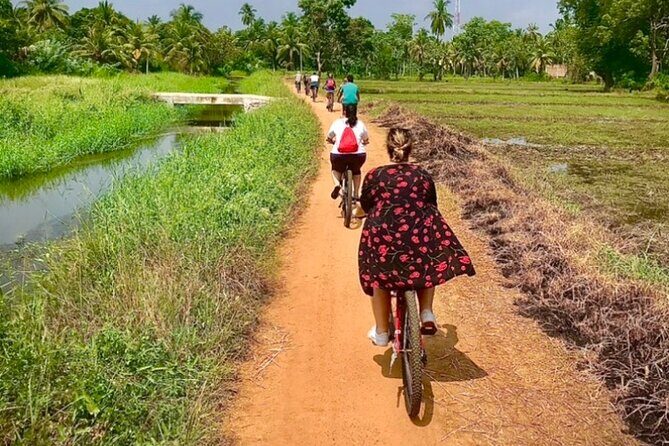
You don’t just get water. You get a local vegetarian meal prepared at Hela Bojun. That’s a smart inclusion for a bike tour in a hot climate, because it keeps energy steady for the final part of the loop.
This meal also fits the tour’s theme: you’re moving through local life, not only monuments. Eating what people around the site eat makes the day feel more real, even if you’re not staying in a village.
If you’re picky about vegetarian food, you’ll still probably be fine. The tour is designed around this meal being part of the rhythm, not a “you figure it out later” add-on.
Bikes, Comfort, and Temple Etiquette (The Stuff That Actually Affects Your Day)
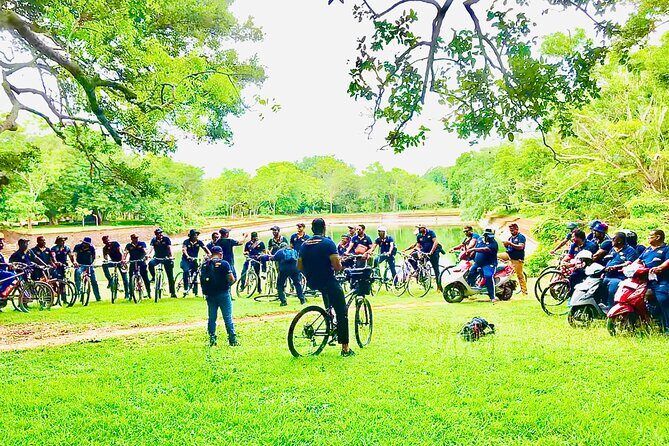
You’ll ride a mountain cycle with included use, and the tour highlights trusted brands such as Giant, Trek, and Louis Garneau. That matters because good gearing and stable handling make a heritage loop far less tiring.
Temple etiquette is explicitly part of the plan. Since you’ll visit temples, bring a wraparound cloth if your knees aren’t covered. If you forget, you’ll waste time solving it on the spot, and you’ll also feel rushed during the most meaningful moments.
Other comfort points are more general, but they follow from the tour format: it’s a half-day bike ride with multiple stops. So wear comfortable footwear for short walks and bring a layer for shade or breeze if the day cools down.
Who Should Book This Tour (and Who Might Prefer Something Else)
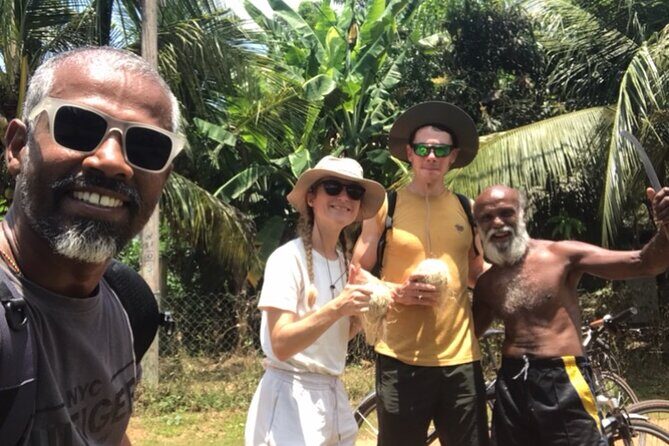
This is a great fit if you want:
- a guided way to see Anuradhapura without getting lost in meaning,
- a bike-based way to move between sites while still having time to look,
- Buddhist and heritage explanations that stay practical and understandable.
It also suits couples and small groups because it’s private. If you like your tours active but not exhausting, the 10 km loop with a 4.5-hour schedule is a sweet spot.
You might skip it if you want a car-based tour with minimal physical effort. Also, if you only care about a single type of monument—say only stupas—you might find the ponds, irrigation tanks, and moonstone details a change of pace.
Should You Book Anuradhapura’s Heritage Mountain Bike Tour?
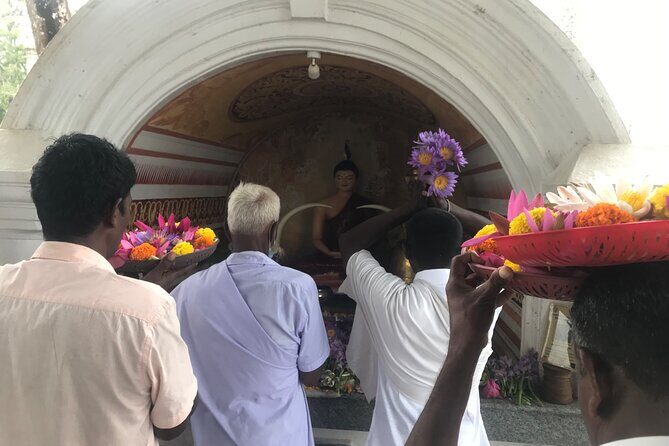
I’d book this if you’re the kind of traveler who enjoys connecting places to ideas. The tour doesn’t just move you past Anuradhapura’s famous structures. It helps you understand what they were for—stupa scale, meditation symbolism, monastic organization, water systems, and the sacred living tree that anchors the day.
The value is strong at $25 because it includes the bike, guide, water, parking fees, and a vegetarian meal. Just budget for the UNESCO ticket, bring the wraparound cloth for temple stops, and treat the pace as part of the experience rather than a constraint.
If you want a heritage day that feels like you’re traveling with a local friend—on wheels—this is one of the better ways to do it.
FAQ
How long is the Anuradhapura heritage mountain bike tour?
It runs for about 4 hours 30 minutes (approx.).
How far do you ride?
The tour is a 10 km loop.
What is the price per person?
The price is $25.00 per person.
Is the tour a private experience?
Yes. It’s a private tour/activity, so only your group participates.
What does the tour include?
It includes bottled water, parking fees, use of a mountain bicycle, a guide tour, and a local vegetarian meal at Hela Bojun.
What is not included in the price?
Entrance fee for the UNESCO ticket is not included (30 USD per person, and 15 USD for children under 13).
Do I need to cover my knees for temples?
Yes. The tour visits temples, so bring a wraparound cloth if your knees are not covered.
What fitness level do I need?
The tour is for travelers with a moderate physical fitness level.
Where do I meet the guide?
Meet at Rides Hubwela mada gedara, Garage waththa near old car park, No:116/1 Watawandana Rd, Anuradhapura, Sri Lanka.
What happens if weather is bad?
This experience requires good weather. If it’s canceled due to poor weather, you’ll be offered a different date or a full refund. Free cancellation is available up to 24 hours in advance for a full refund.