REVIEW · ANURADHAPURA
Explore & Ride the history of anuradhapura with Vogel Tours
Book on Viator →Operated by Vogel Tours Srilanka · Bookable on Viator
Anuradhapura can feel like a maze. This private outing is built for people who want to see the big Buddhist highlights in a few hours, without getting lost in the weeds of history and directions.
I especially like the way the stops are chosen for meaning, not just photos: the sacred Jaya Sri Maha Bodhi bo tree and the Ruwanweli Maha Seya are the kind of anchors that make the whole ancient city click. I also like the simple comfort touches—snacks plus coffee or tea—because temple days are long days.
The one thing to plan around is cost creep: the tour price is low, but there’s a separate $30 per person UNESCO entrance ticket for the protected area. Budget for that upfront, and you’ll feel in control.
In This Review
- Key points that make this tour worth your time
- Why a private overview of Anuradhapura saves you hours
- Vogel Tours and the guide vibe: friendly facts, not lectures
- Price and logistics: $40 per group plus the $30 UNESCO ticket
- Pickup, mobile tickets, and getting around without stress
- The route: what you’ll see and why it matters at each stop
- Stop 1: Jaya Sri Maha Bodhi in Mahamewuna Garden
- Stop 2: Lovamahapaya (Brazen Palace / Lohaprasadaya)
- Stop 3: Ruwanwelisaya (The Great Stupa)
- Stop 4: Twin Baths (Kuttam Pokuna)
- Stop 5: Samadhi Statue at Mahamevnāwa Park
- Stop 6: Abhayagiri Dagaba (Abhayagiri Vihāra)
- Stop 7: Main Refectory of Abayagiri Monastery
- Stop 8: Moonstone (Sandakada Pahana)
- Stop 9: Eth Pokuna (Elephant Pond)
- Stop 10: Rathna Prasadaya & Guardstone
- Stop 11: Jethawanaramaya
- Stop 12: Jethawanaramaya Museum
- Snacks, pacing, and what to do if the day feels too fast
- Who this Vogel Tours Anuradhapura ride is best for
- Should you book Vogel Tours in Anuradhapura?
- FAQ
- What is the duration of the Vogel Tours Anuradhapura experience?
- How much does it cost?
- Does the tour include snacks and drinks?
- Is pickup included?
- Do I need to pay admission fees for all sites?
- What is the cancellation policy?
Key points that make this tour worth your time
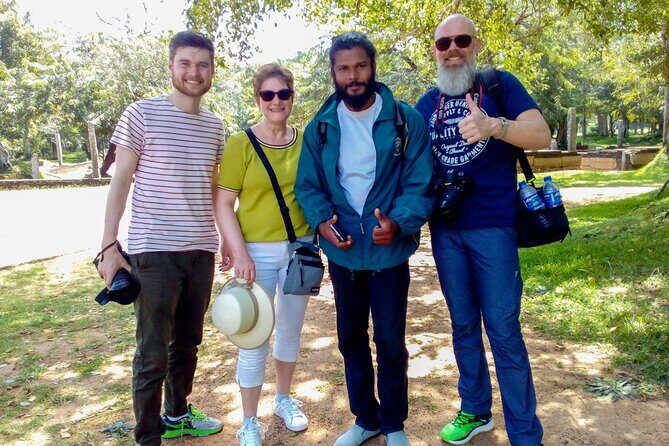
- Ajee Vogel’s guiding style: friendly, strong English, and lots of clear explanations about Buddhism and Sri Lankan culture
- Fast, focused route: you hit the famous stupas, monastery sites, ponds, and carved stone features
- Snacks + coffee/tea so you don’t burn out halfway through the day
- Shoe rules and sacred-site etiquette: you’ll need to remove shoes at certain secret places
- Free admissions at some key stops (like Jaya Sri Maha Bodhi and the Jethawanaramaya Museum), which helps your total cost
- Private transportation available for up to 3 if you request it
Why a private overview of Anuradhapura saves you hours
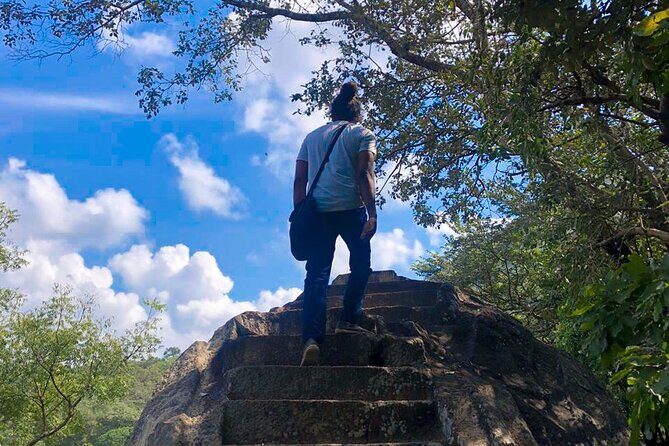
Anuradhapura is old in a way that’s hard to “feel” on a map. You can drive between sites, sure—but the real experience comes when you understand what each place is, how it fits into Buddhist practice, and why it was built where it was.
This tour is designed as a practical answer to that problem. It’s a private guided route through major points of interest, paced so you get time to look and ask questions. The result is that your visit stops feeling like a checklist and starts feeling like a story.
Even with a short time window (the tour runs about 1 to 5 hours), you still get a real sense of the ancient city layout: sacred groves, major stupas, monastic zones, and signature stone architecture. That’s the big value here—context that turns ruins into something you can understand quickly.
Other Anuradhapura tours we've reviewed in Anuradhapura

Vogel Tours and the guide vibe: friendly facts, not lectures
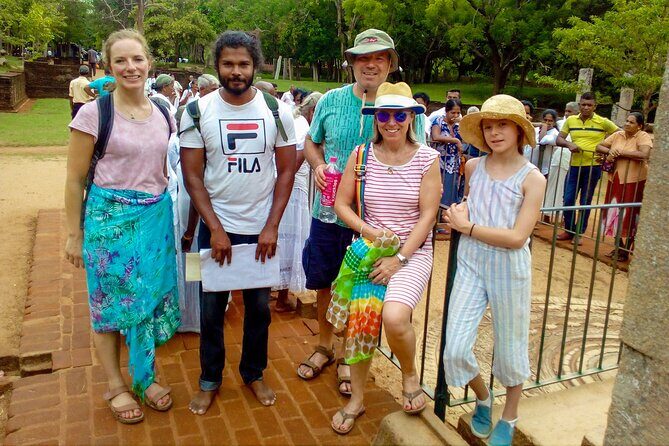
One standout from past guests is the guidance style. Ajee Vogel is singled out for being very good at explaining Buddhism and Sri Lanka’s culture in a way that’s easy to follow. If you like asking questions—about symbolism, architecture, or what different parts of the complex were used for—this format is built for that.
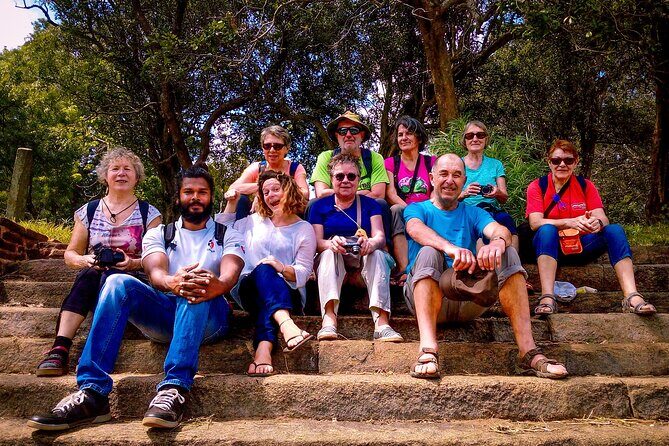
It’s also truly private: only your group participates. That matters in places like Anuradhapura where crowd energy can be a distraction. You can move at a human pace, pause when something catches your eye, and skip the frantic feeling of trying to “keep up.”
The tour can accommodate up to 10 people with the guide, but the pricing is set per group (up to 3). So if you’re traveling as a small pair or trio, it’s a straightforward fit. If you’re a larger group, it may still work, but you’ll want to confirm how they’ll handle the group size and vehicle setup.
Price and logistics: $40 per group plus the $30 UNESCO ticket
Let’s talk money plainly.
- Tour price: $40.00 per group (up to 3 people)
- UNESCO entrance ticket: $30.00 per person (required for the UNESCO area)
So for a group of 2, your total baseline cost is usually:
- $40 tour + ($30 × 2) UNESCO = $100 total for the pair
For a group of 3:
- $40 tour + ($30 × 3) UNESCO = $130 total for the trio
That makes the tour price itself a bargain, but the UNESCO ticket is the real variable. The good news is that some stops have free admissions, which helps your total time-and-money balance.
Also, the tour includes snacks and coffee or tea, so you’re not forced into overpriced convenience stops to keep going. That’s a small thing that adds up when your day is temples plus walking plus heat.
Pickup, mobile tickets, and getting around without stress
You can expect pickup offered, and the tour uses a mobile ticket. It’s also noted as being near public transportation, which gives you a backup plan if needed.
There’s an option for private transportation as well—up to 3 persons if you request it. In ancient-city sites, this can be helpful, because you’ll want to spend your energy on the sites themselves, not on figuring out the best hops between them.
One small but important etiquette note: you’ll need to remove your shoes when you enter certain sacred or secret places. If you bring easy-to-take-off footwear (or plan for it), the day stays smooth.
The route: what you’ll see and why it matters at each stop
This is the heart of the experience. The tour is built as a sequence of major religious and architectural points—mixing famous monuments with the smaller details (like ponds and carved stone features) that make Anuradhapura feel specific.
Other historical tours in Anuradhapura
Stop 1: Jaya Sri Maha Bodhi in Mahamewuna Garden
You start at the Jaya Sri Maha Bodhi, a historical sacred bo tree (Ficus religiosa) in the Mahamewuna Garden. Even if you’ve seen plenty of temples before, this one lands differently because it’s living, spiritual, and tied to history.
You get about 30 minutes, and since admission is listed as free, it’s also one of the lower-friction stops financially. The value here is time: you don’t just pass by. You look long enough to understand why people treat this tree as more than scenery.
Practical tip: go in with a quiet curiosity. A guide can explain how a sacred tree fits into Buddhist devotion, and that makes your minutes here feel focused instead of vague.
Stop 2: Lovamahapaya (Brazen Palace / Lohaprasadaya)
Next is Lovamahapaya, known as the Brazen Palace or Lohaprasadaya. It’s positioned between Ruwanweliseya and Sri Mahabodiya, and it’s a building site that helps you picture the scale of the ancient city.
You’ll spend about 15 minutes here, with admission not included. This stop is a good “architecture checkpoint”: it gives you a sense that this wasn’t just a collection of stupas—it was also complex built space.
If you’re the type who likes understanding how buildings worked (not just what they look like), ask your guide about roof and structure references—this place is often explained through its distinctive historical features.
Stop 3: Ruwanwelisaya (The Great Stupa)
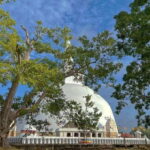
Then comes the Ruwanweli Maha Seya (also called the Swarnamali Maha Seya). It’s a major stupa in Anuradhapura, described as a hemispherical structure containing relics. You’ll get around 30 minutes, and admission here is listed as free.
This is where the tour really earns its “guided” label. A stupa isn’t random. Your guide can connect what you’re seeing to how Buddhists interpret sacred spaces—why pilgrims move around monuments, why relics matter, and how design connects to belief.
Practical note: stupa sites often have a lot of visual detail. Give yourself the time here, even if you think you’ve “seen stupas before.” The explanation is what changes the experience.
Stop 4: Twin Baths (Kuttam Pokuna)
After the big monument, you slow down with a different kind of ancient structure: Kuttam Pokuna, the Twin Baths. These are well preserved old bathing tanks or ponds.
You’ll have about 15 minutes. Admission isn’t included. This stop can be easy to underestimate if you only care about the biggest temples. But it’s a great reminder that ancient monastic life involved daily routines—cleanliness, water management, and practical design.
This is also a nice contrast after the stupa: your brain shifts from symbolism to function, which keeps the tour from blending into one long blur of stone.
Stop 5: Samadhi Statue at Mahamevnāwa Park
Next is the Samadhi Buddha statue in Mahamevnāwa Park. It’s a famous meditation posture associated with the Buddha’s first enlightenment, and the statue is listed as 7 feet 3 inches tall.
You’ll spend about 15 minutes here. Admission isn’t included. The reason this stop works on a guided tour is simple: you’re not just looking at posture. You can connect it to the idea of meditation as a lived practice, not just a concept.
If you’re interested in Buddhism beyond the sightseeing layer, this is a good pause point.
Stop 6: Abhayagiri Dagaba (Abhayagiri Vihāra)
Then you reach Abhayagiri Dagaba, a major monastery site. It’s described as a site for Theravada, Mahayana, and Vajrayana Buddhism. That’s a big deal because it points to how Anuradhapura wasn’t one “single tradition bubble.”
You’ll have about 15 minutes. Admission isn’t included. This stop is especially useful if you want to understand why Anuradhapura is often treated as a key node in Buddhist history: it wasn’t static, and religious practice evolved over time.
Ask your guide how the different traditions are connected to the site. Even a short explanation can make the ruins feel less confusing.
Stop 7: Main Refectory of Abayagiri Monastery
Right after, you’ll see the main refectory (alms giving place) near Uttara Mula. It’s described as a square building, with a side length listed as 42.7 meters, and it notes multiple stages of construction.
You’ll spend about 10 minutes here. Admission isn’t included.
This is one of the more “human activity” stops on the route. Food distribution, alms practices, and daily monastic routines are hard to picture from a distance—your guide can help you connect what you see to how people actually lived.
If you like concrete explanations, this stop tends to land well.
Stop 8: Moonstone (Sandakada Pahana)
Then you get to one of the signature carvings: Sandakada Pahana, also called the Moonstone. It’s a carved semi-circular stone slab, often placed at the bottom of staircases.
About 15 minutes, admission not included.
This is one of those details that can look decorative until someone explains why it’s there. A guide can connect the design to the overall stairway experience and the symbolism often found in stone motifs.
If you enjoy architecture, slow down here. This is a “look closely” stop.
Stop 9: Eth Pokuna (Elephant Pond)
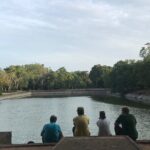
Next is Eth Pokuna, also known as the Elephant Pond. It’s described as a gigantic man-made pond, rectangular in shape, with listed dimensions of 159 meters long and 52.7 meters across.
You’ll get about 10 minutes. Admission isn’t included.
This one is worth it because it reminds you that ancient cities were also water engineering projects. A pond like this is functional and impressive at the same time, and it’s a good stop for photos that don’t just look like more stupa angles.
If the heat is heavy, this pause can feel like a reset.
Stop 10: Rathna Prasadaya & Guardstone
You’ll see Rathna Prasadaya & Guardstone (پوහොය ගෙය සහ මුරගල). It’s noted as one of the finest ancient guard stones of Sri Lanka.
About 10 minutes, admission not included.
Guard stones can be overlooked, because they’re smaller than stupas. But they’re part of the visual language of the site—your guide can point out what makes it notable.
This is another “detail reward” stop.
Stop 11: Jethawanaramaya
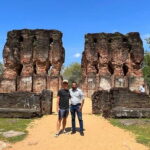
Now comes another monastery complex: Jethawanaramaya, built by King Mahasena. You’ll spend about 30 minutes.
Admission isn’t included. This is one of the longer stops, which usually means there’s a lot to see and explain here—enough that you don’t feel rushed.
This stop is a good time to ask broader questions: how monastic life fit into the city, how kings sponsored religious sites, and how the city’s religious importance developed.
Stop 12: Jethawanaramaya Museum
To wrap up, you visit the Jethawanaramaya Museum. The building is described as a British colonial structure from 1937, and it provides a space for treasures found at Jetavanarama.
You’ll get about 30 minutes, and admission is listed as free.
This museum stop is smart because it gives context for what you just saw. Outdoor ruins can feel lonely; a museum brings objects and evidence into the same narrative. Even if you’re not a museum person, this one can help you connect the dots.
Snacks, pacing, and what to do if the day feels too fast
This tour includes snacks plus coffee and/or tea, which I think is a quiet win. In Anuradhapura, the day is rarely just “sit and look.” You’ll be standing, walking between sites, and paying attention to details your guide is pointing out.
Expect that timing is approximate (the tour is listed as about 1 to 5 hours). If you want more conversation, ask questions. If you want more photo time, tell your guide. Private tours only work if you use them like one.
Also, the tour is said to require good weather. If conditions are rough, you might want to be ready to reschedule. Temple days are way more enjoyable when your footing and visibility are solid.
Who this Vogel Tours Anuradhapura ride is best for
This tour is a strong match if:
- you want an organized route through the key sites without spending your day figuring out logistics
- you care about Buddhism and local culture and want explanations you can ask about
- you’re visiting for a limited time and want maximum meaning per hour
- you’re traveling as a couple or small group (the pricing is especially friendly up to 3)
It’s also a good option if you don’t want to choose between “stupas only” and “architecture only.” The route blends both, plus ponds and carvings, so you see ancient life from multiple angles.
If you’re a hardcore ruins-only wanderer who prefers total freedom, you might feel constrained. But the whole point here is getting the most out of a short visit.
Should you book Vogel Tours in Anuradhapura?
Yes—if you want to make your time count.
Book it if you like guided storytelling, you want a route that hits major highlights (from Jaya Sri Maha Bodhi to Ruwanweli Maha Seya and on to Jethawanaramaya Museum), and you’d rather pay for context than spend hours researching in advance.
Skip or reconsider if you:
- already know the site history well and prefer self-paced wandering
- haven’t budgeted for the separate $30 per person UNESCO ticket
- dislike shoe-removal rules at sacred places (you can still manage it with the right footwear)
If you do book, I’d suggest bringing comfortable shoes that are easy to take off, and come ready with questions. A good guide turns these stones from “interesting” into actually understandable.
FAQ
What is the duration of the Vogel Tours Anuradhapura experience?
The tour is listed as approximately 1 to 5 hours, depending on your pace and how much time you spend at each stop.
How much does it cost?
The tour price is $40.00 per group (up to 3). There is also a separate UNESCO area entrance ticket listed at $30.00 per person.
Does the tour include snacks and drinks?
Yes. Snacks are included, along with coffee and/or tea.
Is pickup included?
Pickup is offered. The tour also uses a mobile ticket and is noted as being near public transportation.
Do I need to pay admission fees for all sites?
Entrance fees are not included for every stop. Some stops are listed with free admission, but the UNESCO entrance ticket ($30 per person) is required for the protected area.
What is the cancellation policy?
Free cancellation is allowed, with a full refund if you cancel at least 24 hours before the experience’s start time. The experience also requires good weather, and if it’s canceled due to poor weather, you’ll be offered a different date or a full refund.