REVIEW · KANDY
Interactive Batik Workshop and Lessons in Sri Lanka
Book on Viator →Operated by Soul Sri Lanka · Bookable on Viator
Batik feels hands-on, not museum-cold. In this Kandy workshop you’ll follow the full process—fabric to waxwork to dyes—at a home studio run by an experienced family team. You’ll make your own design, and you’ll get guided help as you go.
Two things I especially like: you practice the steps yourself (not just watch), and you leave with a finished batik cloth as a souvenir. One thing to consider: it’s an early 8:00 am start and lunch isn’t included, so plan your timing and food.
In This Review
- Key things that make this batik session work
- From Kandy morning to your own batik cloth
- Where the magic happens: a home studio setup
- Picking fabric and designing your pattern
- Wax work basics: mixing, tools, stamping, and cracking
- Brush arts and wax designing: making choices you can see
- Dyes and applications: naphthol, vat, and reactive
- Wax burning, wax boiling, and de-waxing: the reveal moment
- Value check: is $28 worth 3.5 hours of batik?
- What logistics to plan (without overthinking it)
- Who should book this batik workshop in Kandy
- Should you book it?
- FAQ
- How long is the batik workshop in Kandy?
- What time does the workshop start, and where do I meet?
- How many people are in the group?
- What’s included in the $28 price?
- Is lunch or transportation included?
- What is the cancellation policy?
Key things that make this batik session work
- Small group coaching (max 10), so questions don’t get lost in the shuffle
- Full process, end-to-end: selecting fabric, waxing, dyeing, and de-waxing
- Real tools you get to try, including the tjanting and Henry tool
- Dye types on the agenda: naphthol, vat, and reactive dyes
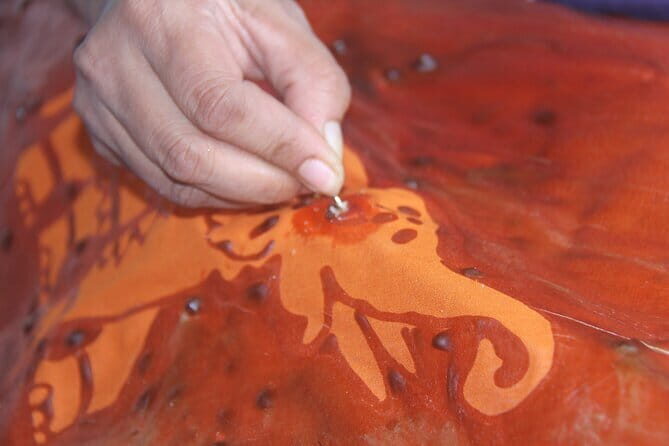
- Take-home result: your own cloth design when the wax comes off
- A cozy home-studio feel with herbal tea and a warm welcome
From Kandy morning to your own batik cloth
If you want a Sri Lanka activity that’s more than a photo stop, this one fits the bill. The workshop is built around doing the craft step-by-step, with enough time at each stage to actually understand what’s happening. You start with fabric and end with dye patterns revealed after the wax is removed.
The vibe is practical and friendly. Instead of a big class where you feel rushed, the small size helps you slow down and ask why certain techniques look the way they do. And because the instruction covers everything from wax mixtures to de-waxing, you don’t just learn the fun part—you learn the logic of batik.
A few more Kandy tours and experiences worth a look

Where the magic happens: a home studio setup
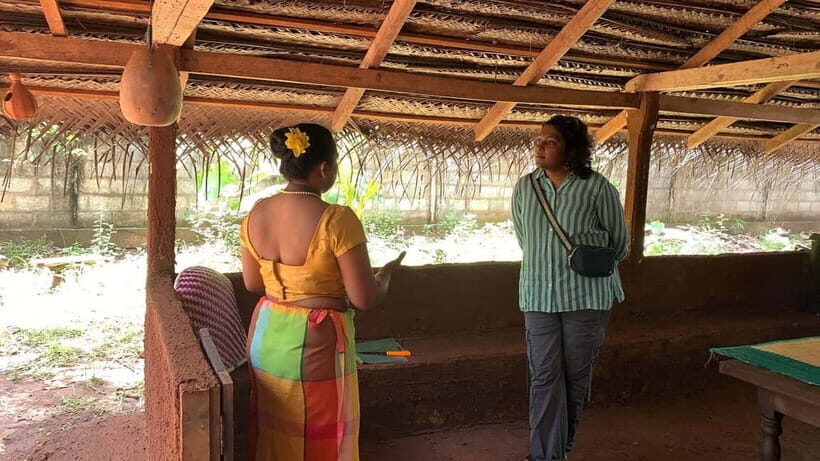
This isn’t a formal factory tour. Your session takes place in a cozy home studio with traditional equipment. That matters more than you might think: batik is a hands-on craft with a lot of messy, detailed steps, and a dedicated workspace is what lets you learn comfortably.
You’ll also be hosted as part of the day, not treated like a drop-off customer. You can expect a refreshing herbal tea, and people have described being offered refreshments plus food and snacks during the session. In other words, you’re not just sitting at a workbench—you’re in someone’s working space while they teach.
Picking fabric and designing your pattern
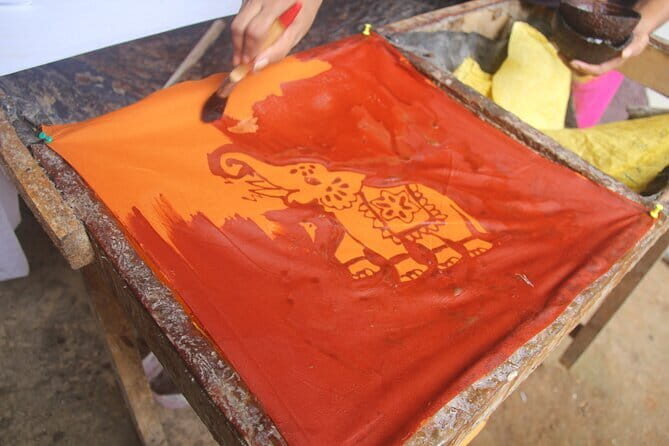
The workshop starts with the basics: choosing fabric and mapping out your design. This is where batik stops being an abstract craft idea and becomes a plan you can execute. You’ll learn how people decide what they want the final pattern to look like, and how wax will shape those results.
You’ll also learn the idea that batik is not one single step. It’s a sequence:
- Apply wax in the places you want to stay undyed
- Dye the fabric
- Repeat (when relevant) so layers build up
- Remove wax so the pattern is revealed
The practical payoff for you is confidence. Once you understand how wax protects areas from dye, the rest starts to make sense—even when you’re working with dyes you haven’t heard of before.
Wax work basics: mixing, tools, stamping, and cracking
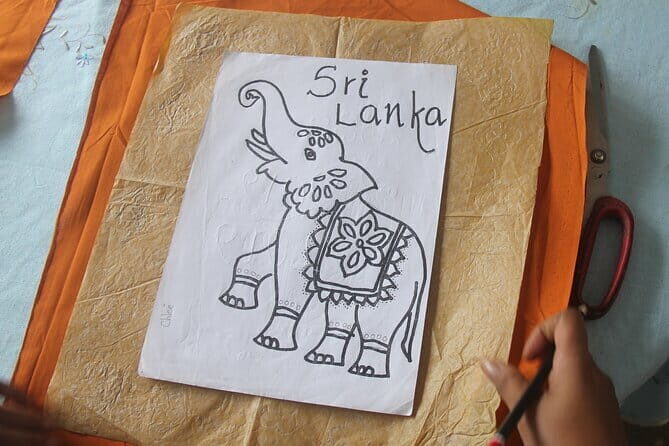
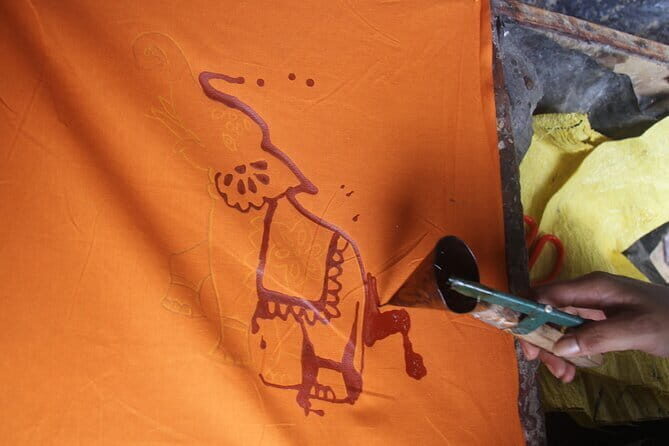
Here’s where batik becomes truly interactive. The workshop walks you through wax mixtures and waxing techniques, and you don’t just observe—you try the techniques yourself with guidance.
You’ll work with traditional wax tools such as:
- Funnel / tjanting
- Henry tool
- Wax spraying
- Stamping
Each tool has a different feel. For example, a tjanting-style applicator is built for controlled lines and detail work, while stamping focuses on repeated shapes. Wax spraying (where offered in the session flow) is another approach for covering areas. The goal isn’t to master all tools perfectly—it’s to understand what each method produces and when to use it.
Then there’s stamping and cracking, which are central to how batik gets its signature look. You’ll learn how techniques like cracking are connected to wax behavior and how that impacts the final texture effect. This is one of those “wait, that’s how they do it” parts that makes the craft feel real.
Brush arts and wax designing: making choices you can see
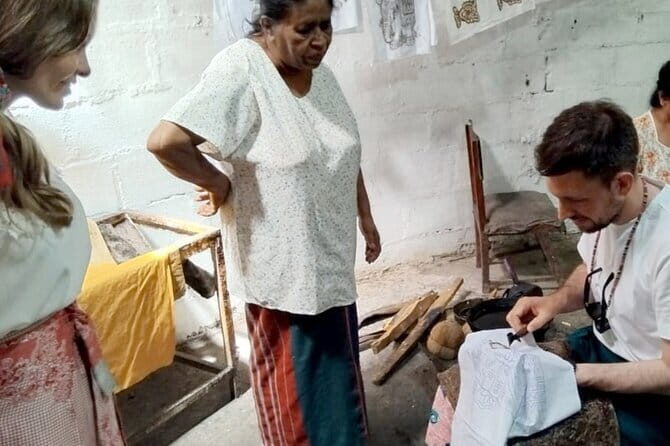
After the foundational wax steps, the session shifts into more creative decision-making: wax designing and brush arts. This is where you get to put your own pattern idea into wax, building the shapes that will later resist dye.
And because the group is small, you can get personal help while you’re working. If your wax line is too thick or your pattern placement looks off, the instructor can guide you while the material is still workable. That matters because batik mistakes aren’t always obvious right away—you see them when the wax comes off and the dyes hit the fabric.
Also, don’t underestimate how tiring wax work can be. You’re doing careful, repetitive motions while concentrating on where wax must go. The workshop structure helps you stay steady because it breaks the process into manageable pieces.





Dyes and applications: naphthol, vat, and reactive

Once your wax pattern is ready, you move into dyeing—where the craft becomes chemistry meets artistry.
The workshop covers:
- Dyes & applications
- Dye mixtures & techniques
- Naphthol dyes
- Vat dyes
- Reactive dyes
You’ll learn what’s involved in preparing and applying these dye types, and how dye choices connect to the look you’re aiming for. Even if you don’t become a dye scientist by the end, you’ll walk away knowing that dye isn’t one universal solution. Different dye families behave differently, and the workshop teaches you how people work with them.
From a practical perspective, this is what turns a souvenir from a “cool story” into a real skill you can explain. You’ll understand the logic behind why certain colors and effects come out the way they do.
Wax burning, wax boiling, and de-waxing: the reveal moment
The last big phase is removing the wax so your design is revealed. The workshop includes wax burning and wax boiling (de waxing) as part of the end-to-end process.
This is often the emotional high point. During wax work you’re protecting areas; during dyeing you’re layering color; then de-waxing shows the contrast. The final reveal is what makes batik feel almost magical—except now you know exactly why it works.
Also, you’ll see why finishing matters. Even small wax residues or rushed timing can affect how clean the final pattern looks. Having instruction at this stage helps you avoid common beginner frustrations.
Value check: is $28 worth 3.5 hours of batik?
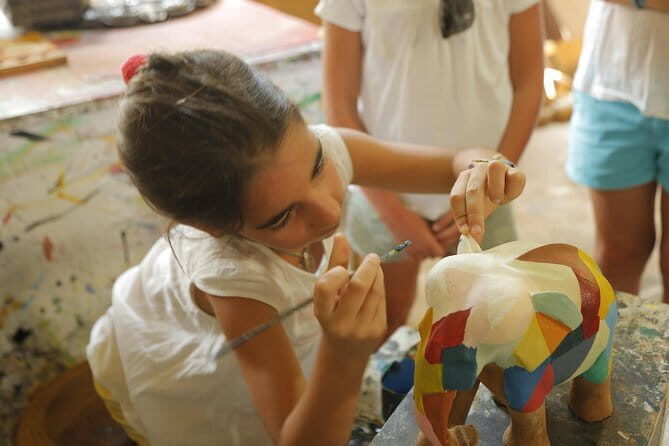
At $28 per person for about 3 hours 30 minutes, this workshop is priced like a serious local craft class rather than a “tour only” experience. The value is strong because it includes:
- All tools and equipment needed
- Cloth and other materials used in the program
- All fees and taxes
What’s not included is private transportation and lunch. So your real cost depends on how you’re getting there and what you eat before/after.
In my view, the best value comes from what you get to do: you handle the tools, try the steps, and end with your own finished cloth. If you’re the type who likes activities where you physically make something, this price is easy to justify.
What logistics to plan (without overthinking it)
You start at 8:00 am at Thalapiyannawa Road in Kandy. The activity ends back at the meeting point, and the session runs about 3 hours 30 minutes.
Small group matters here. With a maximum of 10 travelers, you’re more likely to get personal guidance when you’re stuck—something you can feel immediately during wax work and dye steps, where small errors can show up later.
For your day, I’d plan for:
- Early start means you’ll want breakfast before you go (since lunch isn’t included)
- Comfortable clothes you don’t mind getting stained in theory (wax and dyes can be part of the process)
- Enough buffer time after the workshop so you can handle your souvenir cleanly before heading on
Who should book this batik workshop in Kandy
This works best for you if:
- You want a hands-on craft experience rather than a passive tour
- You like learning by doing, step-by-step
- You want a take-home item that’s genuinely made by your own hands
It’s also a good fit if you enjoy small-group settings. The workshop format is designed so you can ask questions and get help while you work, not after the fact.
If you’re short on time, the morning schedule is convenient but still early—make sure you can handle an 8:00 am start without stress.
Should you book it?
Yes—if you’re willing to get your hands involved and you want more than a quick look at batik, this is a smart use of time in Kandy. The small group size, the end-to-end process coverage, and the included materials make it good value at $28. The main trade-off is planning around the early start and the fact that lunch and private transport are on you.
FAQ
How long is the batik workshop in Kandy?
It runs for about 3 hours 30 minutes.
What time does the workshop start, and where do I meet?
It starts at 8:00 am at Thalapiyannawa Road, Kandy, Sri Lanka. The activity ends back at the meeting point.
How many people are in the group?
This activity has a maximum of 10 travelers.
What’s included in the $28 price?
All tools and equipment, the cloth and materials used during the workshop, and all fees and taxes are included.
Is lunch or transportation included?
No. Private transportation and lunch are not included.
What is the cancellation policy?
You can cancel for a full refund up to 24 hours before the experience’s start time. Free cancellation is available within that window.