REVIEW · ANURADHAPURA
Hands-On Cooking Class in Anuradhapura: Cook Like a Local
Book on GetYourGuide →Operated by GK Immersions · Bookable on GetYourGuide
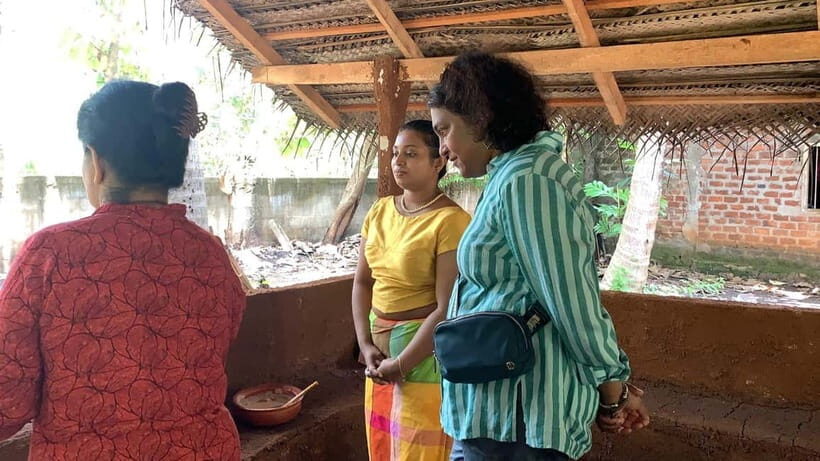
Spice grinding starts your Anuradhapura lesson. In a clay house kitchen under a coconut-leaf shelter, you get hands-on with the kind of setup most visitors only read about, and you cook the meal yourself over a wood-fired stove. I love the practical skills, like grinding spices on the miris gala and scraping coconut with the hiramanaya. One thing to plan for: the food includes spicy items like coconut sambal, so if you are heat-averse, tell your instructor right away.
This 3-hour class also works well as a food-and-culture anchor in Anuradhapura, since you’re learning local techniques in the Rajarata style rather than watching from the sidelines. I like that the experience includes a full meal, plus a welcome local drink, so you’re not scrambling for dinner later. It’s priced at $40, which is fair for a private, skills-focused session where you actually cook and eat what you make.
In This Review
- Key things that make this cooking class worth your time
- Clay House Kitchen in Anuradhapura: what you’re really signing up for
- The morning starts with local tools, not a lecture
- Pick-your-own coconut: from tree to your plate
- Grinding spices on the miris gala (stone grinder)
- Coconut scraping with the hiramanaya
- Wood-fired stove cooking: smoky flavor with real limits
- The menu you’ll cook and taste in one session
- Rice as the foundation
- Ambarella curry
- Banana blossom mallum
- Lake fish curry
- Kathurumurunga mallum (Sri Lankan greens)
- Coconut sambal
- Pumpkin curry
- Sweet finish: curd, treacle, and fruit
- Why this is good value at $40 for a 3-hour class
- How long it really feels: 3 hours with steady flow
- What to bring (and what to avoid)
- Who should book this Anuradhapura cooking class
- Final verdict: should you book?
- FAQ
- How long is the cooking class in Anuradhapura?
- How much does the class cost?
- Where does the class take place?
- Is the class hands-on or just a demonstration?
- What language is the instructor?
- What dishes are included in the meal?
- What traditional tools do you use?
- What’s included before you start cooking?
- Is this activity private and wheelchair accessible?
- What are the cancellation terms and payment options?
Key things that make this cooking class worth your time
- Clay kitchen with coconut-leaf shade: a village-style cooking space, not a demo table in a hurry
- Miris gala stone grinder: you grind your own spices the old way
- Hiramanaya coconut scraping: a fun, satisfying prep skill you’ll recognize from Sri Lankan homes
- Wood-fired stove cooking: smoky flavor comes from the method, not from shortcuts
- A full Rajarata menu: rice plus curries, sambal, greens, fish, and a sweet finish
- English-led, private group: you can ask questions without feeling rushed
Clay House Kitchen in Anuradhapura: what you’re really signing up for
This cooking class is less about copying recipes and more about learning the rhythm of a Sri Lankan kitchen. The setting matters: you cook in a clay house kitchen shaded by a traditional coconut-leaf shelter, surrounded by a nature-and-village feel that keeps the whole experience grounded.
You’ll be working in small, real steps: prep, grinding, cooking, tasting. That’s the point. When you learn how spices behave when they’re fresh-ground, or how coconut changes a curry’s texture, you start to understand why these dishes taste the way they do.
A private group also changes the energy. You don’t have to perform or keep up with a crowd. If you want to ask what a spice is used for or how to balance heat, you can usually get an answer on the spot.
Other Anuradhapura tours we've reviewed in Anuradhapura



The morning starts with local tools, not a lecture
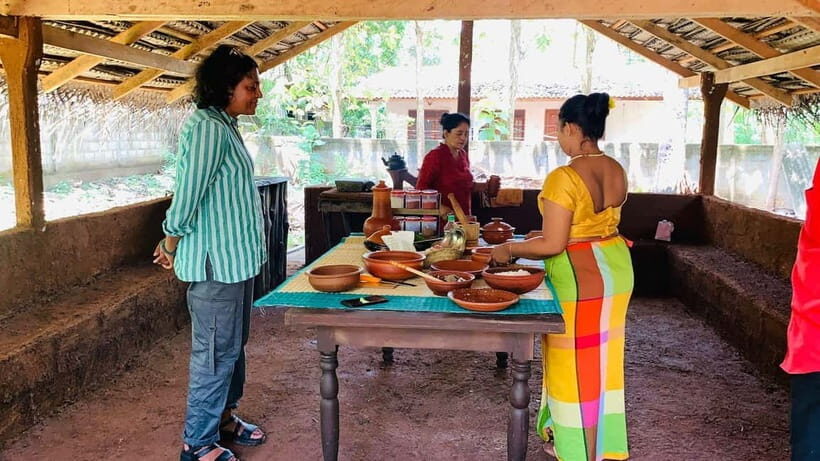
The class begins in that clay house kitchen, and right away you’ll see the tools that shape Sri Lankan home cooking. You don’t just get a list of ingredients. You get the methods: hand-grinding, coconut prep, and cooking over wood fire.
You’ll also get a welcome local drink before you start cooking. That small start helps you shift from tourist mode to village mode fast, especially if you’ve been walking around Anuradhapura in the heat.
From there, the session becomes practical. You’re doing the work: grinding, scraping, cooking, and tasting. That hands-on format is the main reason this class scores so well.
Pick-your-own coconut: from tree to your plate
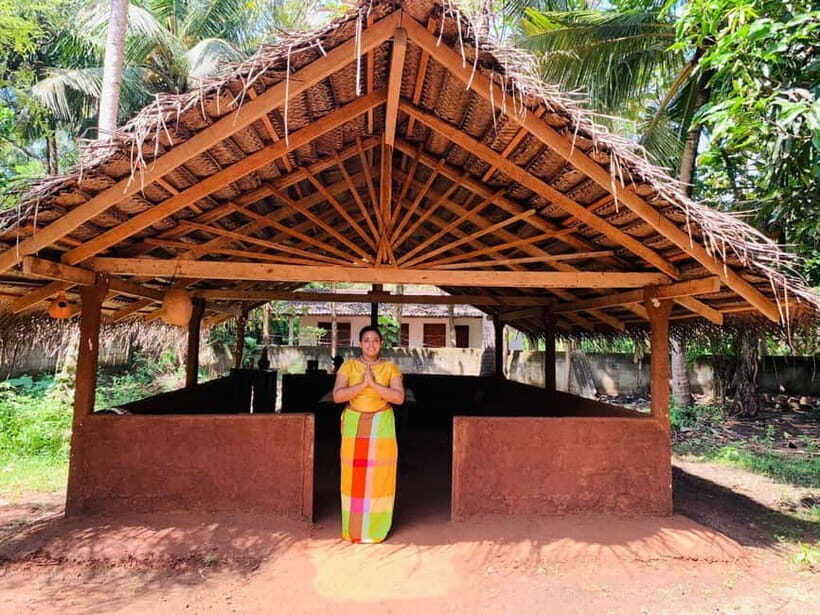
One of the best parts is that coconut isn’t treated like a store-bought ingredient. You pick your own coconut, straight from the tree. It sounds simple, but it changes how you cook with coconut because you understand where it comes from and what “fresh” really means.
Coconut ends up showing up in multiple places in the menu. It’s part of the flavor base in curries and greens, and it’s central to the spicy side dish called coconut sambal. When you’ve handled the coconut yourself, that tangy, creamy, spicy balance makes more sense.
Grinding spices on the miris gala (stone grinder)
This is the signature skill: grinding spices on a miris gala, a traditional stone grinder. It’s physical work, and that’s the point. You feel how different spices break down, and you notice how the aroma changes as the mix gets finer.
I love this part because it turns “spice” from a vague idea into something you control. Want the mix coarser for texture, or finer for a smoother curry base? That’s the kind of detail you learn only when you’re actually turning the stone grinder.
And yes, the smell builds quickly. Expect that strong, fragrant burst people talk about. It also makes the class feel real, like you’re doing kitchen tasks that have been repeated for generations.
Coconut scraping with the hiramanaya
Then comes a very Sri Lankan prep skill: scraping coconut with a hiramanaya. It’s fun, interactive, and very satisfying because you can see the result immediately. Fresh coconut shreds well, and the texture you make influences how dishes feel in the mouth.
Coconut scraping is also a great “pause and learn” activity. While you’re doing it, your instructor can point out how coconut supports flavors and how to balance sweetness, spice, and acidity in the final dishes.





Wood-fired stove cooking: smoky flavor with real limits
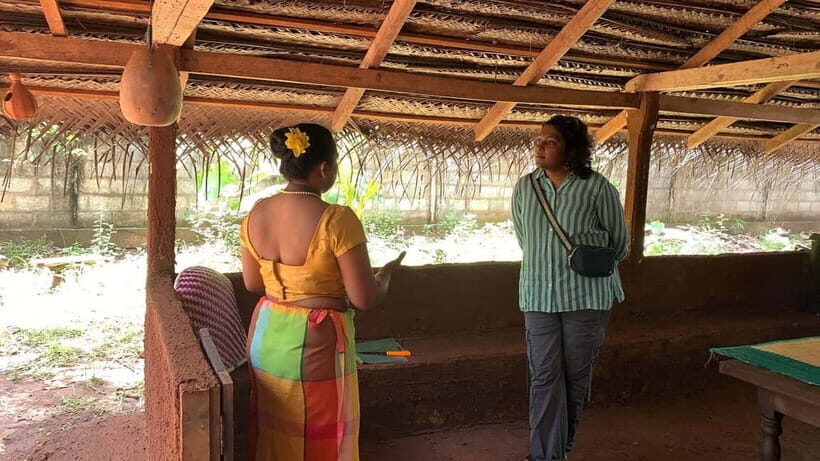
Cooking happens over a traditional wood-fired stove. That means real heat, real smoke, and slightly unpredictable timing compared to a modern stove. You don’t just learn what to cook; you learn how to cook with a fire.
The smoky aroma isn’t a gimmick. It affects the smell of your curry as it simmers, and it’s one of those tastes that makes you want to reach for seconds.
The only consideration here is comfort. If you’re sensitive to smoke or strong smells, you might prefer standing slightly to the side of the cook area when possible. But for most people, this is exactly what makes the class feel authentic.
The menu you’ll cook and taste in one session
This class is built around a traditional Sri Lankan menu tied to the Rajarata region. You’ll cook items and then eat them as part of the same experience, which means you get instant feedback on what you did right (and what you’d tweak next time).
Here’s what’s on the cooking list:
Rice as the foundation
You’ll work with yellow rice or white rice, described as the heart of almost every Sri Lankan meal. In practice, this is where your rice technique matters: fluffy, steamed rice sets the stage for everything else on the plate.
Ambarella curry
Ambarella curry is made from ambarella, a tropical fruit cooked in a savory way. It’s a great lesson in how sour fruit can behave like a vegetable in curry, bringing tang without feeling like dessert.
Banana blossom mallum
Banana blossom becomes a curry-style dish called banana blossom mallum. This is one of those “wait, a flower?” moments, and it’s a fun way to learn how Sri Lankan cooking uses parts of plants that many visitors never see.
Lake fish curry
You’ll also cook lake fish curry, with locally caught lake fish simmered in rich spices and creamy coconut milk. This is flavorful and comforting, but it’s also the part of the menu to think about if you have seafood preferences or restrictions.
Kathurumurunga mallum (Sri Lankan greens)
Kathurumurunga mallum is a greens dish mixed with coconut and spices. It’s a good balance to the heavier curries because greens bring a lighter, softer texture into the meal.
Coconut sambal
Coconut sambal is a spicy side dish made with freshly grated coconut, red chili, lime, and onion. Even if you’re not a spice fanatic, this is where you learn how acidity (lime) and heat (chili) work together. If you’re cautious with heat, tell your instructor early so they can guide you on how much chili to add.
Pumpkin curry
Pumpkin curry rounds everything out with a creamy, slightly sweet flavor and gentle spice. It’s comfort food in Sri Lankan form, and it’s often the dish people remember because it feels familiar but new.
Sweet finish: curd, treacle, and fruit
After the savory dishes, the class finishes with a sweet component: fresh curd and treacle, plus ripe fruit. It’s a satisfying end that helps reset your palate after the curries and sambal.
Why this is good value at $40 for a 3-hour class
$40 for a 3-hour, private group cooking session can seem modest or steep depending on your expectations, so here’s the practical way I think about it: you’re not just tasting dishes. You’re learning skills, using traditional tools, picking coconut, and cooking on wood fire.
You also get a welcome local drink and a full meal built from multiple dishes. In other words, you’re buying a cooking experience plus dinner, with the added benefit of learning the methods behind the flavors.
If you’re comparing this to a basic “watch and snack” class, the value jumps fast. The class is structured around doing: grinding, scraping, cooking, and eating what you make.
How long it really feels: 3 hours with steady flow
The experience runs 3 hours, which is a comfortable length for a hands-on class in Anuradhapura. It’s long enough to learn multiple steps and taste a full menu. It’s short enough that you can still plan other activities the same day without feeling wiped out.
In a village setting, pacing matters. You’ll likely move between prep and cooking, then sit down for the meal. That rhythm helps keep energy up and keeps you engaged.
Also, because it’s a private group, the timing tends to feel more natural. You’re not stuck waiting for a turn while other people take over the workspace.
What to bring (and what to avoid)
From the experience details, the setting is outdoors-adjacent in a village kitchen environment, shaded but still close to natural elements. I strongly suggest bringing mosquito repellent. At least one person found it useful, and it makes sense in this kind of setting.
Also bring a practical mindset about spices. Coconut sambal is part of the menu, and ambarella curry and greens curries also lean flavorful and well-seasoned. If you have dietary restrictions, you should raise them before you start so your instructor can guide you on choices within what’s planned.
Who should book this Anuradhapura cooking class
This is a great fit if you want more than a food stop. You’ll like it if you enjoy learning hands-on skills and you care about understanding why a dish tastes the way it does.
I’d especially recommend it for:
- Food lovers who want to cook, not just eat
- People who like traditional tools and old-school methods
- Travelers who want a structured cultural activity that ends with a full meal
It might be less ideal if you:
- Have strong concerns about spice heat or seafood (fish curry is included)
- Don’t like smoke from wood-fired cooking
- Prefer a more passive, seated experience
Final verdict: should you book?
If you’re looking for a single, memorable activity in Anuradhapura that mixes real village-style cooking with a complete meal, this class is an easy yes. The focus on traditional tools like the miris gala and the hiramanaya makes it feel earned, not staged. And the $40 price is sensible for what you get: hands-on skills, multiple dishes, and a full end-to-end food experience.
FAQ
How long is the cooking class in Anuradhapura?
The experience lasts 3 hours.
How much does the class cost?
It costs $40 per person.
Where does the class take place?
All activities take place at the clay house kitchen, shaded with a traditional coconut leaf shelter.
Is the class hands-on or just a demonstration?
It’s hands-on. You cook using traditional tools, grind spices, scrape coconut, and cook over a wood-fired stove.
What language is the instructor?
The instructor speaks English.
What dishes are included in the meal?
Included dishes are rice (yellow or white), lake fish curry, ambarella curry, Kathurumurunga mallum, coconut sambal, pumpkin curry, banana blossom mallum, and sweet finish with fresh curd and treacle plus ripe fruit.
What traditional tools do you use?
You’ll use a miris gala (stone grinder) to grind spices and a hiramanaya to scrape coconut. You’ll also cook over a traditional wood-fired stove.
What’s included before you start cooking?
You’ll be welcomed with a refreshing local drink, and the class includes ingredients like rice and the listed dishes made during the session.
Is this activity private and wheelchair accessible?
Yes. It’s a private group, and it is listed as wheelchair accessible.
What are the cancellation terms and payment options?
You can cancel up to 24 hours in advance for a full refund. There’s also a reserve now & pay later option.