REVIEW · KANDY
Kandy Village Cooking Class
Book on Viator →Operated by Kandy Village Cooking Class · Bookable on Viator
Sri Lankan cooking starts at the market. This class pairs fresh ingredient shopping with a hands-on village kitchen session, so you’re not just watching—you’re helping make the meal. I like the way the day is built around real choices: you pick produce, you choose chicken or fish, and you cook what you bought.
My other big plus is the host-family feel. In classes led by Shyama (and often her husband), you get patient step-by-step instruction on spices and technique, then you eat what you made. One heads-up: the transport can be a bit confusing. Some people are picked up and taken out to the village, but the return ride may not be included—so confirm before you go.
In This Review
- Key moments worth putting on your list
- A village kitchen meets Kandy sights in a tight 3-hour window
- The market walk: choosing five vegetables and your protein
- Back at the home kitchen: your hands on the spices
- What you’ll actually cook
- Spice learning that sticks
- Dietary reality check
- Kandy stops in between: lake views, a dance show, and the Tooth Relic
- The meal: eating what you cooked (plus the sweet ending)
- Hosts and vibe: family-run, small-group, and very welcoming
- Price and logistics: is $25 good value?
- Should you book the Kandy Village Cooking Class?
- FAQ
- How long is the Kandy Village Cooking Class?
- Where does the class start and end?
- Is pickup included?
- Do you visit a market before cooking?
- What ingredients can I choose?
- How many people are in the group?
- What’s the price per person?
Key moments worth putting on your list
- Market-first shopping where you choose five vegetables and either chicken or fish
- Spice explanations that actually help you understand what each ingredient is doing
- Hands-on village kitchen time with clear coaching from Shyama and her family
- A full meal you finish including curries and dessert-style sweets like caramel coconut pancakes
- Small-group feel with a maximum of 15 people
A village kitchen meets Kandy sights in a tight 3-hour window
This experience centers on traditional home-style Sri Lankan food, served out of a village setting near Kandy. The total time is about 3 hours, so the schedule is active but not long-haul. You start at the Kandy Municipal Central Market (144 Central Market, Kandy 20000), and the activity ends back at the same meeting point.
The tour is also limited to 15 people, which matters. With a smaller group, the instructor can keep an eye on what you’re doing—stirring, grinding, tasting, adjusting spice levels—without the class turning into a lesson you watch from the back row.
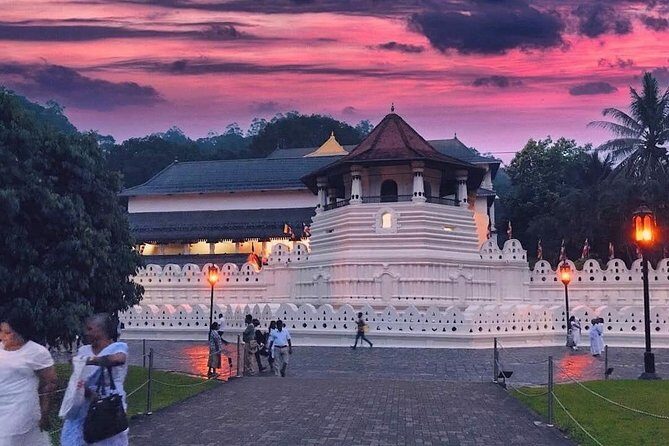
You’ll also get short Kandy stops along the way, including the Kandy Lake area, a view point, and a cultural dance show at the Kandy Lake Club. There’s also a stop at the Temple of the Sacred Tooth Relic. Because everything is packed into a single block of time, expect some stops to be quick photo-and-walk moments rather than deep sightseeing.
If you want one activity that mixes food, culture, and a few iconic Kandy moments, this is a good fit. If you prefer slow pacing and long temple time, you may feel a little rushed.
Other Kandy tours we've reviewed in Kandy



The market walk: choosing five vegetables and your protein
The morning (or afternoon) opener is the market visit. This isn’t just a casual stroll; it’s guided shopping. Your guide helps you select five vegetables from what’s available, and you also choose whether your meal will include chicken or fish.
What I love about this part is that you learn the logic behind Sri Lankan cooking. You start to understand how ingredients work together—what’s used for heat, what adds fragrance, and what gives body to sauces. The class explains spices and other ingredients at the stalls, so later, when you’re cooking, you’re not guessing.
One practical tip: go in hungry but not frantic. Markets move fast, and you’ll be making decisions quickly. If you’re the kind of person who wants to compare five kinds of the same vegetable, take a breath. The guide is there to help you pick what makes the best dishes.
Also, take in the human part of the market. Some class moments include quick conversation with sellers and time for photos, which helps the market feel like a lived-in place rather than a set.
Back at the home kitchen: your hands on the spices
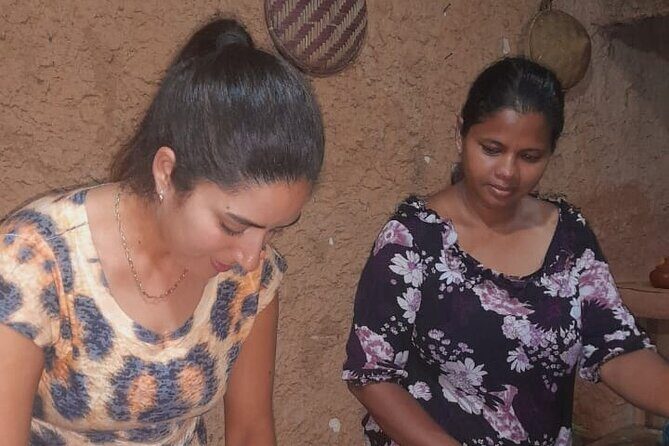
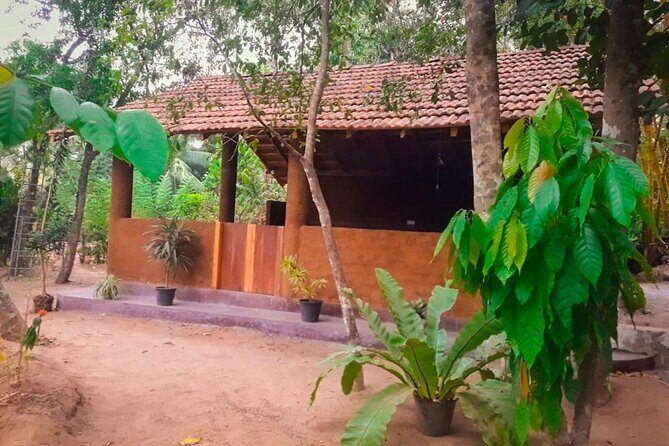
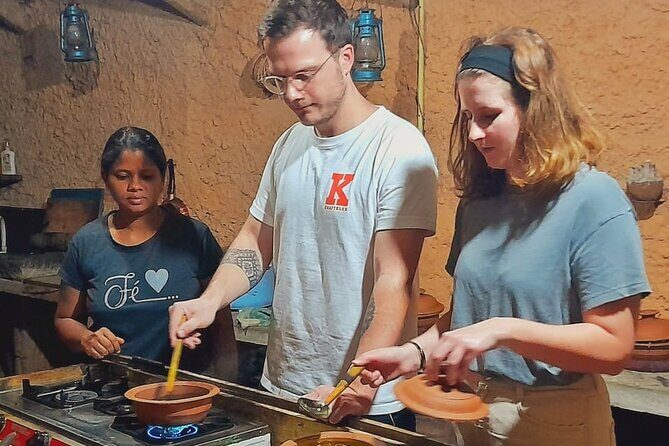
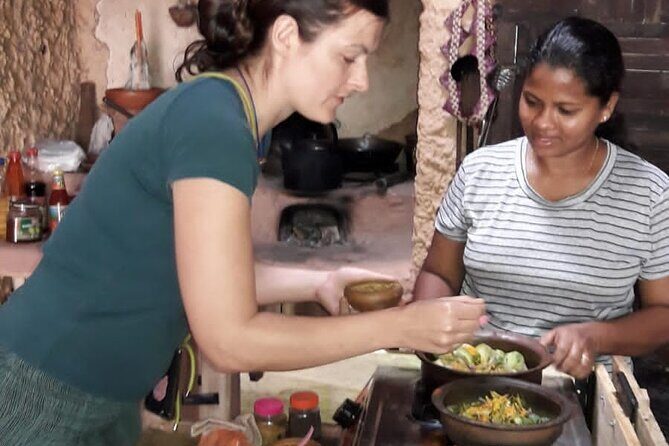
After shopping, you head to the village kitchen. This is the heart of the class: a warm, family-led cooking session where you help prepare the meal step by step. Several people mention an outdoor-style or traditional cooking setup—some cooking happens in an open kitchen space near a home, sometimes with a clay-house feel in the background.
The teaching style tends to be very practical. Shyama is frequently mentioned as the instructor, and the instructions are paced so you can follow along even if your cooking skills are basic. You’ll be guided through chopping, mixing, seasoning, and cooking techniques that show up across Sri Lankan dishes.
What you’ll actually cook
You’ll make a full traditional meal, not just one curry. Reviews commonly describe learning anywhere from multiple dishes up to around 9 or even 11 dishes, depending on the group and what’s being prepared that day. Expect a mix of curries and sides—often including favorites like sambal-style heat, vegetable curries, and a main protein dish based on whether you selected chicken or fish.
Two specific things that come up again and again:
- Coconut milk from scratch: instead of using a carton, the process gets explained and demonstrated.
- Caramel coconut-style dessert: some classes finish with caramel coconut pancakes, which turns the whole session into a real meal rather than “just cooking and then leaving.”
Spice learning that sticks
The best part isn’t only what you cook—it’s why it tastes the way it does. Guides typically explain the role of spices and herbs as you go. That’s how you can recreate the flavors later, even if you don’t copy every recipe exactly.
Other Sri Lankan cooking classes we've reviewed in Kandy
Dietary reality check
Here’s the honest part: strict dietary needs may be tricky. One review mentions celiac disease and notes there weren’t gluten-free options offered; instead, gluten-containing items were removed or adjusted (examples mentioned include soy sauce, mustard, papadam, and pancakes). If gluten is a serious issue for you, you’ll want to ask specific questions before booking. Don’t assume you can eat freely unless the host confirms what they can change.
Kandy stops in between: lake views, a dance show, and the Tooth Relic
This class also wraps in a slice of Kandy sightseeing. The stops listed for the experience include:
- Kandy City Center: a quick orientation point before you head toward the main attractions.
- Kandy Lake: you’ll pause at the lake area for views and photos.
- Kandy View Point: a short stop that gives you a better angle on the city.
- Kandy Lake Club Cultural Dance Show: a cultural interlude before you continue.
- Kandy District and Kandy: additional passing or short stops to keep the timing moving.
- Temple of the Sacred Tooth Relic: one of Kandy’s major religious sites.
Because the total time is about 3 hours, treat these as short stops, not a full sightseeing day. I like the idea of getting your bearings in Kandy while your brain is still in “wander mode,” then switching gears to a focused cooking session when you arrive at the village kitchen.
If you’re coming specifically for food, the sightseeing should feel like context—like you’re learning where the food fits in local life. If you’re coming primarily for temples and long walks, you’ll likely want a separate sightseeing block.
The meal: eating what you cooked (plus the sweet ending)
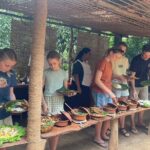
At the end, you sit down and enjoy the meal you prepared. This matters because Sri Lankan cooking is about layering flavors and texture—if you don’t taste as you go, it’s harder to understand the process. Most people leave with full bellies and a sense of satisfaction that this wasn’t a “watch and clap” tour.
The menu often includes:
- multiple curries and vegetable dishes
- a main protein dish based on your selection (chicken or fish)
- rice and sides (rice shows up often in these meal descriptions)
- dessert-style pancakes with caramel and coconut, mentioned in several accounts
This is one reason the value feels strong. For $25, you’re not only paying for an instructor—you’re paying for ingredients, cooking time, and the meal itself.
Hosts and vibe: family-run, small-group, and very welcoming
One of the most praised parts is the host-family hospitality. Multiple people highlight the warm welcome, patience, and helpfulness. Some describe feeling like part of the family for the evening, from the moment you arrive at the home to when you’re learning technique.
You’ll also notice the class tends to work well for mixed ages. One family of 14 (kids through grandparents) described it as a highlight of the trip. That tells me the teaching pace can flex and that the experience is designed to be friendly, not intimidating.
And since the group max is 15, it’s not a factory line. You can ask questions. You can taste and adjust. You can learn how spices change a dish while you’re still cooking it.
Price and logistics: is $25 good value?
At $25 per person for a ~3-hour experience, this is one of the better deals in Kandy if your goal is hands-on food learning. You get:
- guided market shopping for five vegetables
- spice and ingredient explanations
- village cooking instruction
- a full meal you prepare
- a short village/life glimpse
- and, in many cases, a few Kandy sightseeing stops
That combination is hard to beat at this price point.
Now for logistics, the only part you need to double-check. Pickup is offered, and the experience may include transportation out of the city. But one review notes you may need to pay for the return ride, and another person mentions having trouble because they weren’t told clearly about getting home after the class.
So do this simple checklist before you go:
- Ask whether pickup and return transport are included in your price
- Confirm the end location (the activity ends back at the meeting point, but you still may need a ride depending on where you start)
- If you have dietary needs (especially gluten), ask what can be adjusted
Wear comfortable shoes. Even if the cooking time is the main event, market and temple areas mean some walking. Also, plan for warm weather.
Should you book the Kandy Village Cooking Class?
Yes—if you want the kind of experience where you learn by doing. This is ideal when you’re short on time in Kandy but still want something authentic: the market choices, the spice learning, and the hands-on kitchen time all work together. The fact that people describe it as a trip highlight says a lot.
I’d pass or adjust expectations if:
- you need fully gluten-free cooking guaranteed (you’ll have to ask hard questions)
- you dislike schedules that are packed into about 3 hours
- you strongly prefer long temple or museum time over a mixed itinerary
If your goal is to leave with both memories and recipes you can actually use, this class is a smart way to spend $25 in Kandy.
FAQ
How long is the Kandy Village Cooking Class?
The experience lasts about 3 hours.
Where does the class start and end?
It starts at Kandy Municipal Central Market (144 Central Market, Kandy 20000) and ends back at the meeting point.
Is pickup included?
Pickup is offered, and pickup from a designated point is provided for the market visit.
Do you visit a market before cooking?
Yes. You start with a guided market visit where you select ingredients for the class.
What ingredients can I choose?
You choose five vegetables, and you can choose either chicken or fish.
How many people are in the group?
The tour/activity has a maximum of 15 travelers.
What’s the price per person?
The price is $25.00 per person.
If you tell me your travel dates and whether you’re picking chicken or fish (and if you have any dietary restrictions), I can help you decide what to ask before booking so the day runs smoothly.