REVIEW · COLOMBO
Private Tour of Colombo with Ajeet De Soyza
Book on Viator →Operated by Ceymondu Escapes · Bookable on Viator
Colombo changes fast. This tour helps you track it.
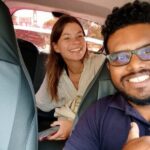
I like how this private Colombo route mixes walking with short drives so you can see old Fort landmarks and ocean-side city life without burning half your day in traffic. The second big plus is the guide approach of Ajeet De Soyza: you get clear, practical historical context, plus thoughtful answers when you ask questions that go beyond the surface. I found the flow especially satisfying because it ties together Colombo’s colonial-era bones with the power centers and street-level religious sites people still use every day. Ajeet De Soyza also keeps the pace human, not rushed.
One consideration: you’ll cover a lot of major stops in about 4 to 5 hours, so places like the Colombo National Museum only get a focused visit. If you’re a museum person and want to linger, you may want extra time on your own afterward.
That said, value is solid for the money. You’re in a private vehicle with air-conditioning and WiFi, you get bottled water, and most stops have free admission. You’ll just budget for a couple site charges (like the temple fee and the museum ticket), and you’ll want decent weather for outdoor walking.
In This Review
- Highlights You’ll Feel Right Away
- A Colombo Route That Links Fort, Faith, and the Sea
- Meet Ajeet De Soyza: More Than Facts, Better Context
- Dutch Hospital Shopping Precinct: Dutch-Era Architecture, Updated for Today
- Colombo Fort: Business Power With Historical Surroundings
- Jami Ul-Alfar Mosque in Pettah: A Landmark You Spot From Anywhere
- Gangaramaya Buddhist Temple: Hikkaduwe Sri Sumangala Nayaka Thera’s Legacy
- Independence Square, the Conference Hall, and Parliament Complex: How Modern Power Is Framed
- Galle Face Green: Sea Air and a Reset Between Stops
- Colombo National Museum: One Hour to Get the Big Picture
- Price and Value: What You Pay, What You Need to Budget
- Timing, Weather, and What to Bring for Walking + Drives
- Should You Book the Private Colombo Tour With Ajeet De Soyza?
- FAQ
- How long is the private tour?
- Is this a private tour or a group tour?
- Is pickup offered?
- What’s included in the tour price?
- Are there admission fees for the sights?
- How much is the Gangaramaya Temple entrance fee?
- Is the National Museum admission included?
- Will I receive a ticket on my phone?
- What happens if the weather is bad?
- What is the cancellation window?
Highlights You’ll Feel Right Away
- Ajeet De Soyza’s history Q&A: you can ask real questions and get explanations, not one-line answers
- Walking plus drive: you see more of Colombo Fort and key neighborhoods without feeling trapped in traffic
- Dutch Hospital to Galle Face Green: colonial buildings, political landmarks, and sea air in one stretch
- Free admission at most stops: you spend time sightseeing, not hunting for ticket windows
- Comfort upgrades included: AC vehicle, WiFi onboard, and bottled water keep the day easy
- A museum visit option: you get an hour at the National Museum without turning the tour into a full museum day
A Colombo Route That Links Fort, Faith, and the Sea
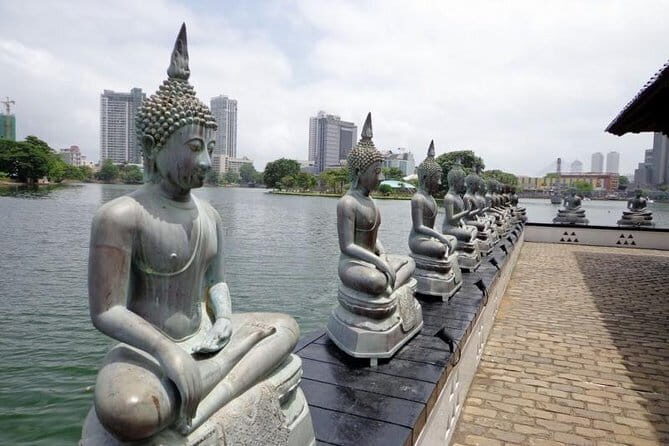
This is the kind of tour that helps you understand Colombo at street level. You start in the Fort area, where older structures still shape the city’s layout. Then you move through neighborhoods where daily life and worship are in the same frame. Finally, you end near the water at Galle Face Green, where the coastline gives you a different rhythm than the business streets.
What makes it work is the balance. Walking brings you closer to the atmosphere and details—signage, architecture, street scenes. The short drives handle the distance between clusters of sights so you don’t spend the entire day in transit. In a city like Colombo, that mix is more than convenience; it’s how you get the “how it all connects” feeling.
Other Colombo tours we've reviewed in Colombo


Meet Ajeet De Soyza: More Than Facts, Better Context
Ajeet De Soyza leads this as a true private experience. That matters because Colombo isn’t a checklist city. You’ll notice how different eras sit side by side, and the guide’s job is to explain why that pattern exists.
A big strength is how Ajeet handles questions. You’re not limited to the tour script, and you can ask things that touch sensitive or political angles without the conversation feeling shut down. I like this style because it turns a standard sightseeing day into something closer to a guided conversation with the city.
Also, the pacing feels designed for real attention. There are stops where you can look, short enough to keep energy up, and long enough to register what you’re seeing. It’s a tour that rewards curiosity.
Dutch Hospital Shopping Precinct: Dutch-Era Architecture, Updated for Today
Your first stop is the Dutch Hospital Shopping Precinct. This old Colombo Fort building is tied to the Dutch colonial era, and it’s described as the oldest building in the Colombo Fort area dating back to that period. Now it’s a heritage building used for shopping and dining.
What to expect here is architecture first. The exterior and the way the complex feels tell you Colombo’s colonial story is still physically present. Then you’ll get the modern twist: people come here for food and browsing, not just for photos.
A practical tip: since this is a heritage shopping-and-dining precinct, it’s a good moment to orient yourself visually. You’ll start noticing the mix of old stone structures and newer storefronts, which becomes a theme for the rest of the tour. And because it’s free to enter, you can spend your time simply looking and absorbing.
Colombo Fort: Business Power With Historical Surroundings
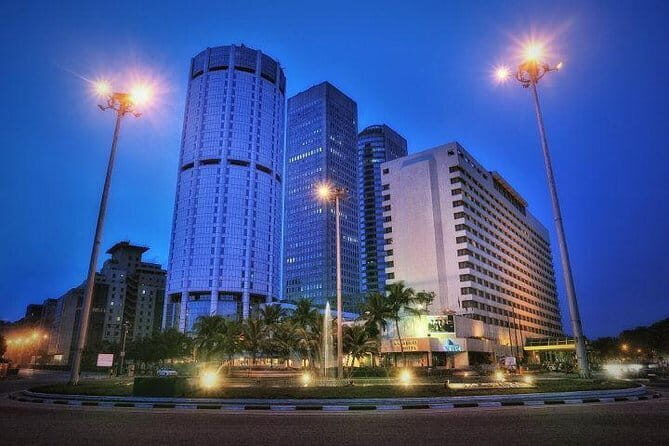
Next you head into Colombo Fort, the central business district. This is where you’ll find the financial district vibe, including the Colombo Stock Exchange and the World Trade Centre of Colombo. Even if you don’t do business here, the area matters because it shows how Colombo has grown into a modern hub.
This stop gives you the contrast you need after the Dutch Hospital. Instead of heritage-focused space, you’re walking through a concentrated area tied to commerce and finance. It’s also a place where you can see how newer structures sit around older lanes and buildings.
Time check: you’ll have about 45 minutes here. That’s usually enough for the basics—street scene, key buildings, and getting a feel for the Fort layout—without turning into an endless walk. If you want more time, you can always return later, but this is a strong “get oriented” block.
Jami Ul-Alfar Mosque in Pettah: A Landmark You Spot From Anywhere

You then move to Jami Ul-Alfar Mosque, also known as Sri Lanka’s Red Mosque. It’s located in the Pettah district, one of Colombo’s oldest parts, and it features tall minarets that are visible from almost every street.
The best part of this stop is the viewpoint it gives you of Colombo’s everyday life. You’re not just looking at a building; you’re seeing how a major place of worship rises above a dense neighborhood. The minarets act like a navigation marker. Even before you arrive at the mosque, you can often spot them, which helps you understand how Pettah’s streets connect.
Practical consideration: this is an active religious site. Dress and behavior matter. Keep it respectful and plan for quick moments of observation rather than long posing sessions. Admission is listed as free, so your biggest cost is time and comfort.
Other private tours in Colombo


Gangaramaya Buddhist Temple: Hikkaduwe Sri Sumangala Nayaka Thera’s Legacy
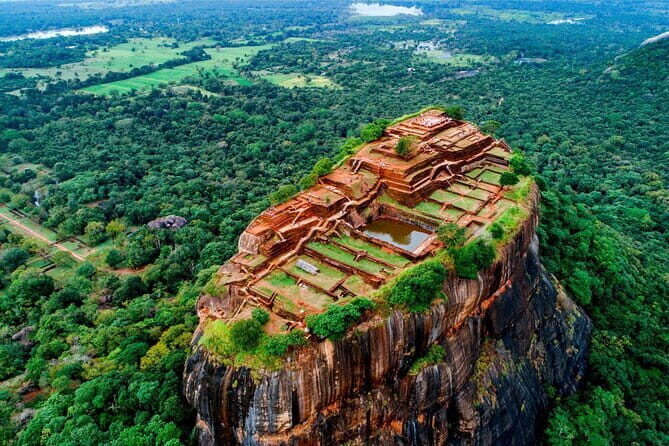
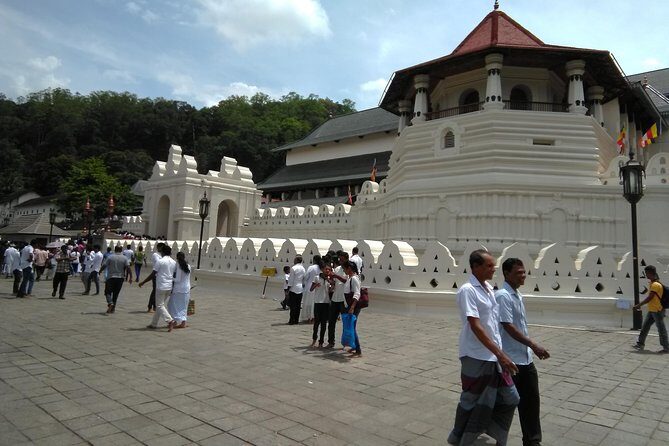
Gangaramaya is one of Colombo’s older Buddhist temples, connected to the famous scholar monk Hikkaduwe Sri Sumangala Nayaka Thera, who started it in the late 19th century. This stop is a meaningful one because it anchors the tour in a spiritual thread that has deep roots in the city.
You’ll have around 30 minutes. That’s enough time to notice major features and understand the temple’s place in the broader Colombo story: a city where multiple belief systems are visible, not hidden behind museum walls.
Budget note: there’s a temple entrance fee listed at LKR 400 (about USD 2) per person. It’s small, but I’d rather you go in knowing it’s coming than guessing on the spot. Bring some cash just in case.
If you’re the type who likes to ask why certain areas grew where they did, this is a good place to do it. The guide’s historical explanations tend to land well here.
Independence Square, the Conference Hall, and Parliament Complex: How Modern Power Is Framed
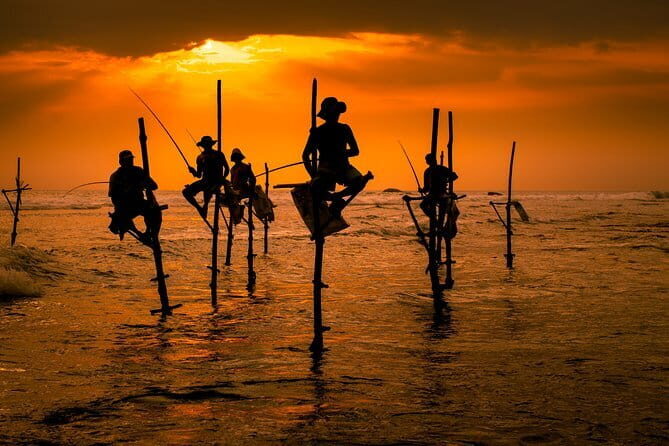
After the religious stops, the tour turns toward national identity and governance. You’ll see the Bandaranaike Memorial International Conference Hall, built between 1970 and 1973. It’s described as a gift from the People’s Republic of China, and the hall functions as a convention center.
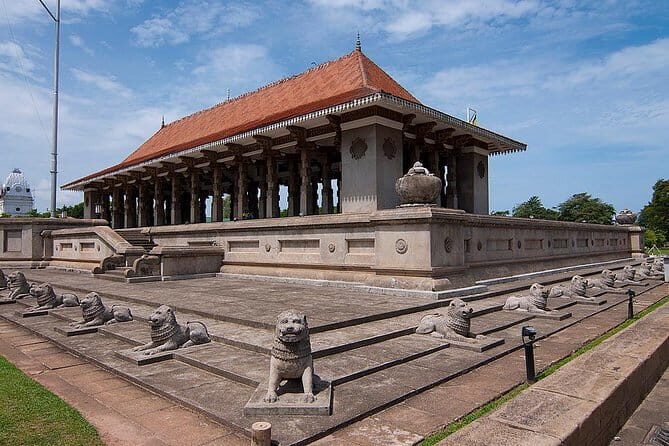
Then you head to Independence Square and the Independence Memorial Hall. This national monument is built to commemorate Sri Lanka’s independence from British rule, linked with the restoration of full governing responsibility.
Finally, you visit the Sri Lankan Parliament Complex, also called the New Parliament Complex. It houses the Parliament of Sri Lanka and is located in the administrative capital, Sri Jayawardenepura Kotte. The site is described as being built on an island, which makes it feel distinct from the city-speed of Colombo Fort.
What ties these stops together is the theme: public memory and public power. After the older colonial building and working religious spaces, these landmarks show the national narrative and the government’s physical presence.
Practical note: this portion can feel like a shift from “look closely” to “look at the civic landscape.” You’ll likely do more photo stops than detailed exploration. Use the guide here—ask what each site symbolizes and how it fits into Sri Lanka’s timeline.
Galle Face Green: Sea Air and a Reset Between Stops
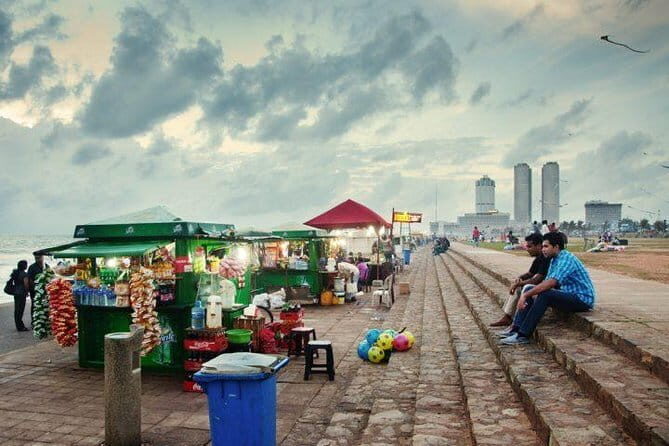
Galle Face Green is next, an ocean-side urban park stretching for about 500 meters along the coast. It’s roughly 5 hectares, and it sits in the heart of Colombo.
This stop is short—about 15 minutes—but it’s a good reset. You trade dense city energy for open air and sea views. Even if the day is hot and humid, the waterline helps you feel less stuck in the concrete-and-street texture of the Fort.
If you’re timing your own photos after the tour, aim for a moment when the coastline light looks good. The park layout gives you options for different angles of the waterfront. Admission is free, so you’re not spending money here—just using the time to breathe and regroup.
Colombo National Museum: One Hour to Get the Big Picture
The tour ends with the Colombo National Museum visit. It’s described as the largest museum in Sri Lanka and home to valuable, historically important objects, including a throne and other significant items.
You’ll have about an hour. Here’s how I’d use that hour if I were you: don’t try to see everything. Instead, pick a few galleries or objects you’re most curious about and let the rest be secondary. A guided pace like this works best when you treat the museum like orientation, not like a full-day deep study.
Admission is not included for the museum, so you’ll need to pay your entry ticket separately. If you’re interested in Sri Lankan history and culture, this is a strong final chapter because the day’s earlier stops were about “where you are.” The museum helps explain “what it all means.”
Price and Value: What You Pay, What You Need to Budget
At $100 for a private 4 to 5 hour experience, the value depends on one thing: how much you’ll appreciate a guide-led route rather than random self-guided sightseeing.
Here’s what you get that supports value:
- Private transportation in an air-conditioned vehicle
- WiFi on board
- Bottled water
- All fees and taxes (for what the tour covers)
Most key sights are listed as free to enter:
- Dutch Hospital Shopping Precinct
- Colombo Fort
- Jami Ul-Alfar Mosque
- Independence Square
- Galle Face Green
What you should budget for:
- Gangaramaya Temple entrance fee (LKR 400 or about USD 2)
- Colombo National Museum admission (not included)
- Meals (not included)
To me, this price feels fair if you want the convenience of a private guide and vehicle, plus a smooth sequence of stops. If you prefer to wander without guidance, you could do parts on your own. But if you want the history context—and you likely will—the private format is the main reason the tour works.
Timing, Weather, and What to Bring for Walking + Drives
This experience requires good weather, and the operator notes that poor weather could affect the scheduling. That matters because you’ll do walking at multiple points and spend time outdoors at Galle Face Green.
For planning: if Colombo’s rain clouds are rolling in, you’ll want a flexible mindset. Dress for heat, and wear comfortable shoes. This is a walking-and-drive tour, not a sit-and-stroll museum day.
For the religious sites, keep clothing respectful and easy to adjust. You’ll thank yourself for simple, breathable layers. Bring cash for small on-site charges like the Gangaramaya temple fee.
Should You Book the Private Colombo Tour With Ajeet De Soyza?
Book it if you want a smart overview of Colombo’s main landmarks without losing the plot. This is especially worth it if you like history and you enjoy asking questions, because Ajeet De Soyza’s style is hands-on and responsive.
Don’t book it if you’re hoping for long, slow exploration. The museum is about an hour, and the civic/political stops are more about overview than deep inspection. If you want “all day” wandering, plan extra time afterward.
Also, if you’re traveling in a group and want coordination made easy, the private vehicle and included comfort perks help a lot.
FAQ
How long is the private tour?
The tour lasts about 4 to 5 hours.
Is this a private tour or a group tour?
It’s a private tour. Only your group participates.
Is pickup offered?
Yes, pickup is offered.
What’s included in the tour price?
Included are bottled water, private transportation, WiFi on board, air-conditioned vehicle, and all fees and taxes for what the tour covers.
Are there admission fees for the sights?
Some stops are free (Dutch Hospital, Colombo Fort, Jami Ul-Alfar Mosque, Independence Square, and Galle Face Green). The Gangaramaya Temple entrance fee and Colombo National Museum admission are not included.
How much is the Gangaramaya Temple entrance fee?
The fee is listed as LKR 400 or USD 2 per person.
Is the National Museum admission included?
No, admission to the Colombo National Museum is not included.
Will I receive a ticket on my phone?
Yes, the tour includes a mobile ticket.
What happens if the weather is bad?
This experience requires good weather. If it’s canceled due to poor weather, you’ll be offered a different date or a full refund.
What is the cancellation window?
You can cancel for free up to 24 hours in advance for a full refund.
If you want, tell me your travel dates and whether you’re more into architecture, religion, or history. I can suggest how to use the one-hour museum block so it fits your style.