REVIEW · NEGOMBO
From Negombo: City Tour & Fishing Village Tour by Tuk-Tuk
Book on GetYourGuide →Operated by Sign of Lanka (Pvt) Ltd · Bookable on GetYourGuide
Negombo’s morning market sets the tone fast. This 4-hour city and fishing-village-style tour is a smart mix of coastal daily life and colonial-era landmarks, all linked by short tuk-tuk rides and timed stops that keep you moving without feeling rushed. You’ll see how different faiths and empires shaped Negombo, from Portuguese-influenced church architecture to Hindu temple art.
What I like most is that the tour gives you two very different ways to understand the city: first through real working life at the Lellama seafood market, and then through major monuments like Negombo Dutch Fort and the Hamilton Canal. You also get a live English guide, and the small touches matter, like having a driver who’s comfortable acting as a photographer when you want clear shots.
One possible drawback: the schedule packs several key sights into a half-day, so if you prefer slow wandering or long time inside buildings, you might want a bit more breathing room than this tour allows.
In This Review
- Key things to know before you go
- Why This Negombo Tuk-Tuk Route Feels More Like a Local Morning
- Pickup and How the 4 Hours Actually Work
- Lellama Seafood Market and the Catamarans You’ll Remember
- Photo and etiquette tips
- St. Mary’s Church: Portuguese-Era Roots and 19th–20th Century Finishing
- What to look for
- Sri Singama Kali Amman Kovil: Murals, Sculptures, and Hindu Art in Motion
- Practical note
- Hamilton Canal: A British-Built Waterway Linking Trade Routes
- Negombo Dutch Fort: Portuguese Foundations, Dutch Shape
- Why it’s worth your attention
- Angurukaramulla Temple: Dragon’s Mouth Entrance and a Mossy Library Ruin
- How this fits the whole tour
- Price and Value: Is $40 Worth It?
- Guides, Drivers, and the Small Details That Matter
- What to Bring (and What to Skip)
- Who This Tour Suits Best
- Should You Book This Negombo City Tour & Fishing Village Tour?
- FAQ
- What’s the duration of the Negombo City Tour & Fishing Village Tour by Tuk-Tuk?
- Where are pickup and drop-off available?
- What sights are included on the tour?
- Is there an English-speaking guide?
- How much does the tour cost?
- What’s included in the price?
- What should I bring with me?
- Is cancellation free if I change plans?
Key things to know before you go
- Lellama seafood market stop: watch fishermen bring in the catch and see the working side of Negombo’s coastal economy
- Christian and Hindu landmarks: St. Mary’s Church plus Sri Singama Kali Amman Kovil with murals and sculptures
- Colonial fingerprints: Portuguese foundations at the Dutch Fort, plus a British-built canal route
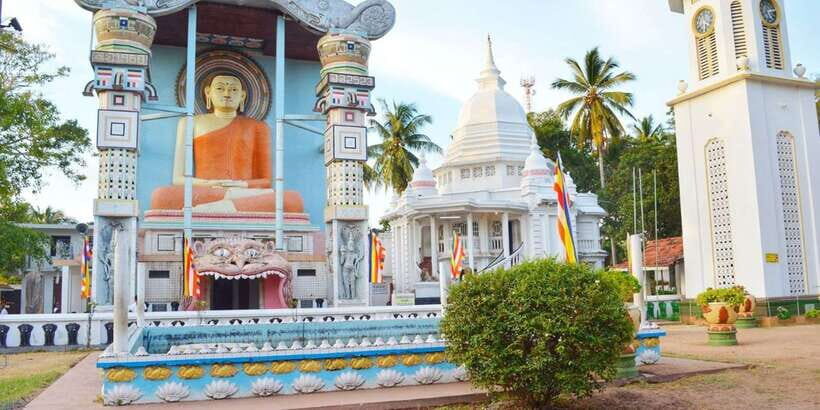
- Angurukaramulla Temple highlights: dragon’s mouth entrance and a moss-covered 300-year-old library ruin
- English live guide for context: you get explanations on the spots, not just a ride between them
Why This Negombo Tuk-Tuk Route Feels More Like a Local Morning
Negombo is often treated like a quick stop on the way to other parts of Sri Lanka, but it’s actually a city with a working rhythm. This tour leans into that. You start with fishing-industry visuals and end at a landmark temple that’s very much about how locals experience faith and symbolism day to day.
The best part is pacing. You’re not stuck in one theme—seafood, then churches and temples, then colonial-era structures, then a temple with a memorable entrance. It’s the kind of half-day plan that helps you understand the city’s layers quickly, even if your total time in Negombo is short.
Also, the tour is set up for private groups with hotel pickup and tuk-tuk transport. That matters because you can move efficiently through areas that aren’t easy to navigate alone, especially when you’re trying to hit multiple sights in a limited time window.
Other Negombo tours we've reviewed in Negombo


Pickup and How the 4 Hours Actually Work
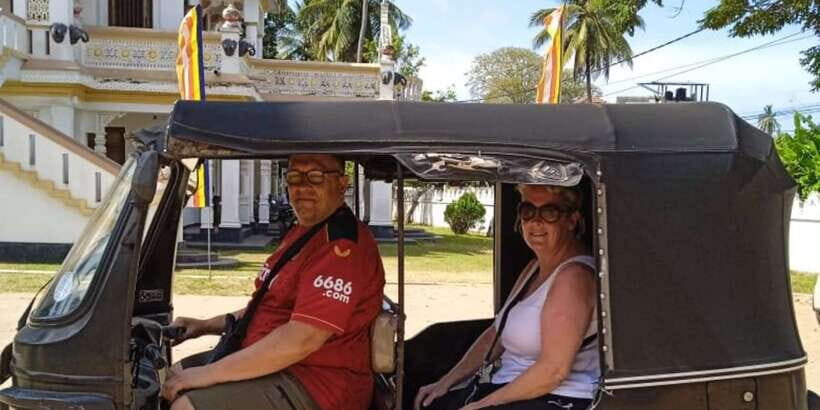
You’ll be picked up from your hotel around 08:00, with service available from Waikkal, Kammala, Negombo, Wattala, and Katunayake. The return drop-offs are similarly flexible: Waikkal, Negombo, Wattala, Katunayake, and Kammala.
Realistically, this is a half-day that runs at a city pace: short rides between stops, photo breaks, and guided visiting time at each location. The upside is that you don’t waste time figuring out transport or entry logistics. The downside is that you’ll have less time to linger at any one place than if you were doing a solo day with no schedule.
It helps that the tour includes parking fees, fuel/driver charges, and entrance tickets for the listed sights. So once you’re in the tuk-tuk, you’re mostly paying for the experience itself, not for little add-ons that can nickel-and-dime your morning.
Lellama Seafood Market and the Catamarans You’ll Remember
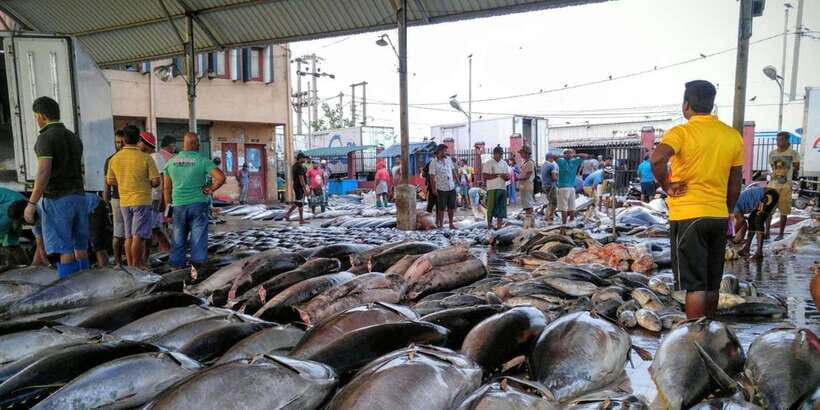
Your first major stop is the seafood market at Lellama, where you’ll see Negombo’s fishing vitality up close. Expect a lively, working atmosphere and the key visual you’ll associate with Negombo: catamarans and fishermen handling the day’s catch.
This stop is valuable for one simple reason: it shows the city’s economy in motion. It’s not a museum version of fishing. You’ll get the feel of the coast as a place where people earn a living, not just a backdrop for photos.
Photo and etiquette tips
- If you bring your phone (and you should), keep it charged and handy. This tour is very photo-friendly.
- Be respectful around workers and goods. If someone is busy, give them space and let them finish.
One practical note: on certain public holidays, market activity can be different. For example, the fish market may be closed on Good Friday, and in that case your guide can help adjust the plan so you still get meaningful sightseeing time. So if your dates line up with a holiday, it’s worth asking early what might shift.
St. Mary’s Church: Portuguese-Era Roots and 19th–20th Century Finishing
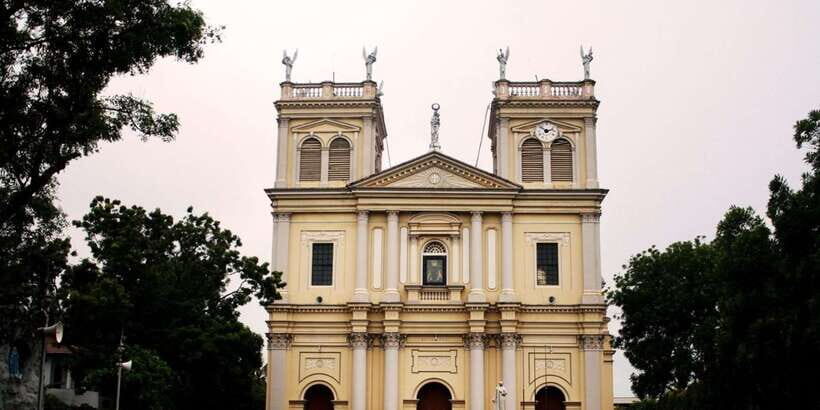
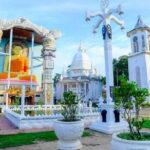
Next comes St. Mary’s Church, a centerpiece for Negombo’s Christian heritage. The story here is clear and historical: construction was restarted in 1874 and completed in 1922, reflecting the long, layered impact of Portuguese colonial influence.
If you’re the type of traveler who likes to understand the “why” behind a place, this stop delivers. It’s not just about seeing a church building. It’s about noticing how architecture reflects changing eras and how religious communities maintained presence over time.
Other tuk-tuk tours we've reviewed in Negombo




What to look for
You’ll get the chance to view the church in the context of the city. Even if you don’t go deep on architecture, it helps to know that this is a site with a long construction timeline, not a quick rebuild.
Sri Singama Kali Amman Kovil: Murals, Sculptures, and Hindu Art in Motion
After St. Mary’s, the tour shifts to Sri Singama Kali Amman Kovil, a Hindu temple known for its murals and sculptural details. This is one of those places where the visuals do a lot of the explaining.
Temples like this also help you read the city culturally. Negombo isn’t only Portuguese-era Christianity or Dutch-era coastal forts. It’s also Hindu worship, expressed through elaborate artwork and strong symbolic entrances and figures.
Practical note
Dress codes can vary by temple. The tour includes entrance fees and guides the timing, but you should still come ready to cover up when needed and keep your pace respectful inside sacred areas.
Hamilton Canal: A British-Built Waterway Linking Trade Routes

Then you’ll head to Hamilton Canal, a 14.5 km waterway connecting Puttalam with Colombo. It was built by the British in 1802, and it played a role in transportation and trade.
What makes this stop interesting isn’t just the fact that it exists. It’s how it shows you that Negombo’s importance has long been tied to waterways. The canal makes the city feel connected to larger regional movement, not only local fishing life.
In a few minutes, you can stand somewhere along the canal and get a sense of why canals mattered: water transport was efficient, and it linked different parts of the island through routes that made sense before modern roads.
Negombo Dutch Fort: Portuguese Foundations, Dutch Shape
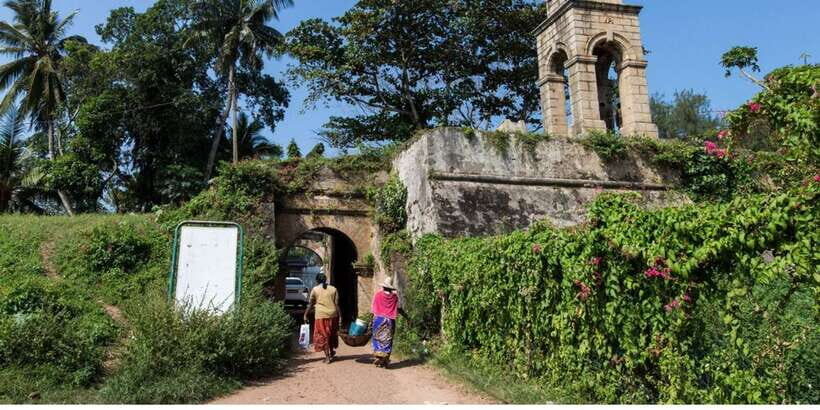
Next up is the Negombo Dutch Fort, a site with a layered backstory. The fort began with Portuguese construction and later was rebuilt by the Dutch into a pentagonal shape in the 1640s.
This is one of those stops where a guide makes a difference. Without context, it can feel like “old walls.” With context, you start noticing how power changes through rebuilding—how one colonial influence lays groundwork and another reshapes the result.
Why it’s worth your attention
- It’s a rare place where the colonial story is visible in structure, not just in words.
- The pentagonal design is distinctive, and the fort’s physical footprint gives you a better sense of planning and defense than a single building might.
Angurukaramulla Temple: Dragon’s Mouth Entrance and a Mossy Library Ruin

Your final major stop is Angurukaramulla Temple, one of Negombo’s most recognized temples. The highlight many people remember is the dragon’s mouth entrance, believed to ward off evil spirits.
Then there’s a quieter, haunting detail: within the temple area, you can see a 300-year-old moss-covered ruin of an ancient library. This is the kind of stop that shifts the mood. You go from street-level life earlier in the morning to a place with symbolism and age in every surface.
How this fits the whole tour
Ending here gives the tour a satisfying emotional arc. You start with working life and daily trade, move through faith landmarks of different traditions, and finish in a temple where age and myth meet.
It’s also a good place to slow down for photos because the entrance and ruin are visually distinct. Your guide can help you understand what you’re looking at, and where to focus your attention.
Price and Value: Is $40 Worth It?
At $40 per person for about 4 hours, this tour can be good value if you want a guided, efficient sampler of Negombo without logistics stress.
Here’s what you’re effectively paying for:
- Hotel pickup and return by tuk-tuk
- Transportation plus parking fees
- Entrance fees for the stops on the route
- Fuel surcharge and driver charges included
- Complimentary water and refreshments
- English live guide
- Taxes included
So the money mostly covers guided access and transport, not a trail of separate tickets you’ll pay one by one. That’s especially helpful in a place where you’d otherwise spend time arranging rides and figuring out entry costs.
The best way to judge value for your style: if you like structured half-days, this is priced like a practical city experience. If you prefer unstructured wandering and long stays at fewer sites, you might find the time limited for what you enjoy.
Guides, Drivers, and the Small Details That Matter
The tour’s strongest asset is its human factor: the guides and drivers. You’ll have a live English guide, and the overall feel from recent experiences is that the drivers are punctual, and the guiding includes real explanations, not just pointing directions.
In particular, I’ve seen names like Samantha connected with tours that cover the major sites and offer good planning around closures. There are also guides/drivers like Fernando and Simon showing up in groups where multiple tuk-tuks handle the transport smoothly for small parties.
One detail I really appreciate: the guide can function as a helper for photos. If you care about getting clear shots at places like Lellama market and the fort, that makes a difference.
What to Bring (and What to Skip)
To get the most out of the morning, bring:
- A charged smartphone
- Passport or ID card (a copy is accepted)
You might also want the usual Sri Lanka basics: light layers for sun and humidity, and modest clothing for religious sites. The tour provides refreshments and water, so you shouldn’t need to buy drinks during the route.
Wear shoes you don’t mind getting a little dusty. You’ll do some walking at temple and fort stops, and those entrances are photo moments where you’ll likely move around.
Who This Tour Suits Best
This is a strong fit if:
- You have limited time in Negombo and want the city’s highlights in one morning
- You want both fishing-industry reality and colonial-era sites
- You prefer the confidence of a guide who can connect the dots between churches, Hindu temples, and historic structures
- You’re traveling with a small group and like the flexibility of tuk-tuk transport
It may feel less ideal if:
- You dislike tight schedules and want slower, longer stops
- You’re only interested in one theme (like temples only or fort architecture only)
Should You Book This Negombo City Tour & Fishing Village Tour?
I’d book this if your goal is to understand Negombo quickly and respectfully, with minimal hassle. The route hits places that explain the city’s identity: working coastal life at Lellama, religious landmarks that show multiple traditions, and colonial remnants you can still see in the fort and canal.
If you’re on the fence, think about your time. For a half-day in Negombo, this plan has a good balance of visual impact and real context. The included transport and entrance fees also help keep the morning straightforward.
If your trip date lands on a holiday, be ready for possible changes at market timings. But the setup is designed for problem-solving, and a good guide will help you get a strong experience even if one stop isn’t running as usual.
FAQ
What’s the duration of the Negombo City Tour & Fishing Village Tour by Tuk-Tuk?
The tour lasts about 4 hours.
Where are pickup and drop-off available?
Pickup is available from Waikkal, Kammala, Negombo, Wattala, and Katunayake. Drop-off is available in Waikkal, Negombo, Wattala, Katunayake, and Kammala.
What sights are included on the tour?
The tour includes Lellama seafood market, St. Mary’s Church, Sri Singama Kali Amman Kovil, Hamilton Canal, Negombo Dutch Fort, and Angurukaramulla Temple.
Is there an English-speaking guide?
Yes, there is a live tour guide in English.
How much does the tour cost?
The price listed is $40 per person.
What’s included in the price?
Included are hotel pickup and return by tuk-tuk, transportation, entrance fees, fuel/driver charges, parking fees, complimentary refreshments and water, and government taxes.
What should I bring with me?
Bring a charged smartphone and your passport or ID card (a copy is accepted).
Is cancellation free if I change plans?
Cancellation is available with a full refund if you cancel up to 24 hours in advance.