REVIEW · NEGOMBO
Negombo: Private Half-Day Tuk-Tuk Tour with Hotel Transfers
Book on GetYourGuide →Operated by Traveli Ceylon · Bookable on GetYourGuide
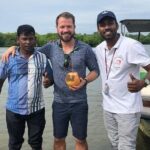
Negombo moves fast, and this tour fits. In a single tuk-tuk loop you get street life, religion, and the working seafood side of town, with hotel pickup and drop-off handled for you. I really like the way the route mixes major sights with less-famous stops, and I also like that the guide I’ve seen praised (Robin, with Tharaka coordinating) makes the places feel connected instead of like a checklist. One thing to keep in mind: the schedule is tight, so some stops are short, and the dry fish areas can be strong-smelling.
Because it’s private, you’re not stuck waiting for a big group. The driver is English-speaking, the pace is controlled, and you get a comfortable ride even when the streets get chaotic. For a first day in Negombo, this is a smart way to get your bearings fast and understand what life looks like here beyond the beach.
You’ll spend about 4.5 hours moving through markets, canals, churches, fort walls, and fishing neighborhoods, finishing with a relaxed beach stop near the hotel zone. Expect photo opportunities, short walks, and plenty of time for the guide to explain what you’re seeing in plain language.
In This Review
- Key highlights worth marking on your map
- Entering Negombo by tuk-tuk: fast, flexible, and very local
- Getting your bearings: mosque views and Angurukaramulla Buddhist Temple
- Sea Street along the Dutch Canal: temples, fruit tables, and Tamil life
- St. Mary’s Church: colonial architecture plus roof paintings with local fingerprints
- Dutch Fort walls, watch tower views, and the English-built prison story
- Dry fish market and lagoon bridge fishing: the coast at work
- Our Lady of Good Voyage Church in Duwa: another faith layer before the beach
- Browns Beach finish: a public beach break with food carts nearby
- Price and value: what $42 buys in a 4.5-hour private format
- Who should book this Negombo half-day tuk-tuk tour
- Quick practical tips before you go
- Should you book it?
- FAQ
- How long is the Negombo private half-day tuk-tuk tour?
- Does the tour include hotel pickup and drop-off?
- What transportation do you use?
- Is this tour private?
- What language are the guide and driver?
- What’s included in the price?
- What should I bring for the day?
Key highlights worth marking on your map
- Hotel pickup and drop-off keep the day from turning into travel logistics
- Robin’s local guiding style makes religious and historical stops easier to understand
- Sea Street via the Dutch Canal gives you a real sense of Tamil community life and temple areas
- St. Mary’s Church roof paintings and colonial architecture are a standout photo moment
- Negombo’s fish economy shows up in both dry-fish market smells and active fishing village scenes
Entering Negombo by tuk-tuk: fast, flexible, and very local
A tuk-tuk tour is ideal in Negombo because the town is built for short trips and quick turns. You’re not trapped in a slow, formal pace like you might be with a bus. Instead, you hop from one “world” to the next: Buddhist temple grounds, Catholic church facades, canal-side lanes, and the places where the fishing industry actually happens.
You’ll also appreciate the private setup. This kind of half-day works especially well if you’re traveling solo or as a couple, because you can ask questions on the spot, slow down at a market counter, or grab a better angle for a photo without worrying about holding anyone else back. Plus, the included water is one less thing to think about in Sri Lanka heat.
Other Negombo tours we've reviewed in Negombo

Getting your bearings: mosque views and Angurukaramulla Buddhist Temple
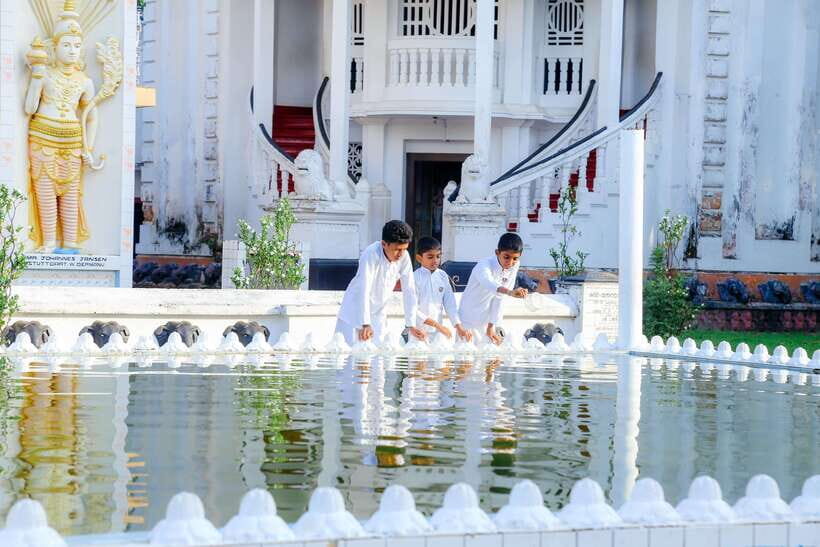
Right after pickup, you start with a short sightseeing ride just outside the city. The idea here is simple: you ease into the area so the rest of the day doesn’t feel like pure motion. On the way, you pass the Negombo Grand Mosque, which helps frame how this coast blends faiths and neighborhoods rather than isolating them.
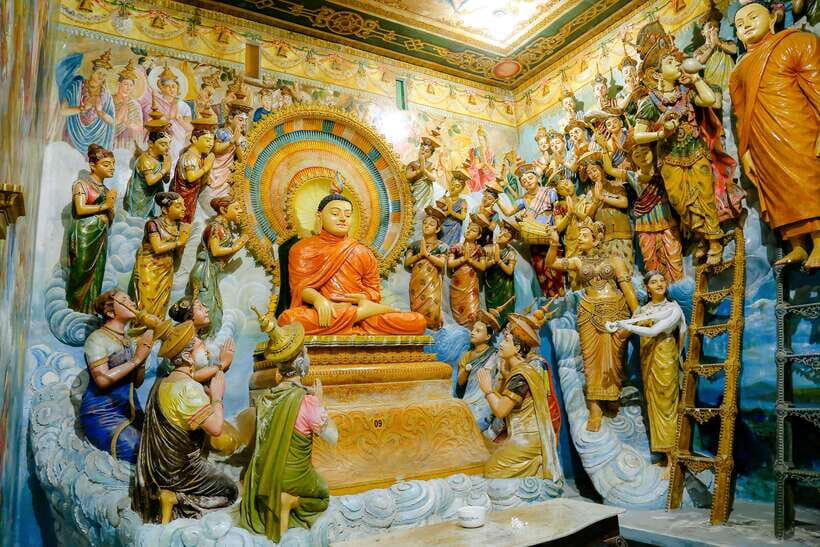
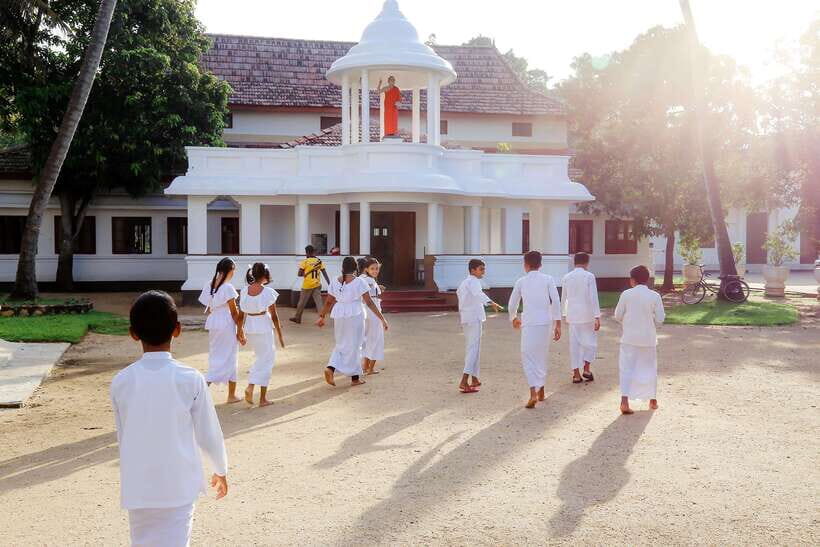
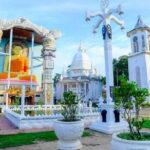
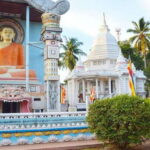
Then the route brings you to the iconic Angurukaramulla Buddhist Temple. This stop matters because it’s not just a quick photo. It’s your early chance to see the kind of religious architecture and daily rhythms that shape the town. Even if you’re not a “temple person,” you’ll likely notice how the guide talks about symbolism and practice instead of just dates and names.
The only real drawback at this stage is timing. After an early temple visit, you’ll move quickly into town streets and market areas, so wearing sun protection matters. Bring a hat and sunscreen, because shade isn’t always guaranteed.
Sea Street along the Dutch Canal: temples, fruit tables, and Tamil life
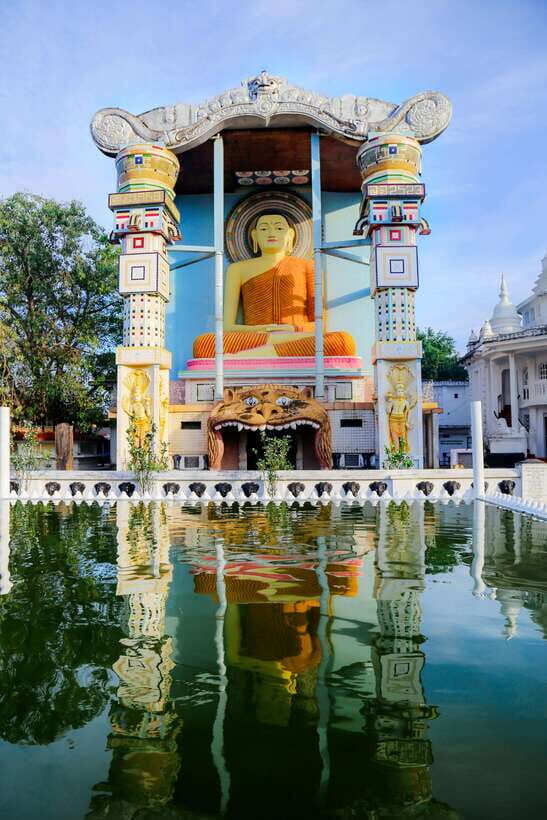
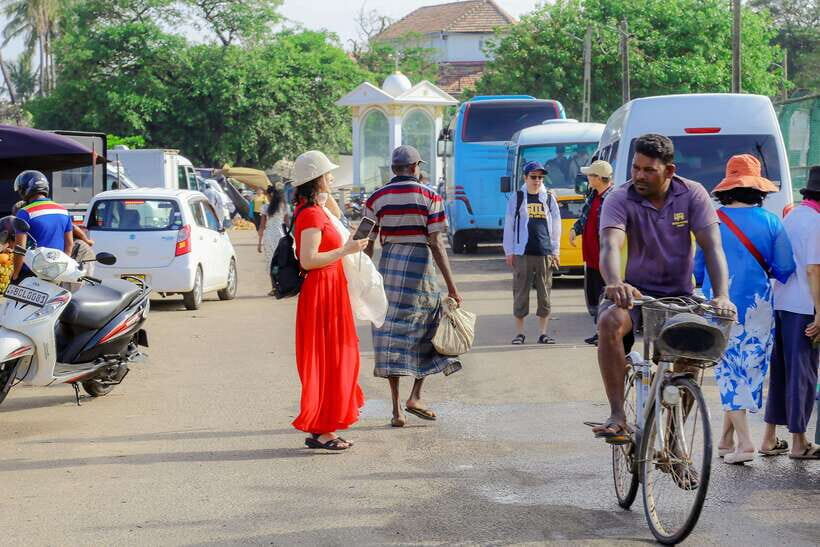
This is where the day turns into “real Negombo.” You cross toward the town center and ride along the main streets to reach Sea Street, entering via the Dutch Canal. On this stretch you’ll see a cluster of Roman Catholic churches and Hindu shrines, which makes it easier to understand how different communities share the same coastal geography.
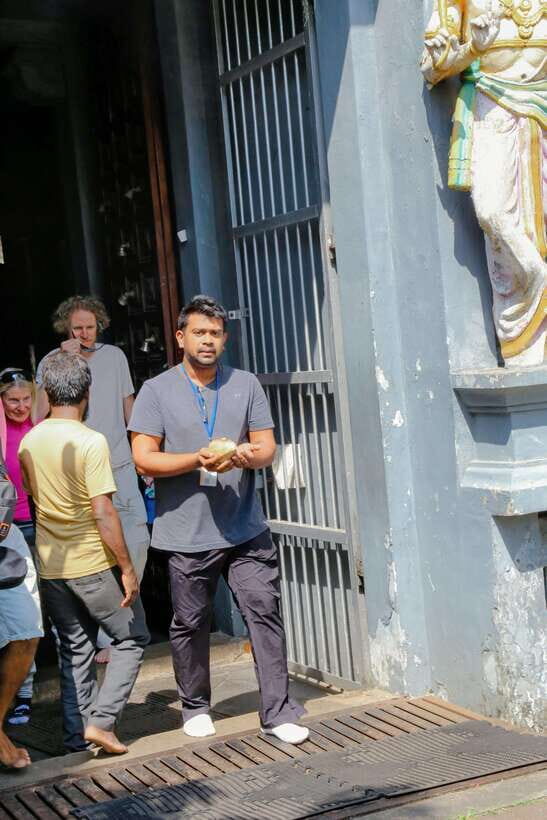
One of the most useful parts of having a local guide is the context. Sea Street is where you can watch day-to-day life unfold: people moving between stalls, religious spaces, and the everyday economy that supports them. You’ll get the chance to visit a Hindu shrine, and the guide can explain what you’re seeing in a way that feels practical rather than lecture-like.
Look out for the temple flower stalls and fruit tables loaded with temple coconuts. These details are worth your time because they’re not “souvenir shopping.” They’re part of ritual life and local supply chains. It’s also a great photo corridor, especially if you like street scenes where the place tells the story.
If you’re sensitive to crowds, this part might feel busy depending on the time of day. You’ll still have room to move, but the focus here is on local movement, not quiet sightseeing.
St. Mary’s Church: colonial architecture plus roof paintings with local fingerprints
Next comes St. Mary’s Church, a major Roman Catholic institution in Negombo. This stop is special because it’s both historical and artistic. You get the colonial feel in the building’s structure and exterior, and then you’re drawn to the roof paintings created by local painters.
Plan for a photo stop plus a visit long enough to actually look up and around. Roof murals can be easy to miss when you’re moving fast, so it helps that the tour gives it time. Even if you only catch a portion of the detail, you’ll walk away with a stronger sense of why this church is such a focal point for the area.
The watch-out here is basic: churches are working religious spaces. Keep your voice down, be respectful with photos, and don’t expect a long free-for-all inside. The guide will help you find the right moments.
Dutch Fort walls, watch tower views, and the English-built prison story
After churches and canal-side scenes, the tour shifts to history at the Dutch Fort. You’ll see how Negombo had the third largest fort during the colonial era. Today, there’s an intact wall and a watch tower that dates back to the 17th century—enough remaining structure to give you real scale.
What makes this stop more than just “old stones” is the way the story connects to later occupation. The prison was built using bricks from the fort by the English. That kind of detail matters because it shows how sites were repurposed, not just abandoned and forgotten.
You’ll also get scenic views along the way, mostly from short drives and walking segments. It’s a good break from market noise, and it gives your brain a moment to organize the day’s themes: faith, trade, and colonial layers.
The drawback: the time here is brief. If you love fort history, you might want more time on your own afterward. Still, as part of a half-day overview, it hits the right notes.
Other tuk-tuk tours we've reviewed in Negombo



Dry fish market and lagoon bridge fishing: the coast at work
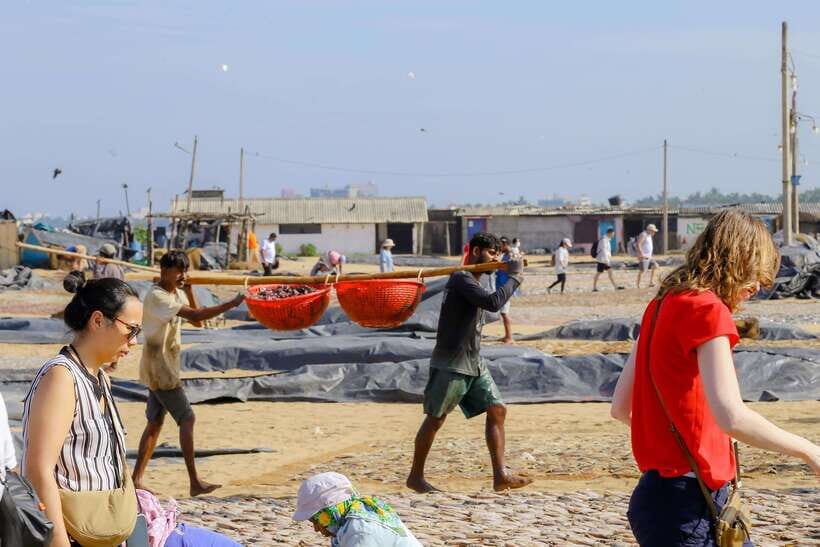
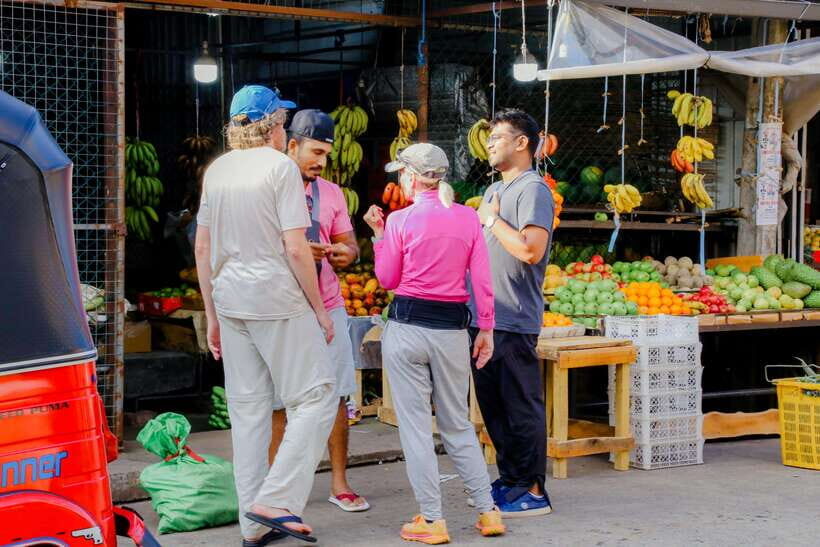
Then comes a sensory shift. The tour takes you to the public fish market, especially the area filled with dried fish. Yes, it smells. That’s not a problem with the tour—it’s the point. This is one of the few cottage industries in Negombo, and seeing it up close helps you understand how the town supports itself.
This stop is worth it because it turns seafood from something you order into something you observe being made. You can also see the active beach setting where people handle fish-processing tasks. Even a short visit gives you that behind-the-scenes feeling.
Next you cross the lagoon bridge to enter the fishing village. Here you’ll witness lagoon fishing activities, including rod fishing at the bridges. It’s a good way to see how the coastline isn’t just scenery—it’s a working system.
You’ll also pass Lellama, where the wholesale fish market is located. Even if you don’t spend long inside any single area, the passing view helps you map the industry: processing and drying in one zone, fishing and bridge activity nearby, wholesale movement beyond.
The tour then includes the Fishermen’s church and even a charming local swimming spot. That pairing is smart because it adds a human scale. You’re not only seeing labor; you’re seeing community spaces too.
One consideration: if you don’t like strong smells or tight, active areas, focus on pacing. Step aside when you need fresh air and let the guide lead the group through the busiest bits.
Our Lady of Good Voyage Church in Duwa: another faith layer before the beach
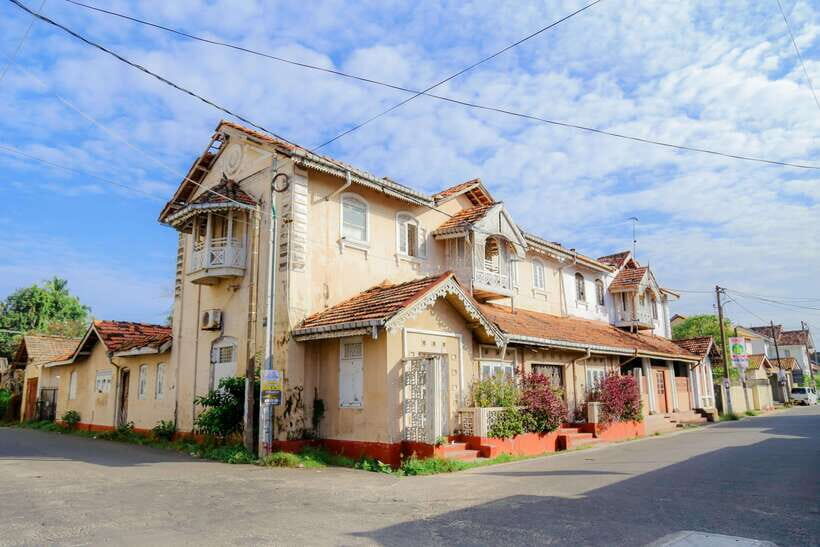
Before the final beach stop, the tour visits Our Lady of Good Voyage Church in Duwa (සින්දාත්රි දේව මාතා දේවස්ථානය – දූව). This fits the overall theme of Negombo’s mixed religious life. It’s another chance to see Catholic architecture and coastal faith traditions in a different neighborhood.
You’ll get a visit time that allows you to look around rather than just pass by. Even if you only notice one or two key visual details, it helps the day click into place: the fort explains colonial echoes, the churches show lasting Catholic presence, and the canal-side areas show daily Tamil community life.
Browns Beach finish: a public beach break with food carts nearby
To close the day, you head to Browns Beach, a public beach park with beach food carts. This final stop works because it’s near the hotel area, so the transition from active market scenes to a simpler shoreline moment feels smooth.
The beach is described as clean, and the food carts make it easy to buy a snack without going out of your way. If you’re tired (and you probably will be), this is the part where you can just stand, breathe, and let the day settle.
The only “downside” here is that after market and fishing stops, the beach can feel calmer than what you’re used to. If you’re hoping for nonstop action, treat this as the decompression phase.
Price and value: what $42 buys in a 4.5-hour private format
At about $42 per person for roughly 4.5 hours, the value comes from what’s included. You’re not paying separately for hotel pickup, tuk-tuk transport, a guide, water, and entry or parking fees. That matters in Negombo because prices add up fast when you stitch together half-day activities on your own.
A private group also changes the math. If you’re traveling as a solo passenger, a guided tuk-tuk route can still be worth it because you avoid taxi confusion and you get someone who can point out the right places in the right order. If you’re a couple or small group, the cost per person drops further and you keep the flexibility of a one-vehicle day.
The best way to think about the price: you’re paying for time saved and understanding gained. A good guide is the difference between walking into a market and actually knowing what you’re seeing. The guide setup here is strongly recommended, with Robin named repeatedly for driving plus explaining, and Tharaka mentioned for communication and personal pickup handling.
Who should book this Negombo half-day tuk-tuk tour
I think you’ll enjoy this most if:
- you want a first-day overview of Negombo without spending the whole day in transit
- you care about culture, religion, and daily life, not only big monuments
- you prefer no-shopping stops and a more straightforward sightseeing approach
- you travel solo and want a comfortable, safe-feeling way to see town
It’s also a solid choice for people who don’t have a long trip window along the coast. In just 4.5 hours, you’ll hit church highlights, fort history, canal-side neighborhoods, and working fishing scenes.
Quick practical tips before you go
- Wear a sun hat and use sunscreen. This is a lot of time outside across markets and beach areas.
- Bring a small cloth or tissue if you’re sensitive to smells at the dry fish market.
- If you have dietary or allergy concerns, ask your guide before buying food from carts during the beach stop.
Should you book it?
Yes, if you want a structured but not stiff half-day that shows you how Negombo really works. This tour is especially good for getting your bearings fast: you leave knowing where the religious landmarks are, how the canal and Sea Street fit together, and why the fish market and fishing village are the town’s heartbeat.
I’d skip it only if you strongly dislike active, working areas with intense smells, or if you prefer long museum-style visits over short, photo-and-walk stops. For most visitors, the mix of iconic sights plus local street rhythm makes it a smart, efficient use of time in Negombo.
FAQ
How long is the Negombo private half-day tuk-tuk tour?
The tour lasts about 4.5 hours.
Does the tour include hotel pickup and drop-off?
Yes. Pickup is available from any hotel in the Negombo area, and you’ll be dropped back at your accommodation.
What transportation do you use?
You travel in a tuk-tuk with hotel transfers included.
Is this tour private?
Yes. It’s a private group tour.
What language are the guide and driver?
The driver is English, and the tour is described as having English language support.
What’s included in the price?
Hotel pickup and drop-off, tuk-tuk transportation, a guide, 1 bottle of water per person, and all entry and parking fees.
What should I bring for the day?
Bring a sun hat and sunscreen, since you’ll spend time outdoors.