REVIEW · COLOMBO
Day Tour Anuradhapura from Kandy by Lux Tours Lanka
Book on Viator →Operated by Lux Tours Lanka · Bookable on Viator
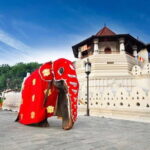
Elephants guard ancient stupas.
Anuradhapura is one of South Asia’s most haunting ruins, with huge dagobas, old temple remains, and sacred sites that still feel like living places. What makes this outing special is that you’re not just looking at stone and standing still. Ceremonies and day-to-day worship add motion, so the ruins feel like part of present-day Sri Lanka rather than a closed museum.
I especially liked the private tour feel and the human touch from the team behind it. In the reviews, I see the same theme again and again: friendly, informative support, and drivers like Kesara and Chana who make the ride easy and even fun. I also like the stop order because it mixes major icons (like Ruwanweli Maha Seya) with smaller, more characterful pieces such as the lotus-pond temple at Isurumuniya.
One thing to watch: confirm the final price before you pay. One group reported that the operator later contacted them about a higher price and requested a cash adjustment. It worked out in their case, but it’s a reminder to lock in the all-in amount up front and get it in writing if possible.
In This Review
- Key highlights you should care about
- Why Anuradhapura feels different from other ruin days
- The human side: what Lux Tours Lanka does well
- Isurumuniya Temple: the lotus pond stop that adds charm
- Ruwanweli Maha Seya: the white dagoba and its 344-elephant wall
- Abayagiriya Stupa: massive scale with a real sense of change over time
- Muragala (Guard Stone) and Ratnaprasada: a quick stone-symbol moment
- Mihinthale: the mountaintop story tied to Buddhism in Sri Lanka
- Price and value: what $125 really buys you
- Timing: plan for a long day, not a quick stopover
- Getting the most from each stop (without turning it into homework)
- Guide support you’ll feel on the day
- Should you book this Anuradhapura day tour?
- FAQ
- How long is the Anuradhapura day tour?
- Does the tour include pickup?
- What stops are included?
- Are admission tickets included?
- Is this a private tour?
- What ticket format will I use?
- What is the cancellation policy?
Key highlights you should care about
- Isurumuniya’s elephant-and-lotus setting: a rock temple by a lotus pond with carved elephant details
- Ruwanweli Maha Seya’s 344-elephant guard wall: a wall of elephants that frames one of the classic white dagobas
- Abayagiriya Stupa’s huge dome at scale: you’ll see how massive these structures were planned to be
- A short stop at Muragala (Guard Stone) and Ratnaprasada: quick but meaningful stone-symbol stopoffs
- Mihintale’s spiritual origin story: the mountaintop tied to the Mahinda–Devanampiyatissa link
- Helpful, responsive staff: reviews mention real care and fast support, including guides named Laxman
Why Anuradhapura feels different from other ruin days
Anuradhapura is the kind of place where scale hits you in layers. First you notice the enormous dagobas and the way the complex stretches out across the area. Then you realize several key sites are still active holy places. That matters, because you’ll often see people doing real worship and ceremonies instead of just photographing empty monuments.
It’s also a good contrast trip if you’ve already done other heritage sites in Sri Lanka. Some ruins feel distant, like you’re visiting the past behind glass. Here, the past is doing its day job. That blend of archaeology and ongoing religious life is what makes the day feel more than a checklist.
Finally, the route works for a one-day plan. You’re not stuck on the road all day without meaning. The stops are short, but they hit major icons and then punctuate them with smaller, more atmospheric points.
Other Kandy tours we've reviewed in Colombo

The human side: what Lux Tours Lanka does well
This is billed as a private tour, so you’re not sharing the ride or the schedule with strangers. That alone makes a big difference on a long cultural day, because your driver can adjust to small needs like timing, pacing, and the rhythm of your group.
The reviews point to the same strengths: the staff comes across as friendly and professional, and they give clear guidance. You’ll see names like Laxman tied to helpful guiding, plus drivers Kesara and Chana described as skilled and good company. Even when the tour is compact in time, the team seems focused on making you understand what you’re seeing, not just moving you from stop to stop.
If you care about comfort, this is a solid match. One review even calls out that the trip felt comfortable and that requests were handled quickly. For your planning, that means you should feel safe asking questions on the day—especially around timing, what to prioritize, and where you’ll have the most meaningful views.
Isurumuniya Temple: the lotus pond stop that adds charm
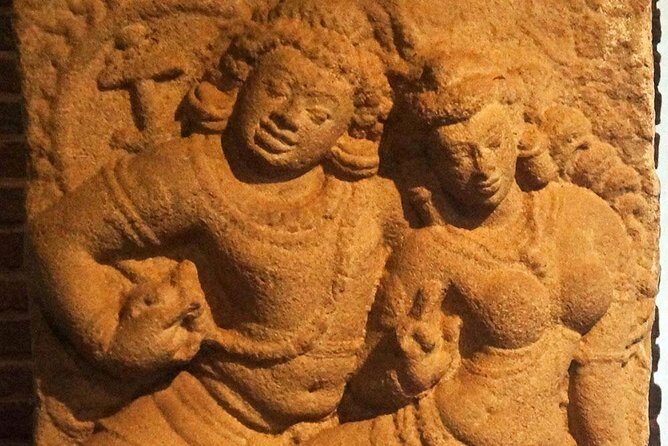
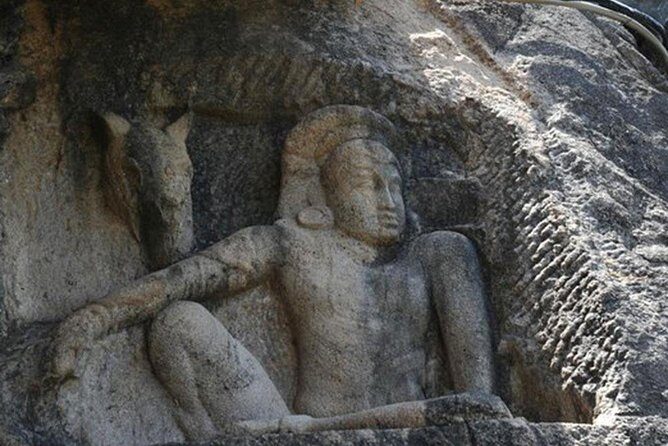
You’ll start with Isurumuniya Temple, and it’s a great first move. This is a rock temple associated with the reign of Devanampiya Tissa (around 307–267 BC), and it sits around a lovely lotus pond. Even if you only have about 30 minutes, the setting does a lot of work for you.
The standout detail is the corner carving with elephants playfully splashing water. That sounds like a small decorative moment, but it’s exactly the kind of specific ancient touch that makes heritage feel real. A big dagoba gives you scale; a lotus pond gives you mood.
The practical side: entry isn’t included for this stop based on the tour info you provided. So you’ll want to budget time for a ticket purchase and bring some cash. If you like photo opportunities, this is one of your best spots because the scene feels composed and calm.
Watchouts to consider: because it’s a temple area with stone surfaces, wear shoes with grip. Also plan to dress respectfully—Sri Lanka is not the place for flashy or revealing outfits in active religious spaces.
Ruwanweli Maha Seya: the white dagoba and its 344-elephant wall
Next comes Ruwanweli Maha Seya, one of the iconic white dagobas of Anuradhapura. The famous feature here is the wall guarded by a frieze of 344 elephants standing shoulder to shoulder.
What I like about this stop is that you get both the visual wow and the meaning behind it. Elephants aren’t random decor in this region’s Buddhist art. They’re tied to symbolism and storytelling across many sites. Here, the sheer count does the storytelling for you. You don’t need a lecture to feel how deliberate it is.
The tour info also notes that while many of the elephants are modern replacements, most are replacements of originals from around 140 BC. That’s a helpful detail because it changes how you look at the wall. Instead of seeing it as purely ancient, you start thinking about preservation—how later generations kept the symbolism going.
Time is brief (about 15 minutes), so don’t overthink it. Aim to walk the approach slowly, catch the wall from a couple of angles, and then move on. If you rush, you’ll miss why the elephants feel so striking.
Abayagiriya Stupa: massive scale with a real sense of change over time
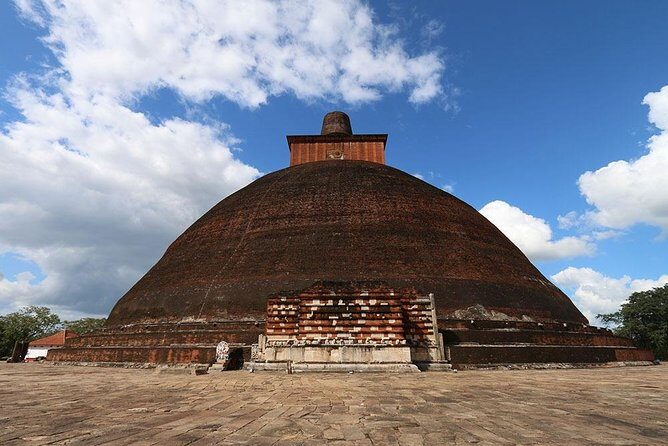
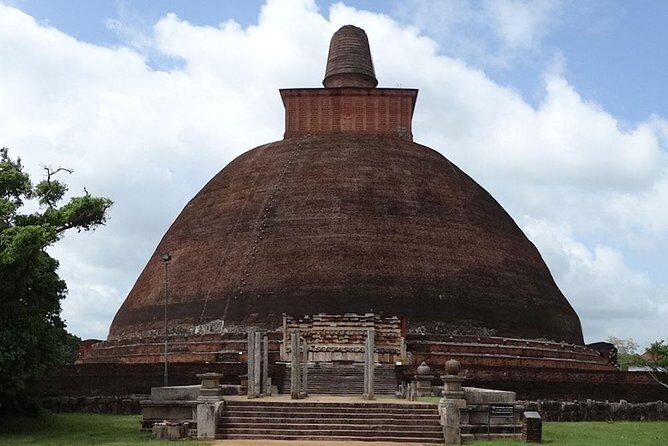
Abayagiriya Stupa is next, and it gives you a totally different feel from Isurumuniya and Ruwanweli. You’ll see the Jetavanarama Dagoba’s massive dome rising above the eastern part of Anuradhapura.
The tour notes that it was built in the 3rd century by King Mahasena and that the original plan may have topped around 120m, but today it’s about 70m. Even without digging into measurements, you’ll get the point: these builders aimed for monumental height, and the structure still communicates that ambition.
This is a stop that rewards a quiet look. Don’t just snap one picture. Take a moment to compare how the dome sits against the surrounding ruins. The difference between intended scale and surviving scale can hit harder here than at many sites because the dome dominates the space.
Again, time is around 15 minutes, so treat it like a short visual chapter. You’re collecting impressions, not trying to memorize the whole complex in one sitting.





Muragala (Guard Stone) and Ratnaprasada: a quick stone-symbol moment
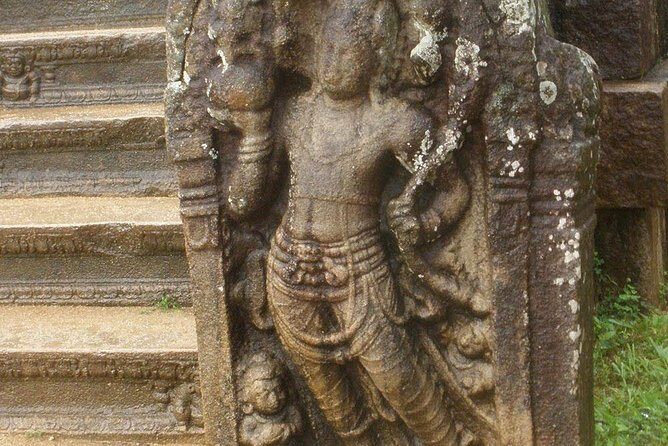
Then you’ll make a brief stop at Muragala, identified as a Guard Stone connected with Ratnaprasada.
Even though this is short (about 15 minutes), it’s worth treating as a pause. These guard-stone points and temple-related stone elements are part of the way Anuradhapura expresses protection, boundaries, and sacred space. If you’re the type who enjoys understanding how cultures mark meaning in physical objects, you’ll probably appreciate this more than you expect.
The drawback is also simple: if you want only the biggest wow-factor monuments, you might find this stop a little smaller. But it helps balance the day so it isn’t just a sequence of large domes and temples. It adds texture.
Mihinthale: the mountaintop story tied to Buddhism in Sri Lanka
Mihinthale is your next big emotional beat. This is a mountain peak near Anuradhapura linked in Sri Lankan tradition to a meeting between Buddhist monk Mahinda and King Devanampiyatissa—the story tied to the introduction of Buddhism to Sri Lanka.
The tour info doesn’t promise you long explanations here; it gives you about 30 minutes. Still, that’s enough to connect the place to the story and to take in the wider sense of why this spot mattered.
Because it’s a mountain peak, you should expect a bit of a climb or at least walking on uneven ground. Even if the route is manageable for you, it’s smart to wear supportive shoes and plan for sun. This is also a place where you’ll want to move slowly—views are the point, but the steps and paths can feel more demanding than you’d guess from the name.
If you’re traveling as a group that includes someone less interested in archaeology, Mihinthale can be a win. It’s about belief, origins, and a living tradition rather than only ancient architecture.
Price and value: what $125 really buys you
The tour price is listed at $125. On paper, that’s not “cheap,” especially if you’re comparing it to self-guided days. But value isn’t only about cost—it’s about what you gain: pickup support, a private schedule, and a driver/team that can interpret the sites while you avoid the guesswork of arranging everything yourself.
Your itinerary is made of short, high-impact stops. That kind of routing works best when someone is handling logistics. You’ll also use a mobile ticket, which cuts friction on the day.
Where value can wobble is in the payment experience. One review described a situation where the operator contacted them after booking because the price had increased and requested a cash difference. Even though the traveler handled it and continued, it’s a caution sign: double-check the final amount and payment method. That’s the only price-related red flag in the info you shared.
If you’re trying to make a one-day Anuradhapura trip work without stress, this tour likely feels like good value. If you’re the kind of traveler who enjoys full DIY planning and already has drivers or transport arranged, you might be able to do it cheaper on your own. But you’ll trade away the convenience and guidance that seem to be the main selling point here.
Timing: plan for a long day, not a quick stopover
The duration is listed as 5 to 15 hours. That’s a massive range, and it’s the biggest practical planning clue you have.
In real life, a tour like this can stretch based on travel time between pickup and the sites, how long you linger at each stop, and how traffic and weather play out. Since most stops are 15–30 minutes, the rest of the day is likely road time plus small pauses like entry lines, walking between areas, and breaks.
My advice: treat this as a half-to-full day outing where you want to arrive early and stay patient. If you’re tight on schedules—flight the same day, another tour right after—build buffer. This kind of cultural day benefits from calm pacing more than a sprint.
Getting the most from each stop (without turning it into homework)
Here’s how I’d make your day feel smooth and meaningful:
- Start with the setting, not the facts. At Isurumuniya, notice the lotus pond and the elephant carving. Let that mood anchor the rest of the day.
- Use the major monuments for scale. Ruwanweli and Abayagiriya are about size and structure. Don’t rush your eyes.
- Treat the smaller stops as pauses. Muragala and Ratnaprasada are quick, but they help you understand how the complex marks sacred boundaries.
- Save energy for Mihinthale. It’s the story stop. If you’re tired, you’ll skip the best part.
Also, expect warm conditions. Even if you don’t sweat through your shirt, you’ll feel the sun around open ruins. Water and shade breaks matter, and they’re easier when your driver can help manage timing.
Respectful dress is smart everywhere here, but especially because some of the sites remain in active religious use.
Guide support you’ll feel on the day
The standout theme in the reviews is care. People describe the team as very friendly, very informative, and always available for support. That matters because heritage days can get confusing fast: one broken sign, one detour, one wrong turn, and suddenly you’re stressed.
The staff described here—sometimes associated with names like Laxman, and driven by Kesara or Chana in some cases—sounds like the kind of support that prevents small problems from becoming big problems. If you ask where to look, they’ll likely direct you. If you need help with timing, they’ll help you keep momentum.
That’s the biggest quality indicator for a private tour: not how perfect everything is, but how quickly the team helps when things are less than perfect. That’s what the best experiences seem to have in common.
Should you book this Anuradhapura day tour?
Book it if you want an efficient, private day that covers the key Anuradhapura highlights—Isurumuniya, Ruwanweli Maha Seya, Abayagiriya Stupa, the guard-stone stop at Muragala, and then Mihinthale—without the stress of planning transport, tickets, and route pacing.
Skip or reconsider if you’re strongly DIY-minded and already have your own reliable transport, or if your schedule is so tight that a long travel day could derail you. Also, if price clarity is a top concern for you, take a minute to confirm the final total and payment expectations before the day starts, since one report in the info you shared mentions a post-booking price change.
If you do book, you’ll likely enjoy the combination of major monuments plus the smaller details that make the ruins feel like a real place people still care about.
FAQ
How long is the Anuradhapura day tour?
The duration is listed as approximately 5 to 15 hours, depending on the day’s timing and travel.
Does the tour include pickup?
Pickup is offered. The start point listed is Bandaranayake Intl Airport in Colombo, so it’s worth confirming your exact pickup location based on where you’ll be.
What stops are included?
The tour includes Isurumuniya Temple, Ruwanweli Maha Seya, Abayagiriya Stupa, Muragala (Guard Stone) and Ratnaprasada, and Mihinthale.
Are admission tickets included?
Isurumuniya Temple lists admission as not included. The tour info lists admission as free for Ruwanweli Maha Seya, Abayagiriya Stupa, Muragala (Guard Stone) and Ratnaprasada, and Mihinthale.
Is this a private tour?
Yes. It’s private, meaning only your group participates.
What ticket format will I use?
You receive a mobile ticket.
What is the cancellation policy?
You can cancel for a full refund if you cancel up to 24 hours in advance. If you cancel less than 24 hours before the start time, the amount paid is not refunded.