REVIEW · COLOMBO
Colombo Walking Tour with Ajeet De Soyza
Book on Viator →Operated by Ceymondu Escapes · Bookable on Viator
If you want Colombo in real size, do this walk.
This Colombo walking tour trades bus glass for sidewalks and close-up street life, guided by Ajeet De Soyza with stories that link the city’s old power centers to today’s everyday rhythms. I really like the small group size (max 8), which keeps questions easy, and I like that you get practical breaks like snacks and bottled water as you move.
One possible drawback: it can feel warm if you hit midday sun, and the route covers a lot of ground—so comfy shoes matter more than you’d expect. Also, most stops are free, but Gangaramaya Temple has a donation-based entry.
You’ll finish right where the city postcards start: in front of Galle Face Green.
In This Review
- Key things to know before you go
- Colombo on foot beats Colombo through glass
- Meeting at Galle Face Hotel and ending at the Green
- Ajeet De Soyza’s guide style: history that answers questions
- King Sri Wickrama Rajasinghe prison cell: a stop with a sharp edge
- Dutch Hospital and the Fort streets: Colombo’s colonial backbone
- Central Bank Currency Museum: Greco-Roman meets Sri Lanka
- Cargills department store and the Grand Oriental Hotel: commerce with a past
- Jami Ul-Alfar Mosque (Red Mosque): a cultural landmark you should pause at
- Old Town Hall in Pettah: history in the old business quarter
- Colombo Fort Railway Station: the British-built hub still matters
- Gangaramaya Temple: donation entry and a multicultural architecture stop
- Galle Face Green and the Old Parliament view
- Price and value: $30 for a structured Colombo primer
- Pace, weather, and what to bring on a Colombo walk
- Who should book this tour?
- Should you book the Colombo Walking Tour with Ajeet De Soyza?
- FAQ
- How long is the Colombo Walking Tour with Ajeet De Soyza?
- Where do you meet and where does the tour end?
- What’s included in the tour price?
- Do I need to pay any admission fees during the tour?
- Is this tour only walking?
- What if the weather is bad, or I need to cancel?
Key things to know before you go
- Small group, big access: capped at 8 people, so you can ask questions without shouting.
- Snack and water support: built-in bottled water and snacks help keep energy up.
- Mostly walk, with short transport legs: private transportation is included, and some parts may be covered by tuk-tuk.
- Fort to Pettah to temples: you’ll move through colonial-era sights, busy markets, and major places of worship.
- Mixed entry rules: many stops are free; Gangaramaya asks a donation for admission.
Colombo on foot beats Colombo through glass
Colombo can feel confusing at first: the buildings look old, but the city keeps changing around them. This tour makes it easier by putting you on foot, where you can actually see how areas connect—what’s still standing, what’s been repurposed, and what locals use every day.
I like that the tour doesn’t treat Colombo as a museum. Instead, you walk through working parts of the city—shopping precincts, department stores, churches/mansions in older districts, major transport hubs, and religious sites that people visit for reasons beyond sightseeing.
And starting at Galle Face means you’re already in the right mood. You get a seafront landmark first, then you work your way through the city’s older layers—Fort, Pettah, and the temple circuit—ending with sea-breeze views again.
Other Colombo tours we've reviewed in Colombo

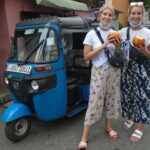

Meeting at Galle Face Hotel and ending at the Green
You meet at Galle Face Hotel on Galle Road in Colombo 00300. The tour ends in front of Galle Face Green, also right by that same hotel.
That start-end design is practical. You don’t need to “finish somewhere else” and figure out how to get back. You can also use the last stop to re-orient yourself for the rest of your trip—Colombo’s geography starts clicking when you’ve been shown its main spines.
If you like the idea of seeing the city’s public spaces in motion, the Green matters. The plan includes time to watch what’s happening out there, and you’ll also get context for major buildings facing the park.
Ajeet De Soyza’s guide style: history that answers questions
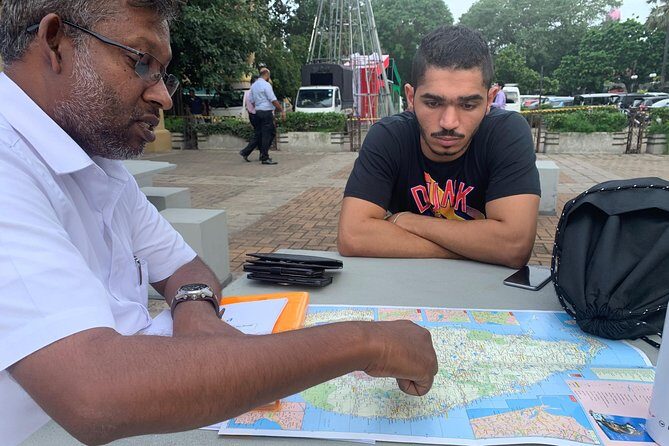
The biggest reason this tour earns such strong marks is Ajeet De Soyza. His approach blends Sri Lanka’s history with what Colombo looks like now, and the pace leaves room to ask questions instead of turning the whole experience into a lecture.
You’ll see the payoff quickly: when you stop at a colonial building, you’re not just told a date. You’re given the “why” behind it—how the city was shaped, why certain areas grew, and how different cultures left visible marks.
The small group format (max 8) helps a lot. Even when the group is tiny, the tour doesn’t feel like a rushed private briefing. It stays interactive, and you’re more likely to get answers that fit what you actually care about—architecture, religion, politics, daily life, or how the pieces connect.
King Sri Wickrama Rajasinghe prison cell: a stop with a sharp edge
The route begins with King Sri Wickrama Rajasinghe’s prison cell. This stop ties directly to a major turning point: he was captured on 18 February 1815 in Madamahanuwara and transferred to Colombo without entering Kandy.
Why this matters on a walking tour: it’s a reminder that history isn’t abstract here. You’re looking at a site connected to the end of an era, and the setting helps you understand Colombo’s role as a control-and-transition hub.
Time is short—about 10 minutes—and the admission is free. The “consideration” is simple: if you’re expecting big ruins or dramatic remains, you may find this more interpretive than showy. But the story behind it is worth the brief stop.
Dutch Hospital and the Fort streets: Colombo’s colonial backbone
Next you move into the Dutch Hospital Shopping Precinct. The Dutch Hospital is described as the oldest building in the Colombo Fort area, dating to the Dutch colonial era, and today it functions as a heritage building with shopping and dining.
This stop is a great example of what makes Colombo walkable with a guide: you can see the colonial shell, then you notice how modern use has layered itself on top. It’s not frozen in time, and that makes the architecture feel more alive.
From there, you’ll pass through the central business district and reach the Colombo Fort Clock Tower. The clock tower is noted as a unique structure in the city, and it’s an easy landmark to tie together what you’re seeing around it.
Expect quick photo moments and short explanations. Multiple stops here are listed as free, which is a nice bonus at the start of your trip.
Other walking tours we've reviewed in Colombo

Central Bank Currency Museum: Greco-Roman meets Sri Lanka
A highlight for architecture nerds and culture-curious folks alike is the Central Bank Currency Museum stop. The building construction began in 1911, and at the time it opened it was the tallest building in Colombo.
You’ll also get design context: it’s described as Greco-Roman in style, with a colonnade featuring Corinthian columns. That detail is useful because it explains why the building looks the way it does and why it feels different from the surrounding streets.
This is another quick stop (about 10 minutes) with free admission for your visit. The best way to enjoy it is to think of it as a visual bridge: Colombo’s modern finance identity lives inside a colonial-era statement building.
Cargills department store and the Grand Oriental Hotel: commerce with a past
Then it’s onto the Cargills Department Store area, described as the oldest department store buildings in Sri Lanka. The site’s story starts with a Dutch building on the land before the current Cargills & Millers buildings—so you’re seeing the evolution of commerce in the Fort zone.
This part of the walk is practical. It’s not just “historic,” it’s functional. You’ll pass a place that still matters for everyday shopping, which helps you understand the Fort area as a working district, not a theme park.
The Grand Oriental Hotel stop follows, with details that put the place in time: it officially opened on 5 November 1875, had 154 luxury and semi-luxury rooms, and is described as the first of the modern type of imposing hotels erected in the East.
I like stops like this because they show how Colombo branded itself to the outside world while still developing into a city shaped by locals, labor, and changing eras. The stop is around 15 minutes, and admission is listed as free.
Jami Ul-Alfar Mosque (Red Mosque): a cultural landmark you should pause at

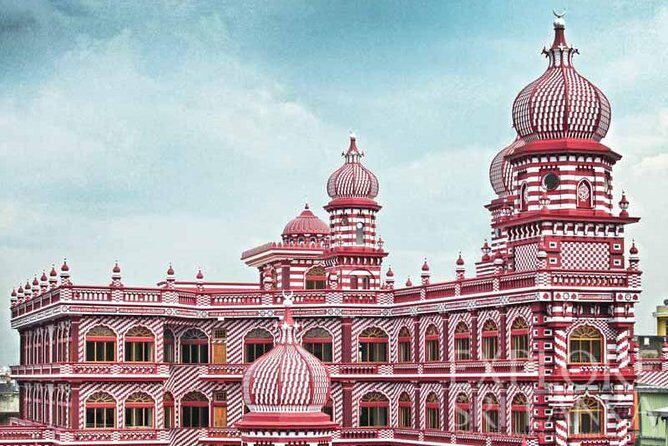
From the hotel zone, you’ll reach Jami Ul-Alfar Mosque, popularly known as the Red Mosque. It’s described as a unique masterpiece.
This is one of the stops where you’ll feel the tour’s balance. A walking route that only covers colonial buildings would be incomplete. Sri Lanka is many cultures at once, and you need to see the faith landmarks that locals use and maintain.
Plan for a short stop (about 5 minutes). Admission is listed as free, and the main value is the moment to recognize the building’s identity and how it fits into the wider city.
Old Town Hall in Pettah: history in the old business quarter
Pettah is where Colombo shifts gears, and the tour gives you a taste. You’ll visit the Old Town Hall, described as one of the little-known historic monuments: a large gothic church-like mansion in the old business quarter of Pettah.
Even if you don’t know Pettah yet, you’ll feel what the guide is doing: moving you from the polished Fort narrative to the commercial, crowded, and older-market mindset. This stop is about 15 minutes, and admission is listed as included.
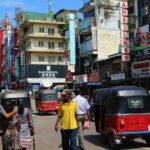
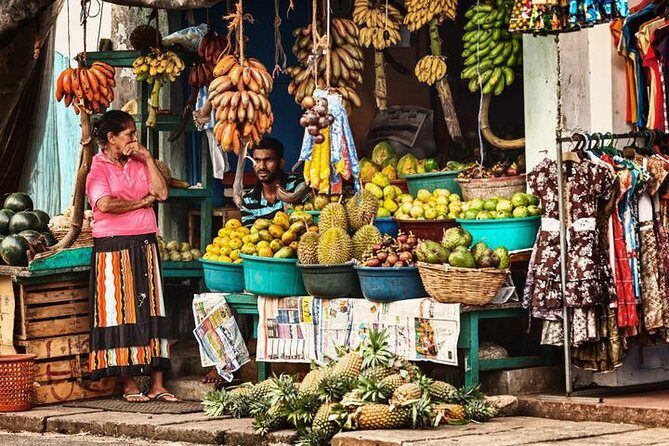
There’s also time set aside to explore the busy markets of Pettah Bazaar. This part is where you learn quickly. You see how people shop, what gets handled daily, and how the city’s energy is different from the Fort streets.
A practical note: markets can be loud and crowded. Go slow, keep your phone secure, and listen to the guide’s context so you’re not just collecting random sights.
Colombo Fort Railway Station: the British-built hub still matters
Then you hit the Colombo Fort Railway Station. It was built by the British and is described as the major hub in the Colombo city.
This is a smart stop for anyone trying to understand how Colombo works. Transportation tells you what the city values. A hub like this explains why areas developed the way they did and why certain commercial zones stayed important.
Your time here is about 15 minutes, and admission is listed as included. The value comes from noticing the building as both infrastructure and history—how old engineering now serves daily movement.
Gangaramaya Temple: donation entry and a multicultural architecture stop
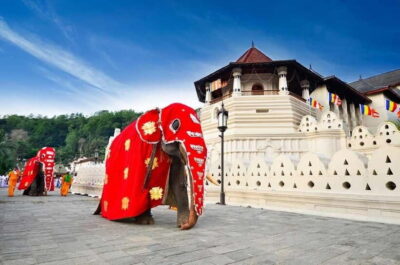
The tour also includes Gangaramaya (Vihara) Buddhist Temple. It’s described as the main temple in the Colombo city, with unique architecture influenced by many cultures.
This is the stop where you should be ready for a small cost. Admission at Gangaramaya is not included; a donation is considered the admission fee, and a ticket is issued by the temple. The data specifies $2.00 per person.
Plan your visit with respect. Temples have their own rhythm, and the best experience is when you slow down. The architecture note matters too: you’re not only looking at Buddhist elements, you’re seeing layered influences in the design.
This stop is about 20 minutes. If you’re short on time in Colombo, this is one of the strongest “why this matters” additions to the route.
Galle Face Green and the Old Parliament view
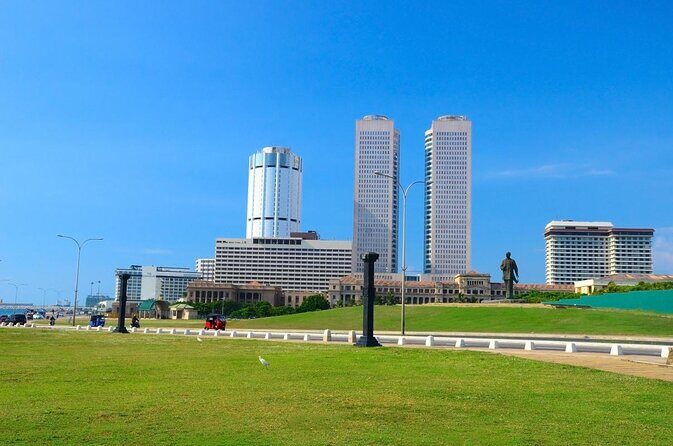
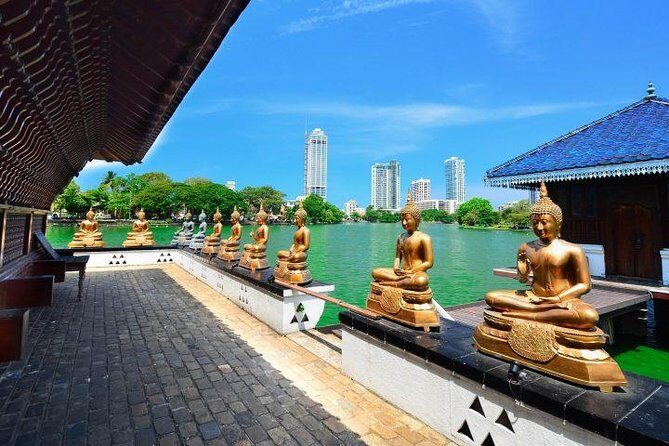
You finish back at Galle Face Hotel area and in front of Galle Face Green. The tour includes time to see activities on the Green and also learn about older landmarks facing it.
You’ll get context around the Old Parliament, with notes that it’s a British colonial era building. It’s described as Neo-Baroque-style, built to house the Legislative Council of Ceylon, and the idea is linked to Sir Henry McCallum.
This final sequence works as a “read the city” moment. After walking through Fort and Pettah, you can compare what you’ve learned with what you see in one wide public space. It’s also a nice end point for grabbing lunch or continuing your own exploration.
Price and value: $30 for a structured Colombo primer
At $30 for about 3 to 4 hours, the value is mostly in the structure and the guide-led interpretation. You’re not paying for a long ride or a ticket-heavy itinerary. Instead, you pay for someone to connect the dots among colonial architecture, working districts, transport hubs, and religious sites.
The included items help: bottled water, snacks, and private transportation (so you’re not stuck walking every single step). Many stops are listed as free, and government fees are included, which reduces the “surprise costs” feeling.
The main “extra” is clear: Gangaramaya has that $2 donation. So the pricing is predictable. I’d treat this as a first-day orientation tour—especially if you want to understand Colombo beyond the generic highlights.
Pace, weather, and what to bring on a Colombo walk
This is a walking tour, but it’s not a punishment hike. Still, Colombo can be hot. One of the practical tips from real experience is to wear comfortable shoes and carry water and snacks—both are addressed by the tour, but you should still plan for the heat.
Because the experience requires good weather, it’s a tour that makes sense earlier in your trip when you can adjust if needed. And since the schedule is about 3 to 4 hours, you’ll want to set it up when you’re not trying to rush to another distant plan right afterward.
Pack simple:
- Comfortable walking shoes
- A light layer for sun and breeze
- Your own small sun protection (hat/sunscreen), if you use it
Who should book this tour?
This tour is a great fit if you:
- Want a guided introduction to Colombo’s key neighborhoods without getting lost
- Like history told through places you can see and walk past
- Prefer small-group tours where you can ask questions
- Are interested in the mix of Fort colonial sites, Pettah markets, and major temples
It’s especially useful as an early tour because it gives you context fast. Then you can return later and recognize what you’re seeing on your own.
If you hate long explanations or prefer lots of free time with no talking at all, you might find the storytelling style more detailed than you want. But the overall pacing and question time are built into the experience.
Should you book the Colombo Walking Tour with Ajeet De Soyza?
Yes—if your goal is to understand Colombo in a few hours, this is one of the best ways to do it. The combination of small group access, food and water, and a guide who connects history to street-level reality makes it worth the money.
If you’re booking for a hot-weather day, aim for a timing window when you can handle sun and plan your footwear carefully. And remember the one likely extra cost: the Gangaramaya donation ticket.
If that matches how you like to travel, you’ll come away with Colombo that feels real, not just seen.
FAQ
How long is the Colombo Walking Tour with Ajeet De Soyza?
The tour lasts about 3 to 4 hours.
Where do you meet and where does the tour end?
You meet at Galle Face Hotel, 2 Galle Rd, Colombo 00300, Sri Lanka, and you end in front of Galle Face Green at the same location.
What’s included in the tour price?
The tour includes bottled water, snacks, government fees, and private transportation, plus the mobile ticket.
Do I need to pay any admission fees during the tour?
Most stops are listed as free. Gangaramaya Buddhist Temple has an admission donation fee of $2.00 per person, and the temple issues a ticket.
Is this tour only walking?
It’s described as a walking tour, and private transportation is included. That means you’ll likely have some transport between areas rather than walking every single segment.
What if the weather is bad, or I need to cancel?
The experience requires good weather. If it’s canceled due to poor weather, you’ll be offered a different date or a full refund. You can cancel for free up to 24 hours in advance for a full refund.