REVIEW · WELIGAMA
Weligama: Pottery Workshop with Tea and Snacks
Book on GetYourGuide →Operated by DONGA · Bookable on GetYourGuide
Clay starts flying fast in Weligama.
This workshop takes you into a Sri Lankan potter’s home in Kotapola, where pottery is still made the traditional way. You learn the pottery-making process with a couple who has been crafting since their teenage years, and you’ll get guided help in English or French while working on a real potter’s wheel.
My favorite parts were the chance to put my hands on the wheel and learn what goes into clay before it’s fired, plus the end-of-session tea and local sweetmeats. The whole mood stays warm and personal, not like a showroom class where everything feels rushed.
One heads-up before you go: this is not a Western pottery studio. There’s no glazing or instant kilning, so you’re not leaving with a finished, fired version of your own creation. You do get a souvenir piece made by the master potters instead, and that’s the trade-off for keeping the process authentic.
In This Review
- Key highlights worth knowing
- A Weligama workshop in a real potter’s home
- What you actually learn: from clay prep to wheel work
- The end-of-workshop ritual: tea, sweetmeats, and conversation
- What you take home: a master-made piece, not a glazed souvenir
- Price and value: is $40 a fair deal?
- Practical tips before you go (so clay day goes smoothly)
- Should you book the Weligama pottery workshop?
- FAQ
- Where does this workshop start and end?
- How long is the experience?
- What do you do during the pottery workshop?
- Do you offer glazing or instant kilning during the class?
- What pottery item do I take home?
- What’s included in the price?
- Are kids allowed?
- What languages are the instructors comfortable with?
- Is it a private group, and is it wheelchair accessible?
- What is the cancellation policy?
Key highlights worth knowing
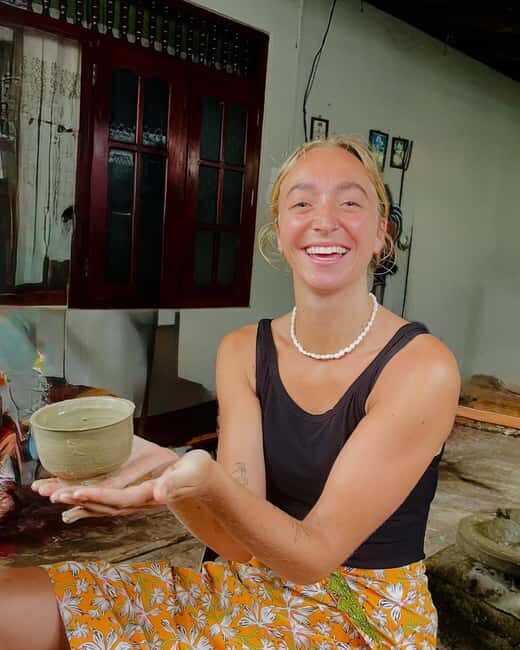
- Wheel time in a real potter’s setup, not a demo-only experience
- Clay preparation and kilning process talk, explained as part of daily making
- Tea and local sweetmeats at the end, taken with the people running the workshop
- A take-home souvenir piece made by the master potters (not your own fired pot)
- Kids can paint mini-pots, with materials provided
- Private group feel, so you can ask questions without crowd pressure
A Weligama workshop in a real potter’s home
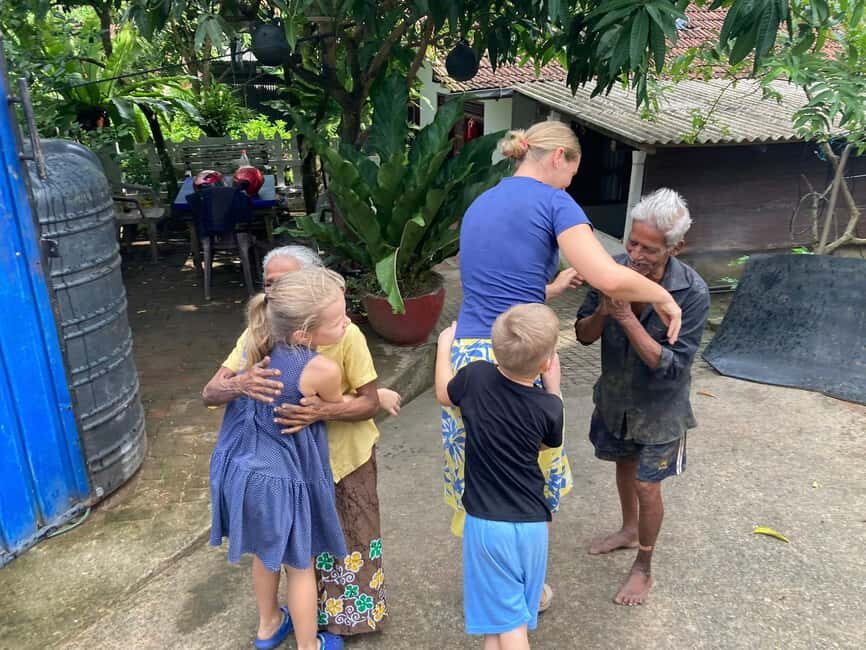
I like workshops where you can feel the place. Here, you’re not dropped into a craft room that could be anywhere. You meet your host at Kumbalgama Railway Station, then head to a private home where pottery work is part of life, not an imported hobby. It’s hosted by a couple who have been pottery-makers since they were teens, so the teaching comes from routine and pride, not a script.
You’ll notice the tone right away: the class is about learning how pottery fits into Sri Lankan tradition, and how the making process connects hands, time, and materials. The history and process are shared as part of what they do every day. That matters because pottery in Sri Lanka isn’t presented here as a trendy “experience.” It’s presented as a craft with practical steps and a community behind it.
The group format also helps. This runs as a private group, which usually means you get more time when you have questions about the wheel, the clay preparation, or what happens next in the pottery process. And the instruction is available in English and French, so language usually isn’t a barrier.
If you’re expecting a polished studio setup with modern tools, don’t. Think more along the lines of learning from artisans in their working space. You’ll leave with stories and a better sense of how pottery is made—plus a small souvenir that supports the family running the workshop.
A few more Weligama tours and experiences worth a look


What you actually learn: from clay prep to wheel work
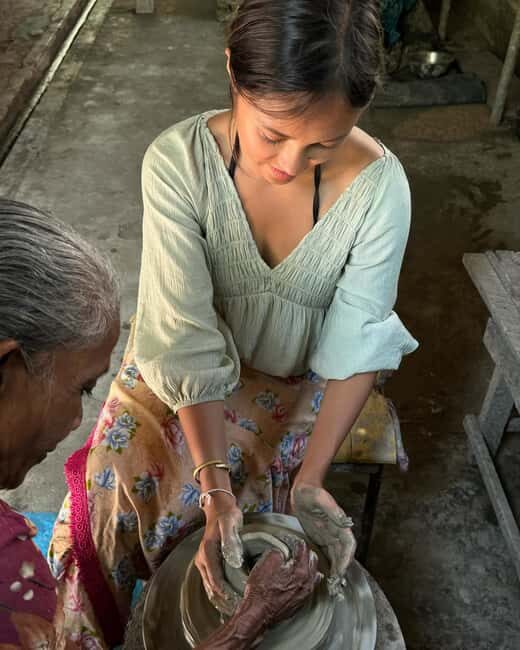
The workshop time is about 2 hours of making and explanation, then you wind down with snacks. The “making” part starts with how the clay is prepared for the wheel and for kilning. You’re not just spinning the wheel and hoping for the best. You get the context first: how the clay is handled so it behaves properly on the wheel and so it can be prepared for firing later.
Then you step onto the traditional potter’s wheel. This is the heart of the experience. Even if you’ve never used a wheel before, the pace is meant to give you time to get the hang of it. You’ll be guided through the basics of working the clay on the spinning wheel and shaping something you can call your own.
The workshop also explains the broader history and process of pottery in Sri Lanka. That turns the session from a one-off craft into something more meaningful. Instead of only learning hand movements, you also learn why those steps matter—how clay becomes a usable object, and what the makers think about as they work.
One important limitation to understand up front: glazing or instant kilning isn’t available. That affects your expectations. It also affects what gets taken home. You might make a piece during class, but it won’t be finished the way a Western “paint-and-glaze” workshop would finish it in a single sitting. The goal here is process learning and wheel practice, with the final fired work handled by the master potters.
The end-of-workshop ritual: tea, sweetmeats, and conversation
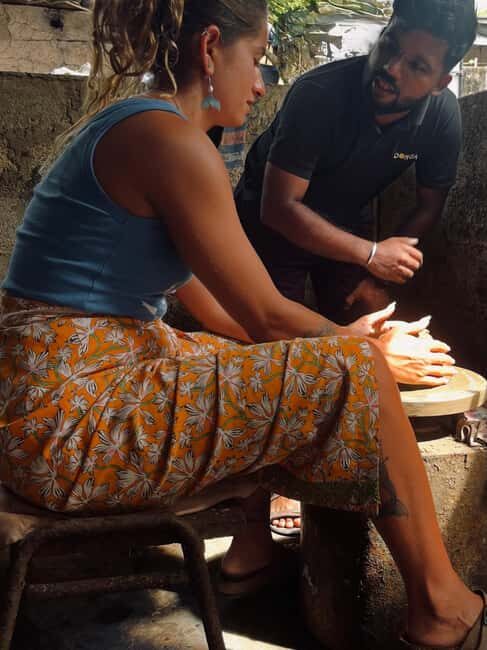
After the wheel time, you shift gears into a more relaxed 30 minutes of snacks. You’ll get tea and local sweetmeats—simple, but it’s a smart part of the day. It slows everything down so the session doesn’t feel like a rushed transaction. Instead, you get to sit and chat with the organizers and absorb the experience as a real human moment.
This is also where the hospitality shows. The hosts don’t treat this like a quick stop on a bus tour. It’s closer to being invited into someone’s world for a short while. In the reviews, people consistently point out the warmth and friendliness, and you can feel that in how the tea portion is handled: unforced, comfortable, and focused on conversation.
If you’re traveling with kids, there’s a small extra touch here. Kids are provided paint to decorate mini-pots. That’s a nice way to keep younger hands busy without changing the core adult class. It also helps kids engage with the craft visually, even if the main wheel work is geared toward adults.
Dress matters more than you might think, simply because this is a home setting. Wear clothing that feels comfortable for clay, and keep it modest. The experience also has rules in place—nothing alcohol-and-chaos related, and no sharp objects—so the setting stays family-friendly and safe.
What you take home: a master-made piece, not a glazed souvenir
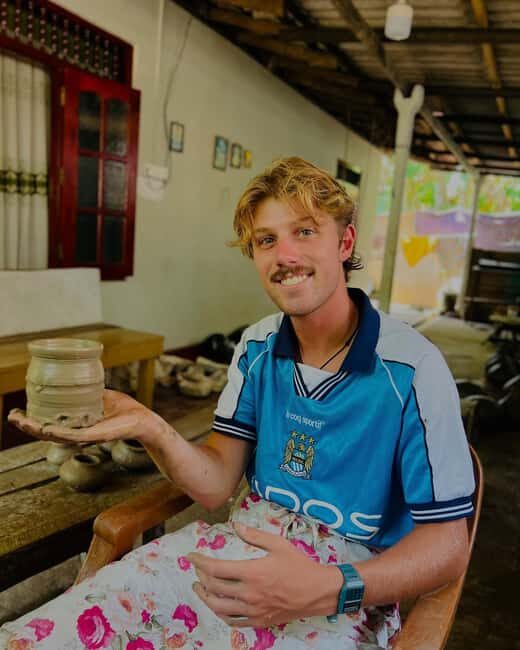
Here’s the practical part, and it’s worth getting clear on before you book. You can create during class, but you won’t glaze or instant-kiln your own piece during the session. Because of that, the souvenir you take home is a pottery piece made by the master potters.
That design choice is part of why the workshop works as it does. A true wheel session in a working home isn’t trying to squeeze everything—shaping, glazing, firing—into a single easy afternoon. The team handles the final steps so you still go home with something finished and giftable.
For many people, this is actually a plus. You get the best of both worlds: hands-on wheel time and a properly made, finished piece from experienced makers. It also means the hosts aren’t selling the quickest possible product. They’re teaching you, then supporting their craft network through what they produce.
The other “take home” isn’t an object. You also leave with the sense that this class is tied to livelihoods. By joining, you help the potters earn a better income and support a tradition they want their grandchildren to keep. That doesn’t make the class magically life-changing, but it does make it feel grounded in community—not just a photo moment.
Price and value: is $40 a fair deal?
At $40 per person, the price sits in the “reasonable” zone for a small, hands-on workshop—especially in a home setting where you’re paying for instruction time, materials, and the work behind the scenes.
What makes it good value is that you’re not only watching. You get actual hands-on wheel time, plus explanation about the clay prep and the pottery process in Sri Lanka. And you’re also included with tea and local sweetmeats, which helps the experience feel complete instead of like a quick stop.
The trade-off is the finish. Because there’s no glazing or instant kilning, you aren’t paying for a fully finished version of your own creation made during the workshop. Instead, you get a take-home piece made by the master potters. If you’re the type of traveler who wants the finished souvenir to be 100% your own craft-from-start-to-end, this may feel slightly different than a studio class. If you’re more interested in learning the method and supporting real makers, it feels fair.
Also, you’re not just buying entertainment. You’re helping a local family earn income through an artisan skill that takes time. For me, that’s the kind of value that ages well: you can remember the process, and you can also remember you were part of keeping something going.





Practical tips before you go (so clay day goes smoothly)

A few things will make your session smoother:
- Wear easy-to-wash clothes. You’re working with clay, and even if you’re careful, accidents happen.
- Plan for a basic, non-studio setup. This is a traditional home environment, so don’t expect modern craft-room conveniences.
- Keep expectations aligned with the process. You’ll learn about clay preparation and kilning, but glazing/instant firing isn’t part of your session.
- If you’re bringing kids, they can paint mini-pots, but the main wheel learning is still the focus of the class.
- The workshop has clear rules: no alcohol or drugs, and no sharp or prohibited items. So keep it calm and follow the host’s guidance.
If you’re traveling as a couple or small group, this is a nice fit because it stays personal. And if you care about crafts that connect to real daily life, you’ll appreciate how the hosts teach without turning the place into a stage.
Should you book the Weligama pottery workshop?
Book it if you want a hands-on craft lesson with real people, real tools, and a direct connection to local makers. It’s especially worth it if you like learning how things work, not just taking a finished product home. The wheel time plus the tea-and-snacks finish make it feel like a complete afternoon, not a rushed activity.
Skip it if your main goal is a Western-style pottery class where you glaze your own piece and see it fully finished right away. Here, that final glazing/firing step isn’t offered during the session, and the take-home souvenir is made by the master potters.
FAQ
Where does this workshop start and end?
You meet at Kumbalgama Railway Station, and you return there at the end.
How long is the experience?
The total duration is 2.5 hours.
What do you do during the pottery workshop?
You get a hands-on pottery experience that includes learning the pottery tradition and process, preparing clay for the wheel and kilning, and spending time working on a traditional potter’s wheel.
Do you offer glazing or instant kilning during the class?
No. Glazing or instant kilning is not available during the workshop.
What pottery item do I take home?
You take home a piece of pottery made by the master potters as a souvenir.
What’s included in the price?
The experience includes the hands-on workshop, history of the pottery tradition, clay preparation process, time on the wheel, the take-home piece, tea and local sweetmeats, and paint for kids to decorate mini-pots.
Are kids allowed?
Yes. Kids are provided paint to decorate their own mini-pots, but it is not suitable for babies under 1 year.
What languages are the instructors comfortable with?
The workshop is taught in English and French.
Is it a private group, and is it wheelchair accessible?
Yes, it’s a private group, and it is wheelchair accessible.
What is the cancellation policy?
You can cancel up to 24 hours in advance for a full refund.