REVIEW · UDAWALAWA NATIONAL PARK
Tangalle/Hiriketiya: Udawalawa Safari & Elephant Transit Hom
Book on GetYourGuide →Operated by Shehan Safari Jeep Tours · Bookable on GetYourGuide
Udawalawe has a way of turning a normal afternoon ride into serious wildlife time. I love that you get comfortable air-conditioned transport and still spend the core part of the day on a jeep safari where you can actually track animals. The guide support matters too, and in at least one booking the English guide was Mahesh, who clearly knew which spots gave the best chances.
You’ll also like the practical mix of wildlife targets: elephants as the headline, plus things like buffalo, crocodiles (when you’re lucky), and multiple bird types. One drawback to keep in mind: the park entrance and service fees are not included, so your final cost will be higher than the base price once you reach the gate.
This trip is built for people who want wildlife without complicated planning. You’ll be picked up from Tangalle, Hiriketiya, or Mirissa, driven to the park, and then returned the same day—simple rhythm, lots of animal time.
In This Review
- Key takeaways before you go
- Tangalle and Hiriketiya Pickup: Getting to Udawalawe without stress
- What to watch for
- Udawalawe Jeep Safari: Elephants, buffalo, and the hunt for movement
- Beyond elephants: what you can realistically scan for
- What a good guide actually does
- The best part: Why Udawalawe feels different as a wildlife reserve
- Elephant Transit Home: What to expect, and how to judge the value
- Price and logistics: Is $62 good value for Udawalawe?
- The cost you must plan for: entrance fees
- What makes the total cost worth it
- Timing tips: How to get better sightings on a short day
- A realistic expectation
- Who should book this Udawalawe safari (and who shouldn’t)
- Should you book? My honest take
- FAQ
- How long is the Udawalawe safari experience?
- What’s the price per person?
- What does the $62 include?
- Are entrance fees included?
- Where do you get picked up from?
- What language is the guide?
- Is this a jeep safari or a walking tour?
- What wildlife can I look for?
- Is free cancellation available?
- Is it suitable for everyone?
Key takeaways before you go
- Mahesh-style guiding: spot selection and on-the-spot explanations help you see more
- Jeep safari time is the point: you’re not spending hours in a bus watching road scenery
- Elephants are the main event: Udawalawe is known for its healthy wild population
- Birds and butterflies matter here: the area supports dozens of butterfly species and many birds
- Bring water: even short safari days feel warm, and you’ll be out spotting
Tangalle and Hiriketiya Pickup: Getting to Udawalawe without stress
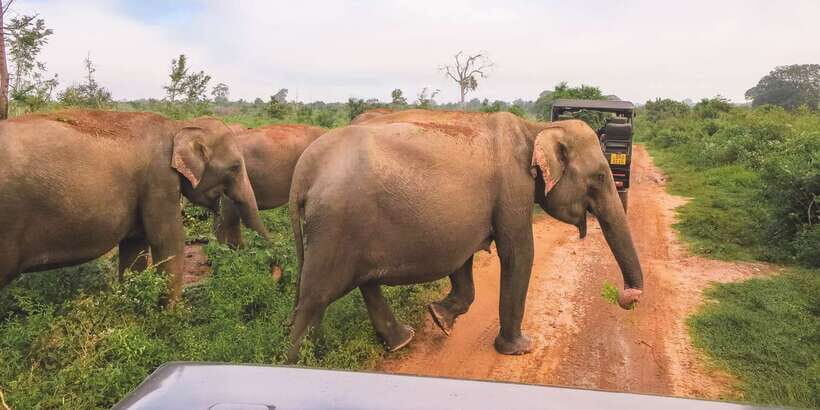
Your day starts with pickup from your hotel in the Tangalle, Hiriketiya, or Mirissa area. From there, expect about a 2-hour drive to Udawalawe National Park. This is one of the easiest ways to do Udawalawe if you’re staying near the south coast, because you don’t have to figure out transport on your own.
I like that the transfer is by private air-conditioned vehicle. It’s not just comfort for the sake of comfort—the drive time is real, and you’ll feel better once you arrive for the jeep safari. You also get a bit of context along the way, which makes the park feel less like a random stop.
Here’s what you’ll likely learn on the road: Udawalawe was created in the 1970s as a sanctuary for wildlife displaced when the Udawalawe Reservoir was built on the Walawe River. That matters because the park wasn’t formed for tourism first—it exists for animal refuge. When you understand that, the experience feels more grounded.
Other Udawalawe safari tours we've reviewed in Udawalawa National Park
What to watch for
This is not a walk-in-and-out situation. You’re traveling, you’ll be moving around in vehicles, and you’ll spend time on the safari vehicle in open conditions. If you have back issues, note that the activity is listed as not suitable for people with back problems. Even if you’re generally fine, the safari-style ride can be jolty.
Udawalawe Jeep Safari: Elephants, buffalo, and the hunt for movement
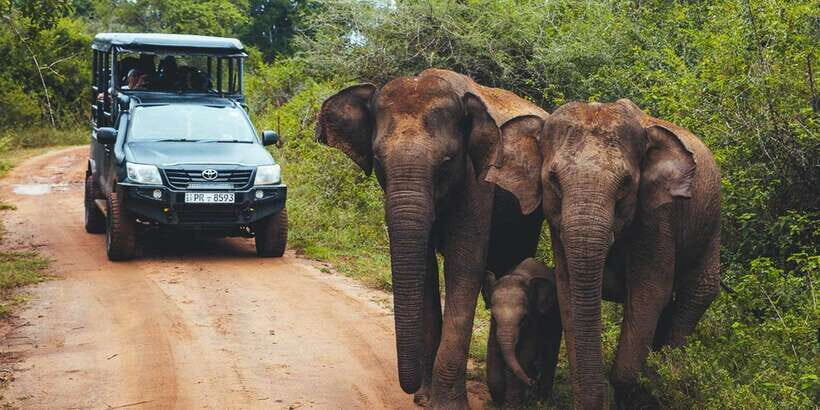
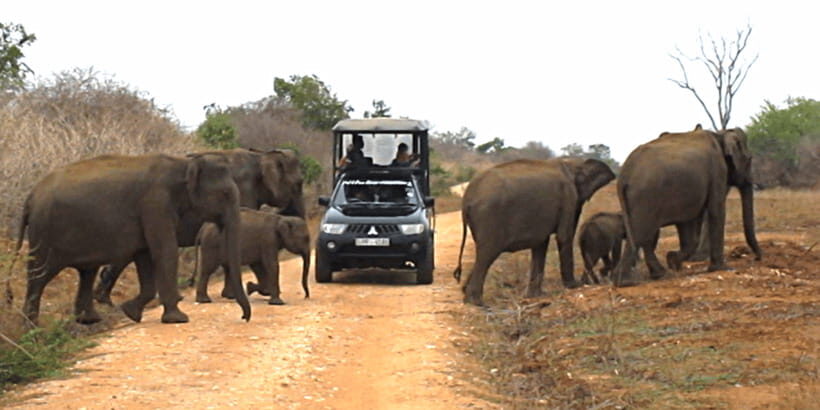
Once you reach the park, the day shifts into real wildlife mode. You’ll go for a safari drive by jeep, which is the key difference between seeing animals and just hearing about them later.
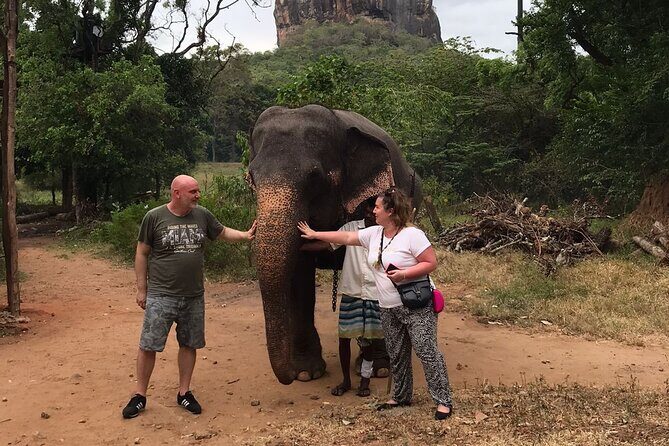
Udawalawe is especially known for its thriving elephant population. That’s the headline for a reason: the chances of spotting elephants are strong compared with many other Sri Lankan day trips. The better your guide is at reading the park, the more likely you’ll actually see elephants rather than just imagine where they might be.
Beyond elephants: what you can realistically scan for
You’ll be looking for other indigenous species too, including:
- Buffalo
- Wild boar
- Sambhur (a type of deer found in the area)
- Hares
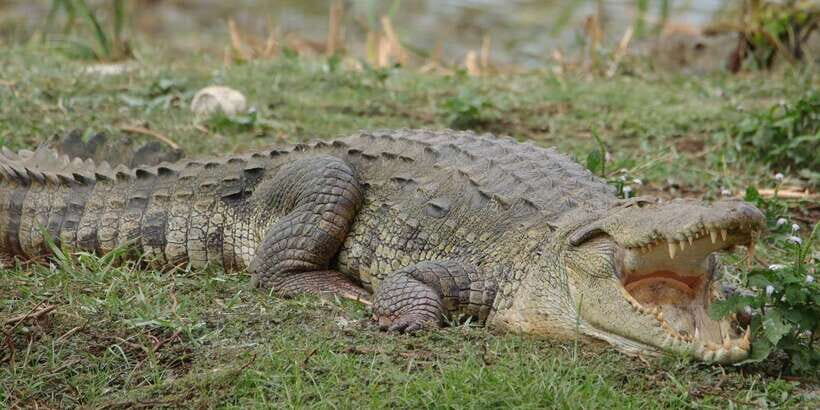
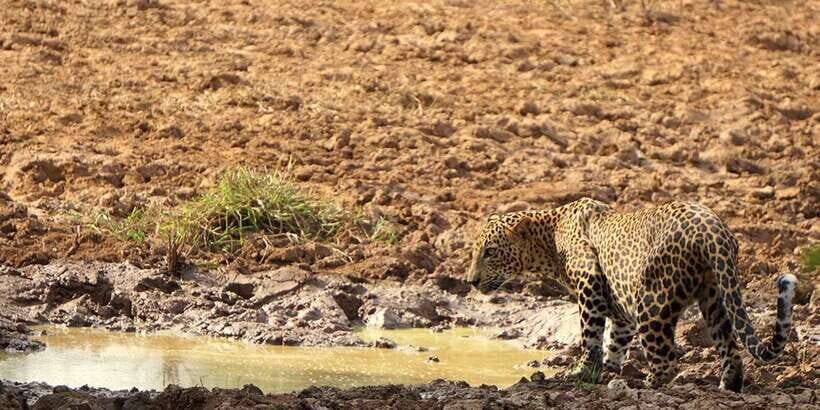
- Crocodiles if conditions and sightings line up
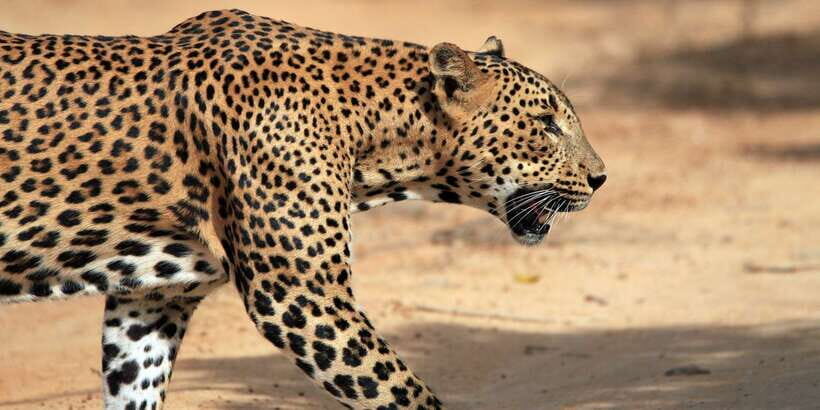
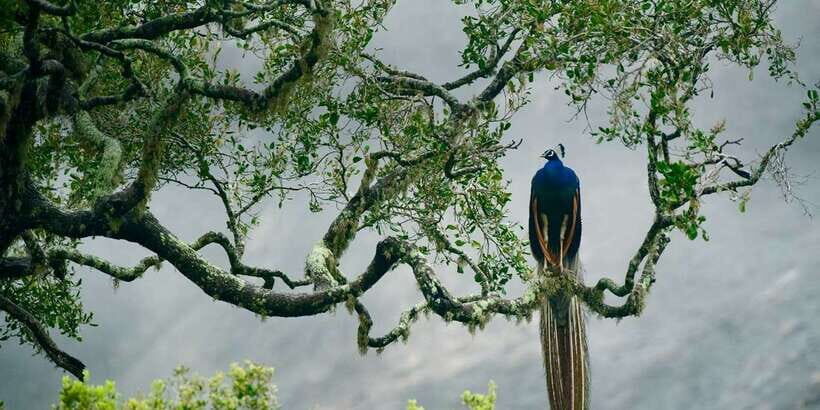
The park is also described as an important nature reserve for 50 species of butterflies, plus many bird species. That’s helpful because it gives you something to look for even when elephants are farther away. Birds can also be easier to spot when visibility changes—so even if the big moments come in bursts, there’s almost always something moving.
What a good guide actually does
In the best moments of this kind of tour, the guide isn’t just pointing. They’re positioning the jeep so you’re facing the right direction at the right time. In the feedback you provided, the consistent theme is that the guide knew exactly where to be for animal sightings.
In one booking, Mahesh was mentioned as very attentive and good with interesting information. That style matters because it changes the safari from random driving into purposeful searching.
The best part: Why Udawalawe feels different as a wildlife reserve
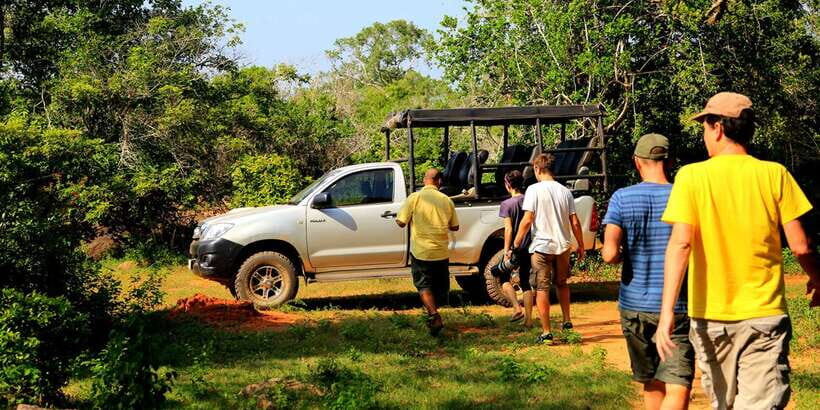
Udawalawe isn’t only about elephants lined up for photos. The setting is part of the value.
First, the park’s origin story helps: it exists as a sanctuary, created to protect wildlife displaced by the reservoir project. That means the habitat you’re driving through is managed to support animals living there—not just animals staged for visitors.
Second, the species mix is broader than most people expect. You’re not limited to one animal category. You can spot larger mammals like elephants and buffalo, but you can also keep an eye out for deer-like sambhur and smaller mammals like hare. Add birds and butterflies, and the park becomes more like a living system than a single-species stop.
If you like nature photography or you simply enjoy noticing tracks, calls, and movement, the reserve reputation helps you stay mentally engaged—even on the days when sightings come in cycles.
Elephant Transit Home: What to expect, and how to judge the value
The experience name includes an elephant transit home. However, the detailed breakdown you shared focuses mainly on the Udawalawe safari drive itself.
So here’s my practical approach: treat the transit home as a possible bonus, not the core promise. If your departure includes it, it may add context and another chance to see elephants up close (depending on how it’s run that day). If it does not, you’re not losing the main value, because the safari is already the centerpiece.
There’s one important balancing point from your notes: one person felt the elephant sanctuary stop was not really necessary. That doesn’t mean it’s bad—it just suggests you should go in expecting that it may feel shorter or less central than the safari. If your goal is wildlife sightings in the wild, the jeep time is where you should put your energy.
Price and logistics: Is $62 good value for Udawalawe?

Let’s be straight about money. The listed price is $62 per person for a 1-day, half-day-style experience. What you get in that price is the real value:
- Hotel pickup and drop-off from the Tangalle area
- Transportation by private air-conditioned vehicle
- Jeep safari in Udawalawe National Park
- A professional driver/guide (English)
That’s a solid package because you’re paying for transport + guided safari mechanics, not just a seat.
The cost you must plan for: entrance fees
Entrance fees are not included. You’ll pay park entrance and service fees in Sri Lankan Rupees, listed as 11,000/-, about $37. That can double your day’s outlay compared with the base price, so it’s smart to treat your budget as something like:
- Base: $62
- Entrance + service: ~ $37
At that point, the question becomes: do you want a guided, safari-style elephant-focused half-day from the south coast? If yes, this often pencils out well because you’re buying convenience and wildlife time.
What makes the total cost worth it
You’re paying for a setup that gets you from Tangalle to Udawalawe and then into the jeep with a guide who (in the best cases) knows the right areas to improve your odds. If you’re traveling without a driver or without local knowledge, $62 plus entrance can be a fair trade.
Timing tips: How to get better sightings on a short day
This is a half-day experience, so timing matters. One piece of advice from your notes: start early and bring water.
Even if you’re not the type who wakes up at dawn for fun, early safari starts tend to help for wildlife spotting. Animals move differently through the day, and guides are often trying to time your safari slot with calmer visibility and better chances of seeing animals before the midday heat changes behavior.
Bring water. You may not realize how long you’ll spend scanning until you’re out there. Even with air-conditioned transport on the way in, the safari time is spent outdoors looking and waiting for movement.
A realistic expectation
This is wildlife. Animals don’t follow a schedule. The guide’s job is to stack your chances, not guarantee a perfect checklist. If you go with flexible expectations and focus on the act of spotting, the day feels rewarding even when elephants are not right next to the jeep.
Who should book this Udawalawe safari (and who shouldn’t)
This works best for:
- Wildlife lovers staying in Tangalle, Hiriketiya, or Mirissa
- People who want a guided jeep safari rather than self-driving guesses
- Travelers who enjoy birds and smaller wildlife as much as large mammals
- Anyone who values a guide who can explain what you’re seeing—Mahesh-style attentiveness is exactly the kind of bonus that makes safaris better
It’s not suitable for:
- Pregnant women
- People with back problems
If you’re unsure, think about the combination of drive time and safari vehicle movement. The activity is specifically labeled as not suitable for certain medical needs, so don’t “test it” with hope.
Should you book? My honest take
I’d book this if you’re staying near Tangalle/Hiriketiya and you want Udawalawe done the easy way. The value is strongest when you care about having a guide who can place the jeep in the right spots. In your provided feedback, that’s exactly the repeated praise—Mahesh was described as attentive, informative, and good at getting people to good viewing areas.
The main reason to hesitate is simple: entrance fees are extra, and the total cost can climb fast. Also, if you’re only excited about one big thing—elephants in the wild—keep in mind that any transit home or sanctuary stop may feel secondary to the jeep safari for some people.
If you’re happy to spend your day scanning for movement and letting the reserve do its thing, this is a very solid, low-hassle wildlife day.
FAQ
How long is the Udawalawe safari experience?
It’s listed as 1 day, with a half-day safari format built around your hotel pickup and return.
What’s the price per person?
The price is listed as $62 per person.
What does the $62 include?
Hotel pickup and drop-off in the Tangalle area, transportation in a private air-conditioned vehicle, the jeep safari in Udawalawe National Park, and a professional driver/guide.
Are entrance fees included?
No. Entrance & service fees for Udawalawa National Park are not included. They’re listed as 11,000 Sri Lankan Rupees (about $37).
Where do you get picked up from?
Pickup is available from any hotel in the Tangalle, Hiriketiya, Mirissa area.
What language is the guide?
The live tour guide is English.
Is this a jeep safari or a walking tour?
It’s a jeep safari in Udawalawe National Park.
What wildlife can I look for?
You can look for elephants, crocodiles (when spotted), buffalo, sambhur, wild boar, hare, and various birds. The reserve is also noted for butterflies.
Is free cancellation available?
Yes, you can cancel up to 24 hours in advance for a full refund.
Is it suitable for everyone?
It’s listed as not suitable for pregnant women and for people with back problems.