REVIEW · SOUTHERN PROVINCE
Sinharaja’ rainforest – Discovery Tour (half day)
Book on Viator →Operated by Explore Sinharaja Rain Forest Tour · Bookable on Viator
Mosquitoes take the day off here.
This half-day Sinharaja Discovery Tour is built around a real rainforest walk: you get binoculars to help you scan for critters, you hike under a thick canopy, and you’ll learn how this protected forest keeps rare species going strong. The pace stays friendly, with an easy trail for about 3–4 hours, then a break.
I particularly like the practical planning: lunch comes after your hike (with a vegetarian option if you request it), and there’s also a complimentary tea plantation visit. You’re not just moving through green space—you’re getting context and a proper pause in the middle.
The one thing to plan for is leeches (and possibly rain). You’ll be given leech socks and rain jackets, but you still need to arrive ready to do a bit of squirm-free footwear thinking, especially if you’re not used to wet forest trails.
In This Review
- Key Things to Know Before You Go
- Sinharaja Morning Walk: What This Tour Gets Right
- Critter Spotting With Binoculars: How You’ll Actually See Wildlife
- Entering Sinharaja Forest Reserve: What the Hike Feels Like
- Leeches and Rain Gear: Plan Your Body, Not Just Your Clothes
- Lunch After the Hike: A Real Break, Not an Afterthought
- Tea Plantation Visit: Why This Stops Works After the Forest
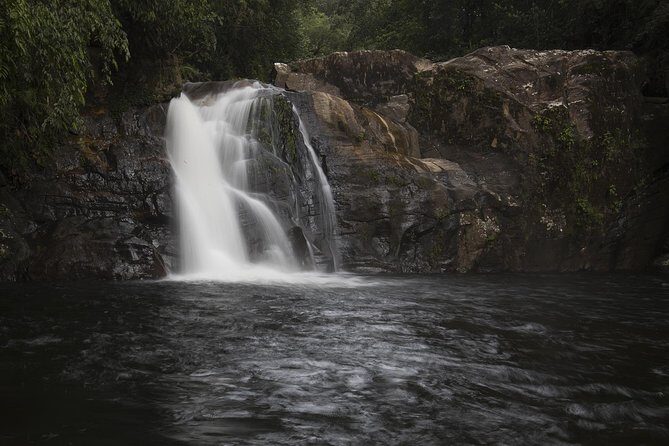
- Swimming With a Bathing Suit: The Cooling Moment You’ll Appreciate
- Price and Value: Is $25.65 Good for This Experience?
- Logistics That Matter: Meeting Point, Private Group, and Timing
- Who Should Book This and Who Should Skip It
- Should You Book the Sinharaja Discovery Tour?
- FAQ
- How long is the Sinharaja Discovery Tour?
- What time does the tour start and where is the meeting point?
- Are binoculars provided for the rainforest walk?
- Are mosquitoes or leeches a concern?
- Is lunch included, and is there a vegetarian option?
- Is there swimming during the tour?
- What is the cancellation policy?
Key Things to Know Before You Go
- Binocular-led critter spotting: Your guide helps you slow down and look closely instead of just walking through.
- Mosquito-free promise: The rainforest is described as having no mosquitoes, which changes how comfortable you’ll feel outdoors.
- Leeches are real: You’ll get leech socks, and you should wear them properly for the hike.
- Lunch is part of the value: Eat after the walk, with a vegetarian option if requested.
- Tea plantation stop included: You get a quick cultural add-on that fits naturally after time in the forest.
- Swim option: Bring a bathing suit since you may have a chance to cool off.
Sinharaja Morning Walk: What This Tour Gets Right
If you want rainforest time without the usual “what am I supposed to do here?” feeling, this works. You start in the morning (7:30 am) and build your day around guided looking, walking, and a couple of well-timed breaks. The forest setting matters too: Sinharaja is known for its heavy canopy and plant diversity, including a large number of endemic tree species, with canopy giants like dipterocarps, mesua, and ironwood.
What makes the experience feel worth it is how many different parts of “nature day” get bundled into one flow. You hike through dense forest for a few hours, then you’re not left hungry or stranded—you get lunch, a tea stop, and even a chance to swim if conditions allow. It’s one of those trips where the schedule is built to reduce decision fatigue.
Just keep your expectations aligned with a forest morning: you’ll spend time looking up, spotting movement, and walking on damp ground. This isn’t a quick photo-stop tour where you race from viewpoint to viewpoint.
If you're still narrowing it down, here are other tours in Southern Province we've reviewed.
Critter Spotting With Binoculars: How You’ll Actually See Wildlife
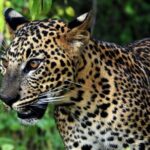
One of the biggest boosts here is that you’re given binoculars and encouraged to use them. In rainforest environments, wildlife often shows up as tiny motion—something climbing, a shape in leaves, movement along a branch. Binoculars help you see details without constantly walking closer and disturbing the habitat.
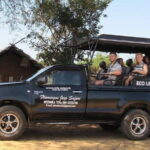
The guides are clearly tuned to spotting, and you may hear familiar guide names like Inoka and Prasad. Inoka, in particular, is described as thoughtful and careful about helping with leech prevention so your focus stays on the trail and the forest life rather than worrying about your legs the whole time. Prasad is associated with smart coordination too, including arranging transport to get people to the track in a smooth way when needed.
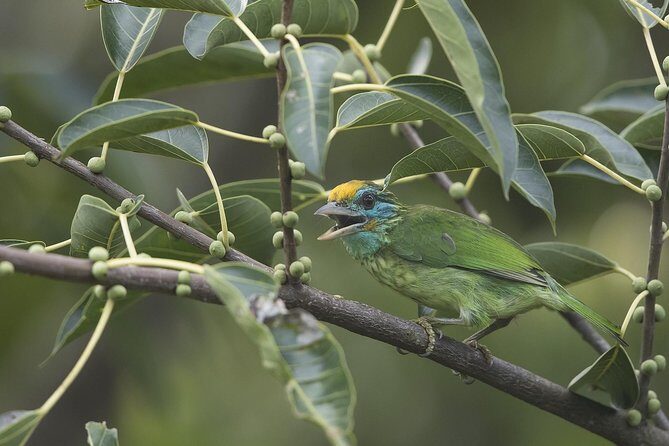
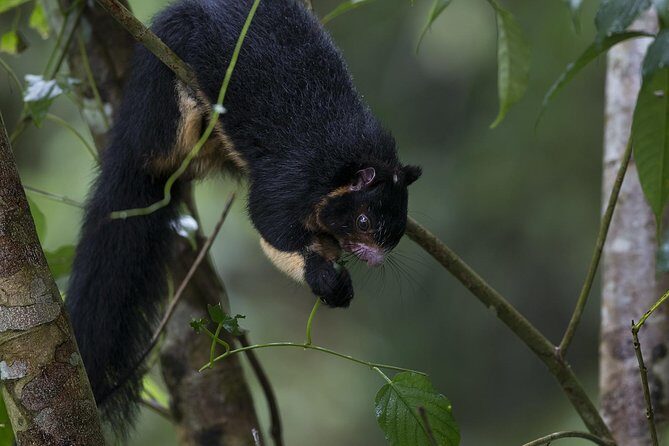
Here’s the practical part: your best chance to notice animals comes from pausing often. Don’t sprint ahead. Let your guide point, then you scan with binoculars. Even if you don’t see something dramatic at first, you’ll likely catch smaller critters—things like snakes, lizards, and spiders were specifically called out as targets people enjoyed seeing. In a rainforest, that’s a win.
Entering Sinharaja Forest Reserve: What the Hike Feels Like
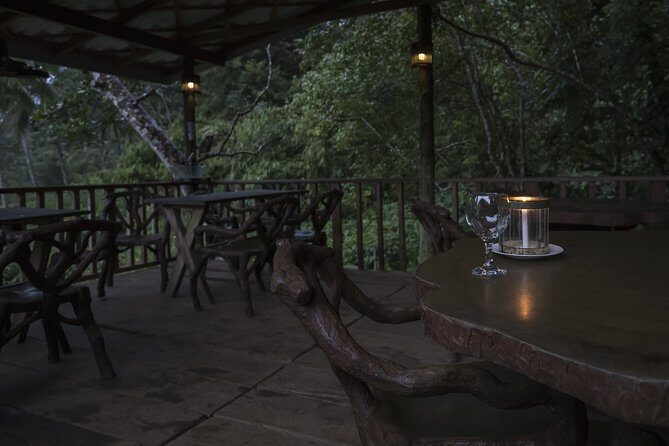
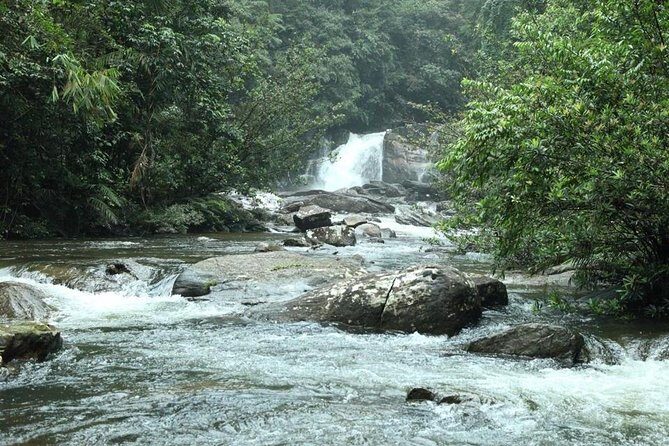
You’ll be walking through the Sinharaja Forest Reserve on an easy trail for around 3–4 hours, then regroup for lunch. “Easy” here doesn’t mean dry, flat, or cushion-soft. Expect a real rainforest path: damp air, uneven footing, and the kind of thick overhead canopy where light comes through in fragments.
What you’re really experiencing is a living conservation area where rare and endangered species have a sanctuary. Sinharaja’s plant life is a key reason the forest is protected—over a thousand endemic tree species are part of what makes it a botanical hot spot. The canopy dominance from big tree families matters because it shapes the whole ecosystem below: how light reaches the undergrowth, how moisture is trapped, and how animals move.
Practical drawback: the same dense environment that makes wildlife possible also increases the chance of getting wet and dealing with leeches. The tour provides leech socks and rain gear, which helps a lot. Still, I’d treat it like a “wet-hike day.” Wear the provided socks correctly, and plan to adjust your steps slowly rather than trying to outwalk the forest.
Leeches and Rain Gear: Plan Your Body, Not Just Your Clothes

This tour doesn’t pretend leeches don’t exist. It’s straight about it, and that’s a good sign. You’ll be given leeches socks and rain jackets, and the forest conditions can include rain.
Here’s what to do so you feel confident:
- Put the leech socks on the way your guide instructs. A small gap is all it takes for a problem.
- If it starts raining, don’t rush to fight the weather. Stay steady and keep your pace comfortable.
- Keep your hands free so you can manage your footing. In a forest, a fall is the real enemy.
Also, the tour calls out something that makes you breathe easier: there are no mosquitoes in this rainforest. That’s a huge comfort factor because wet forests can make you tense up. Even if you’re the calm type, less biting pressure lets you enjoy the quiet sounds and the search for wildlife.
Lunch After the Hike: A Real Break, Not an Afterthought
After your hike, you’ll stop for lunch. What I like about this setup is that it isn’t a rushed “grab something quick” moment. The meal comes after the walking, so you can actually reset.
You’ll have a vegetarian option if you request it. In tropical settings, I always appreciate when food needs are respected ahead of time rather than handled with a last-minute scramble.
Think of lunch as part of the pacing strategy. By eating after the main hike, you’re less likely to push too hard through fatigue later—especially if you also end up with tea and a swim opportunity. It’s a small detail, but it affects how enjoyable the overall day stays.



Tea Plantation Visit: Why This Stops Works After the Forest
You’ll also get a complimentary tea plantation visit. This is one of those smart add-ons because it connects two sides of Sri Lanka you often end up learning about separately: the wild rainforest and the cultivated landscapes people manage for livelihoods.
Tea plantations also help with mental re-centering. After the humidity and the close canopy of Sinharaja, you’ll get a different visual rhythm—less tight overhead, more open views, and a chance to understand how the region’s plant knowledge shows up in daily life.
What you should expect from this part: a short, guided visit that feels like an educational pause. It’s not described as a long, multi-stop day. Keep your energy for the hike and the forest time, then let tea be the lighter section of your morning.
Swimming With a Bathing Suit: The Cooling Moment You’ll Appreciate

The tour offers an opportunity to swim, and they specifically ask you to bring a bathing suit. This makes sense after a rainforest hike: even with rain jackets and socks, you can get warm from walking in humid air.
A realistic way to think about this: swimming might depend on conditions, but the fact that it’s built into the experience means you shouldn’t plan to leave everything “dry and tidy.” Bring a change of clothes if you can, and pack your bathing suit where you can reach it without unloading half your bag.
If you like active breaks—cooling down, stretching legs, resetting for the next segment—this is a nice bonus. If you don’t swim, you can still treat it as a chance to relax and take in the surroundings while others cool off.
Price and Value: Is $25.65 Good for This Experience?
At $25.65 per person, this is priced like a solid local excursion rather than a premium outfitter. For that money, you’re getting a guided rainforest walk plus practical gear support (binoculars, leech socks, and rain jackets), lunch, and a complimentary tea plantation visit.
The value angle is mostly about reducing uncertainty:
- You don’t have to figure out what to do in the forest—binoculars and guide-led scanning are built in.
- You’re not buying the “rain + leech problem” solutions on your own since the gear is provided.
- You get food included after the hike, plus vegetarian support.
Duration is listed at 4–7 hours (approx.), and you’ll start at 7:30 am. That’s a typical half-day structure that still feels substantial once you count the lunch and the tea stop. If you’re trying to maximize meaningful outdoor time without committing to a full-day trek, this fits.
Logistics That Matter: Meeting Point, Private Group, and Timing
You start at Mederipitiya Dombagoda Rd, Sri Lanka and the activity ends back at the meeting point. That “back where you started” approach makes your life easier, especially on a shorter trip.
This is also described as a private tour/activity, so only your group participates. That tends to improve the experience because your guide can focus on your pace—helpful in a rainforest where pausing matters for wildlife spotting.
Confirmation is received at booking time, and tickets are mobile. Those are small details, but they reduce friction.
One note for planning: the tour is described as near public transportation, and service animals are allowed. Physical fitness should be moderate. You’re walking for a few hours, and wet conditions can make it feel harder than dry-day hiking.
Who Should Book This and Who Should Skip It
This is a great fit if you want:
- guided rainforest time with real wildlife-spotting effort
- binocular help and a guide who knows how to look
- a morning schedule that includes lunch and a tea stop
- an outdoor day where you don’t need to worry about mosquitoes
You might want to think twice if:
- you dislike wet conditions or you’re uncomfortable with leeches even with socks provided
- you don’t handle hiking in damp forest well
- you’re looking for a totally stroller-level, flat, dry stroll (this is a hike, even if it’s labeled easy)
If you’re traveling as a couple, friends, or small family group and want a guided day that feels personal, the private setup is a nice match.
Should You Book the Sinharaja Discovery Tour?
Yes—if you’re excited to slow down in a rainforest and you can handle the reality of wet ground and leeches. The best part is the balance: you get binocular-led critter spotting, practical gear for forest conditions, a proper lunch, and a complimentary tea stop, all wrapped into a morning you can actually finish without burning your whole day.
I’d book this when:
- you want a guided nature experience that feels structured but not rushed
- you care about seeing wildlife details, not just scenery
- you appreciate value: included lunch, gear support, and a tea visit for a modest price
I wouldn’t book it if leeches make you panic or if you’re sure you won’t enjoy a damp, living forest environment. In that case, you might prefer a drier, simpler day plan.
FAQ
How long is the Sinharaja Discovery Tour?
The tour duration is approximately 4 to 7 hours.
What time does the tour start and where is the meeting point?
The start time is 7:30 am. The meeting point is Mederipitiya Dombagoda Rd, Sri Lanka, and the tour ends back at the meeting point.
Are binoculars provided for the rainforest walk?
Yes. You are provided with binoculars to help you look for critters in the rainforest.
Are mosquitoes or leeches a concern?
The tour information notes there are no mosquitoes in this rainforest. Leeches are mentioned as a possibility, and you’ll be provided with leech socks. Rain is also possible, so rain jackets are provided.
Is lunch included, and is there a vegetarian option?
Lunch is included after the hike, and a vegetarian option is available if requested.
Is there swimming during the tour?
Yes, there is an opportunity to swim, and you should bring a bathing suit.
What is the cancellation policy?
You can cancel for a full refund up to 24 hours before the experience’s start time, and cancellation is free under that condition.