REVIEW · NEGOMBO
Negombo: private half day city tour with hotel transfers
Book on GetYourGuide →Operated by Traveli Ceylon · Bookable on GetYourGuide
Negombo works best when you go with a local lens. This private half-day tour uses an air-conditioned car and an English-speaking chauffeur guide to get you from temple to market to waterfront without the usual hassle. The day feels fast, but not rushed—more like someone showing you the places they actually pass every week.
I especially love the street-market walking through everyday shopping lanes, where you’ll see fruit and vegetable stalls and taste what’s going on right now. I also like how the tour doesn’t skip the real Negombo smell and work: you’ll walk near locals processing fish to dry, then move on to the lagoon-linked fishing area. One drawback to consider: it’s a short 3-hour format with a lot packed in, so if you want long beach downtime or slow museum-style pacing, this may feel a bit busy.
In This Review
- Key things that make this Negombo tour worth your time
- Getting picked up and set loose in Negombo’s everyday streets
- Angurukaramulla and Abayasekararamaya temples: how faith shapes the streets
- Bandulla Market food tasting and the Clock Tower area
- The Dutch canal and Fort: history without the heavy lectures
- Fish markets and drying on the beach: expect the real working smell
- Cross the lagoon to fishermen’s island: the bridge view that feels authentic
- Mora Wala sea basin: a quick local bathing stop
- The guide experience: why Tharaka’s style matters
- Price and value: what $37 buys in a 3-hour private tour
- Who this tour suits best (and who should rethink it)
- Should you book this Negombo half-day city tour?
- FAQ
- How long is the Negombo private half day city tour?
- Is hotel pickup included?
- Is the tour private?
- What language is the guide?
- Is transportation air conditioned?
- What sights are included?
- Is it wheelchair accessible?
- What should I bring?
- Can I cancel for free?
Key things that make this Negombo tour worth your time
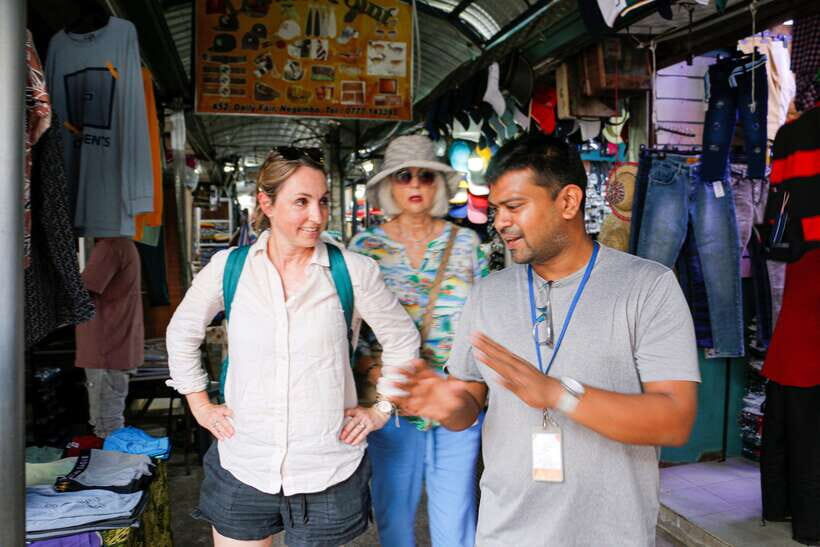
- Private pickup and an AC car mean you start cooler and finish less tired, especially in the heat.
- Temples, church, and a Hindu shrine in one run gives you an easy snapshot of Negombo’s mixed faiths.
- Town shopping lanes and markets are the core experience, not an add-on.
- Dutch canal and fort areas add a different layer to the city beyond fishing and beach life.
- Fish drying and fishermen’s dock views show you Negombo’s working culture up close.
- Your guide adapts to your interests; English guide Tharaka is repeatedly praised for clear explanations and timing.
Getting picked up and set loose in Negombo’s everyday streets
This is built as a true half-day city tour. You get picked up from your hotel lobby, then you ride in an air-conditioned vehicle with a local chauffeur guide who’s there to explain what you’re seeing and keep the day moving. The group is private, so you’re not stuck pacing with strangers who want totally different stops.
Right away, you’re aiming at the areas tourists often skip: the main shopping corridors and the waterfront work zones. That matters because Negombo can look like a “transit town” if you only visit the obvious highlights. Here, the goal is to help you get your bearings fast and understand how people actually live—shopping, praying, eating, and working along the coast.
One practical note: bring a sun hat. Even though you’ll have AC rides between stops, you’ll still be walking in open-air markets and near the sea.
Other Negombo tours we've reviewed in Negombo


Angurukaramulla and Abayasekararamaya temples: how faith shapes the streets
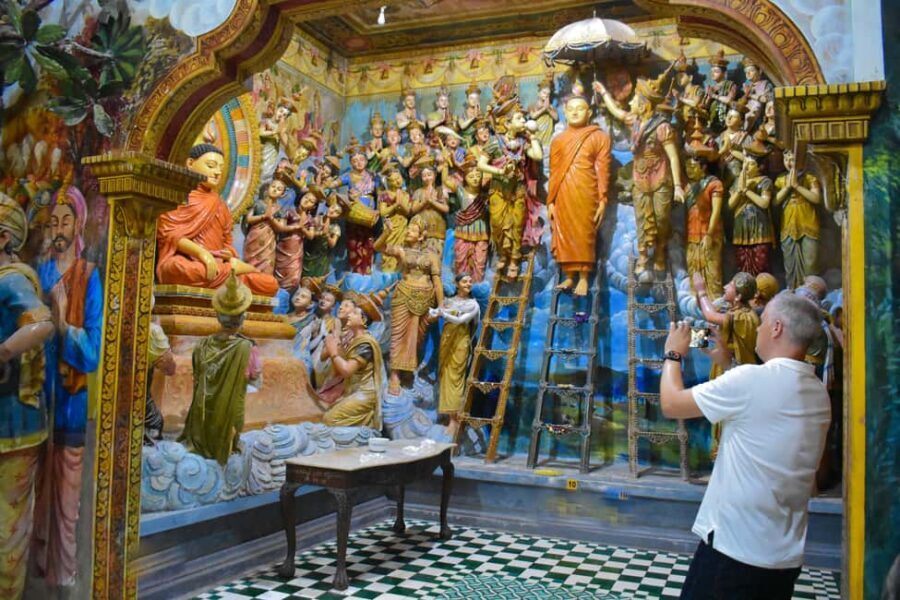
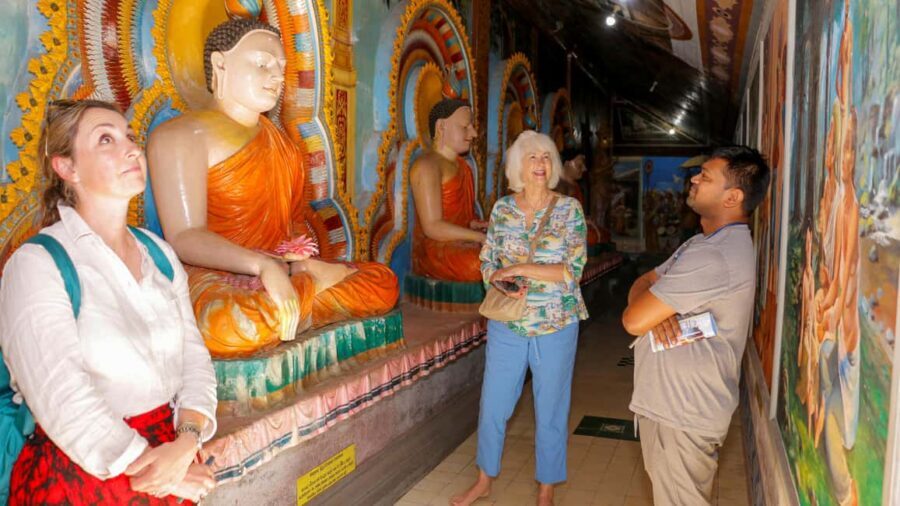
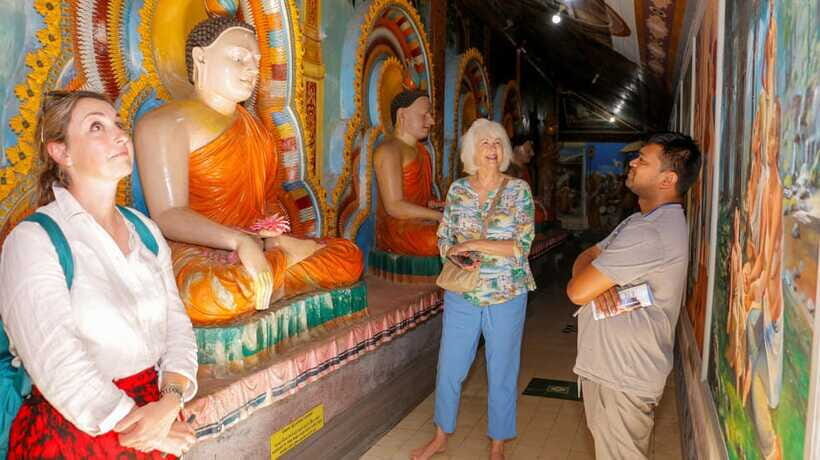
The tour starts with a visit to Angurukaramulla Buddhist temple, a good first stop because it sets the tone: Negombo isn’t just scenery—it’s a working city with daily religious rhythm. You’ll have time to look around, and your guide can point out what you should notice without turning it into a checklist.
Later, the route also includes a quick stop at Abayasekararamaya temple. Even though it’s described as a short visit/pass-by, the value here is context. When you see temples from different parts of town in a short time, you start understanding how faith isn’t “separate” from daily life—it’s woven into neighborhoods.
Tip for your visit: keep your pace respectful. You’ll be near active places of worship, so stay mindful with clothing and behavior. If you’re not sure what’s appropriate, follow the guide’s lead for what to cover and how to move through the space.
Bandulla Market food tasting and the Clock Tower area
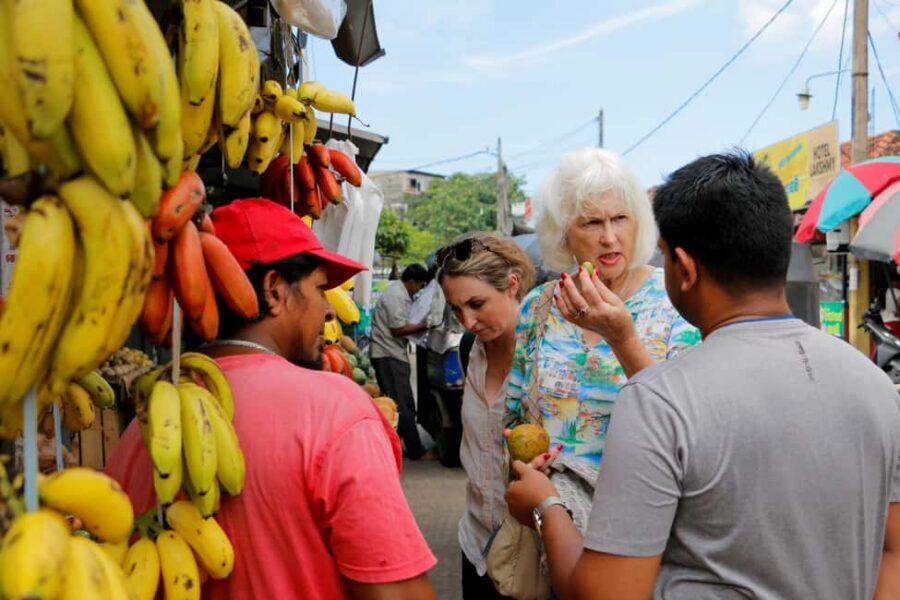
After the temples, you’ll head toward the town through the main streets—the same roads locals use for daily shopping. Parking in the middle of town keeps the walk easy, and you’ll enjoy a guided stroll that’s roughly 20 minutes long.
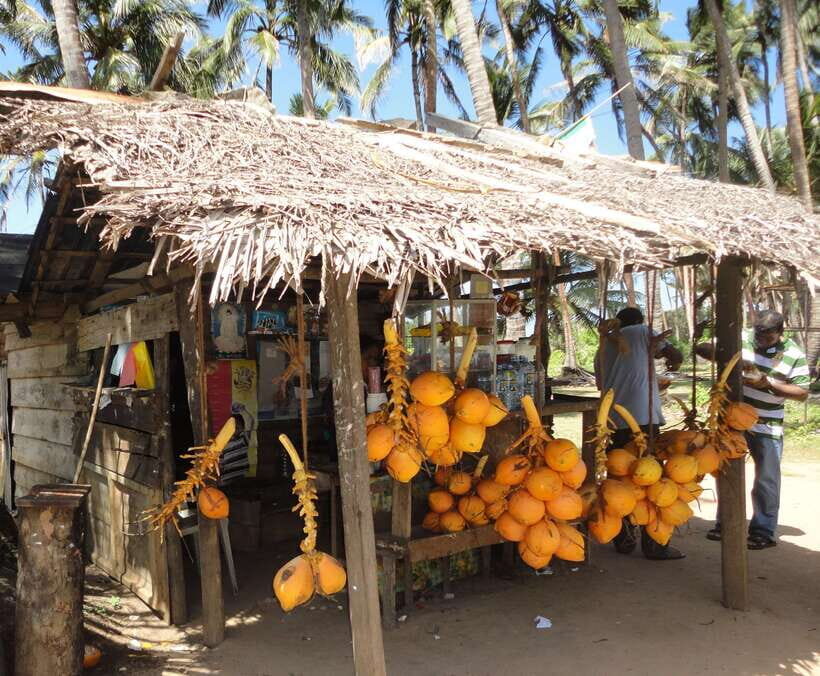
This is where the tour feels most “real.” You’ll pass fruit and vegetable stalls and move among people buying and selling. It’s not staged. It’s not a craft bazaar designed for photos. It’s a neighborhood market environment—so you get that everyday texture right away.
Then you’ll include time at Bandulla Market with a bit of food tasting. Food is one of the easiest ways to understand a place without needing a long explanation. Even if you only try a small sample, it helps you connect the city’s smells and tastes to what you’re seeing on the street.
Next up: Negombo Clock Tower, with a guided look of about 15 minutes. It’s a good anchor point in the center of town, helping you understand the geography before you shift from inland markets to the waterfront and canal side.
If you’re the type who likes structure, this part of the day works well. You get a clear rhythm: temple → market foods and stalls → central landmark → then you travel toward the water.
The Dutch canal and Fort: history without the heavy lectures
Once you’re done with the inner-city market area, the tour heads toward the sea along the Dutch canal. This stretch is valuable because it links two sides of Negombo: daily life inland, and the coast-facing economy that grew around trade and fishing.
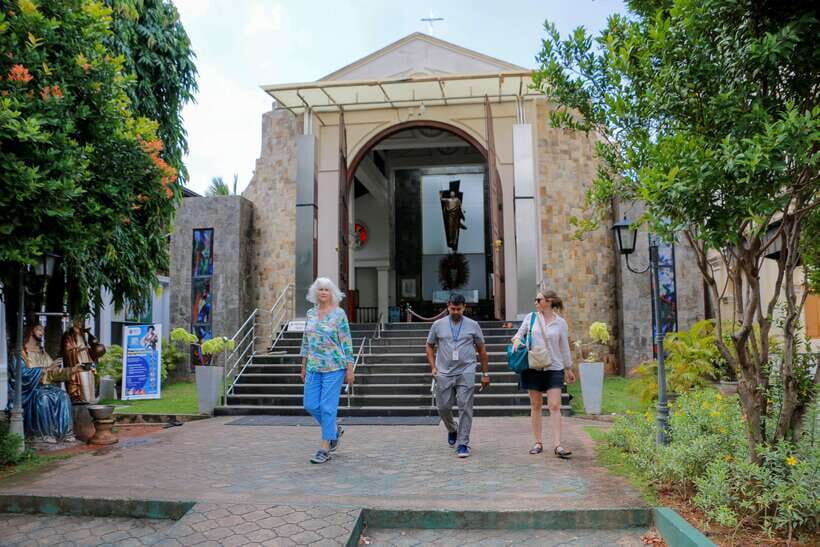
From here, you’ll visit the Sri Sitthi Vinayagar Temple (Hindu) and St. Mary’s Roman Catholic Shrine. Having both faith sites in the same coastal route makes a lot of sense. In a short time window, you’ll see how religious communities live side by side and how the city’s spiritual map overlaps with its physical geography.
After that, you’ll see the Dutch fort area and nearby fish market zones. The tour keeps this practical: you’re not just looking at walls. You’re moving through areas where the city’s coastline-connected economy still matters.
Here’s what to watch for: even when the buildings are older, the daily activity around them is modern and ongoing. That contrast is the point.
Fish markets and drying on the beach: expect the real working smell
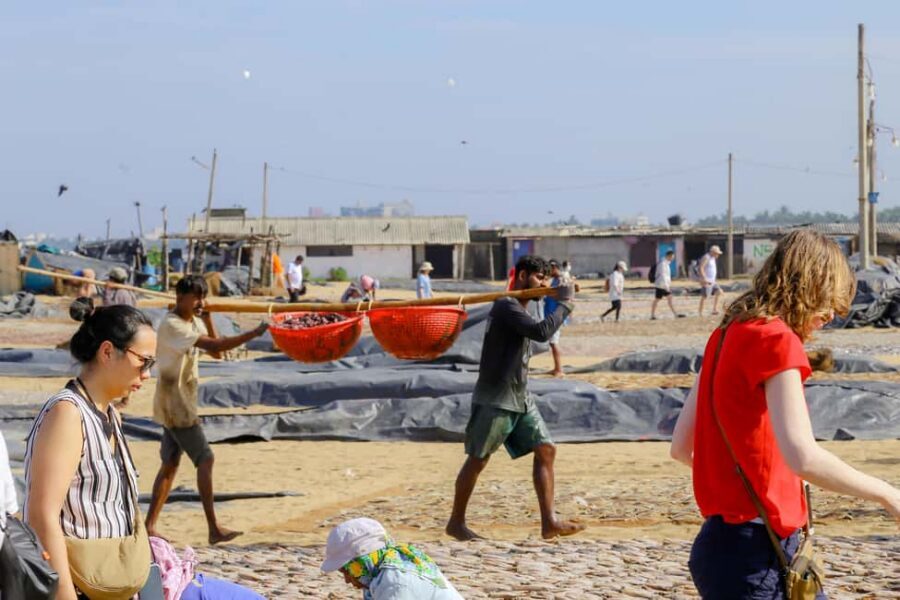
One of the tour’s most memorable moments comes near the beach, where locals process fish to dry. You’ll walk to the shore as part of the route, and your guide will help you understand what you’re seeing.
Let’s be honest: there’s a pungent smell. That’s not a flaw in the tour; it’s a sign you’re seeing actual work. If you’re sensitive to strong odors, this is the stop to think about. If you can handle it for 10–20 minutes, you’ll come away with a sharper understanding of why Negombo feels the way it does.
Also, look at the practical details. People are working with fish in a way that’s shaped by sun, airflow, and timing. It’s not a “tourist photo moment” only—it’s a small production chain happening in public. This is the kind of place where a good guide matters, because they’ll point out the logic behind what’s going on.
A small bonus: once you’ve seen drying operations, the rest of the fishing-focused stops make more sense. You’re not just watching boats—you understand the supply work behind them.
Other city tours we've reviewed in Negombo





Cross the lagoon to fishermen’s island: the bridge view that feels authentic
Next, you’ll cross over the lagoon to enter the fisherman’s island area. The route includes a bridge crossing, and that bridge view is one of the most “you are actually here” parts of the day.
From the bridge, you can look at the lagoon and see boats docking near the crossing point. The vibe is simple and direct. You’re not far from the action, and the sightlines make it easy to understand how the boats move and where the work happens.
Then you continue by car to see Our Lady of Good Voyage, the fishermen’s church overlooking the Indian Ocean. This stop adds emotional weight to the day because it connects faith to sea life. For many coastal communities, the ocean isn’t a background view—it’s the source of livelihood, risk, and daily routine.
If you’re the kind of traveler who likes meaning tied to place, this is one of the best “why this matters” moments on the tour.
Mora Wala sea basin: a quick local bathing stop
The tour includes a short visit to Mora Wala, described as a popular sea basin where villagers and local travelers go to bathe. This is one of those “small but telling” stops. You’ll be close to how people use the coastline day to day, not just how outsiders photograph it.
Because it’s quick, you shouldn’t expect a long swim or a fully planned beach session. Think of it as a window into local routines—another way the tour keeps you grounded in everyday Negombo.
The guide experience: why Tharaka’s style matters
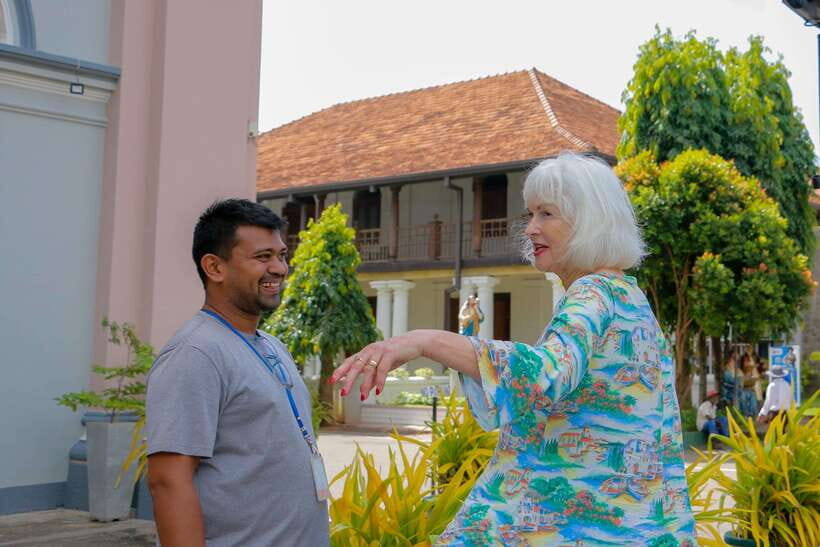
This tour stands or falls on the guide, and the feedback around Tharaka is consistently positive. The themes you can use to decide are clear: Tharaka is described as courteous, fluent in English, and strong at explaining where you are and why the stop exists. He’s also noted for adapting the day to match what you care about.
In practical terms, that means you get more than directions. You get context for the markets, the temples, and the fishing areas—without turning it into a lecture. It also helps if your pace is different from the schedule. One review example even mentions he tried to help with a personal need like taking broken sun glasses to an optician to get fixed. That’s not something you should count on every time, but it fits the bigger pattern: he’s engaged, not just “clocking in.”
So if you like tours where the guide can answer questions and keep you comfortable, this one has a strong track record.
Price and value: what $37 buys in a 3-hour private tour
At $37 per person for about 3 hours, you’re paying for a private setup, AC transport, and an English live guide. For a half-day in a city like Negombo—where going between inland markets and seafood/lagoon areas can be time-consuming on your own—the structure is the value.
What you should recognize in the price:
- You’re getting hotel pickup and a chauffeur guide, which reduces planning stress.
- You’re getting a mix of daily-life markets plus specific cultural stops (temples, a Catholic shrine, a Hindu temple).
- You’re getting the fishing-side views that are harder to arrange quickly without local guidance.
Included extras are small but useful: bottle of water per person, plus the option of cassava chips from the street if you want them. Those aren’t big ticket items, but they support the “eat and walk” feel.
If you’re traveling solo or as a couple and want convenience without a full day commitment, this pricing usually makes sense. If your plan is purely beach time and nothing else, you might prefer a different kind of day. But if you want to understand Negombo fast, this format fits.
Who this tour suits best (and who should rethink it)
This tour is a great match if you:
- Want a short, private introduction to Negombo that goes beyond the usual tourist trail
- Like markets, daily street life, and real coastal work
- Prefer an English guide to explain the mix of Buddhist, Hindu, and Christian sites
- Want AC transport between multiple stops
You might rethink it if you:
- Have a strong sensitivity to the smell of fish drying and don’t want to be near that work area
- Want a slower day with long free time at the beach
- Expect major museum-style attractions—this is more about lived-in neighborhoods
Should you book this Negombo half-day city tour?
If your goal is to leave Negombo with an actual sense of place, I’d say yes. The route is built around where Negombo shows its character: shopping lanes, temples, canal/fort areas, and the fishing economy along the beach and lagoon. The private car and AC make it realistic in heat, and the guide factor—especially Tharaka’s reputation for clear explanations and adapting to your interests—can turn a “pretty sights” day into something you remember.
The main reason not to book would be if you’re unwilling to handle the fish-drying environment or you don’t like packed schedules. Otherwise, this tour is one of the best ways to get an honest snapshot of Negombo in just a few hours.
FAQ
How long is the Negombo private half day city tour?
It runs for about 3 hours.
Is hotel pickup included?
Yes. Pickup is included from your hotel lobby. You should specify your hotel name and have a contact number available.
Is the tour private?
Yes, it’s a private group tour.
What language is the guide?
The live tour guide speaks English.
Is transportation air conditioned?
Yes. You’ll travel by an air-conditioned car.
What sights are included?
The tour includes stops such as Angurukaramulla Buddhist temple, Abayasekararamaya temple (pass by), Bandulla Market, Negombo Clock Tower, Sri Sitthi Vinayagar Temple, St. Mary’s Roman Catholic Shrine, the Dutch canal/fort area, fish market and fish drying near the beach, fishermen’s island crossing, Our Lady of Good Voyage church, and Mora Wala.
Is it wheelchair accessible?
Yes, it’s listed as wheelchair accessible.
What should I bring?
Bring a sun hat (and a hat is specifically mentioned).
Can I cancel for free?
Yes. Free cancellation is available up to 24 hours in advance for a full refund.