REVIEW · KALUTARA
Mangrove Adventure
Book on Viator →Operated by ZRI Adventures · Bookable on Viator
Quiet water and strange roots.
This mangrove boat trip is interesting because you move slowly through the Bentota River estuary, where unusual plants grow in salty, shifting mud. I like that it’s truly your group’s boat, not a crowded shuffle with strangers. I also like the built-in focus on asking questions, since the guide-led chatter is meant to help you understand what you’re seeing (not just pass by it).
The overall feel is stress-free: you’re on water, but the mission is learning and noticing. One thing to consider is that the experience is only about 1 hour, so if you want lots of time deep inside the mangroves—or lots of English explanations—your experience will depend on how the operator runs your specific trip.
In This Review
- Key highlights to know before you go
- Bentota River mangroves: what makes the scenery different
- The one-hour boat ride: how the timing really works
- Your group’s boat: why that matters more than you think
- What you’ll learn: mangrove plants and the coastal job they do
- Wildlife and fish spotting: what to expect without overpromising
- Stop 1: Bentota River and what makes it the main event
- Photography and the calm “zen” vibe
- Price and value: is $25 per person fair?
- Best fit: who will enjoy Mangrove Adventure most
- A practical caution: quality can hinge on your run of the day
- When to book around your Sri Lanka schedule
- Should you book this mangrove boat trip?
- FAQ
- How long is the Mangrove Adventure boat trip?
- Where does the tour start in Sri Lanka?
- Is the boat shared with other groups?
- What areas do you explore during the trip?
- What time can I do this activity?
- Do I need to bring a ticket?
- What if the weather is bad?
- Can I get a full refund if I cancel?
Key highlights to know before you go
- Private for your group: fewer distractions, easier to ask questions and actually hear the explanations.
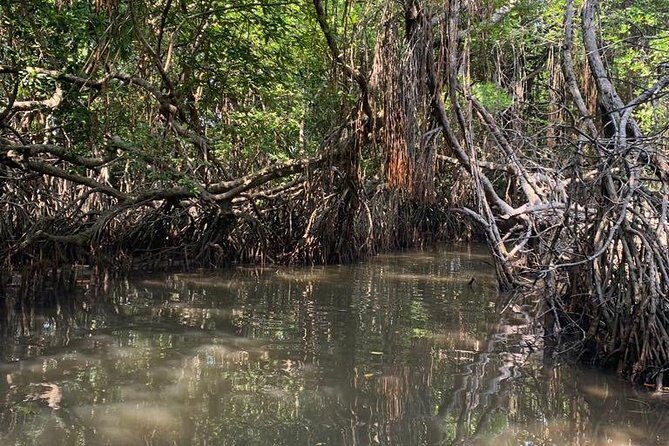
- Bentota River estuary: mangroves in a real coastal system, where plants and water conditions interact.
- Slow, zen pacing: this is meant to feel calm, not rushed.
- Nature learning on the water: you’ll hear how mangrove plants support coastal ecosystems.
- Photo-friendly roots and branches: the view of exposed roots is a big part of the experience.
Bentota River mangroves: what makes the scenery different
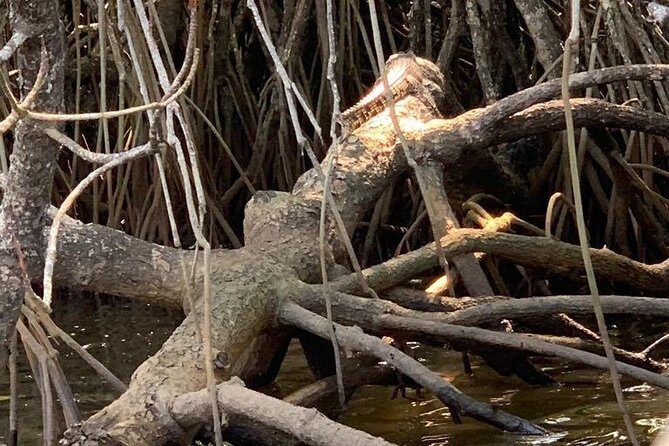
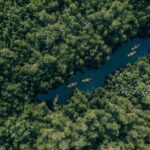
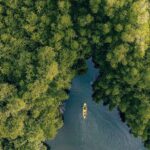
The Bentota River estuary is the kind of coastline where land and sea keep negotiating. You’re not looking at mangroves from a boardwalk. You’re gliding over the water right through the mangrove maze, so you see how these plants live with tides, salt water, and muddy ground.
What I find most compelling is how visual the mangrove system is even before you learn anything about it. The exposed roots and twisting branches make the forest feel almost prehistoric. And when you’re moving slowly, you get time to notice the patterns: how vegetation forms channels, how the shoreline changes character, and how the water looks different depending on where the roots crowd in.
If you're still narrowing it down, here are other tours in Kalutara we've reviewed.

The one-hour boat ride: how the timing really works
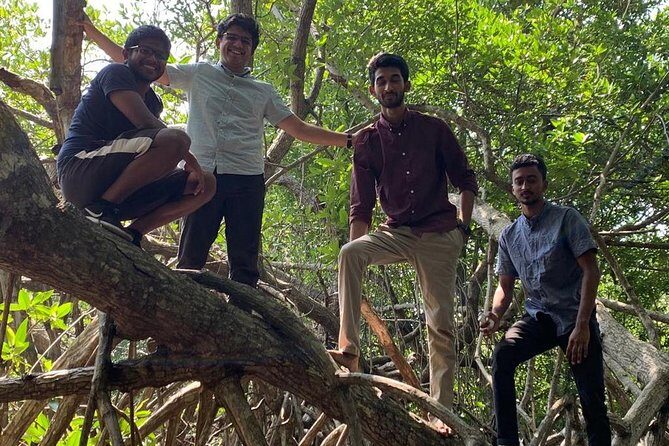
This experience runs for about one hour. That short window is a plus if you want something light and low-effort in the middle of a Sri Lanka day. You’re not signing up for a whole afternoon of transfers and waiting. You’re meeting in the morning window, getting on a boat, and heading back to the same place when you’re done.
The ride is designed to be stress-free. In practical terms, that means you’re on water rather than hiking through slippery mud, and you’re not spending your time trying to navigate. The trade-off is simple: you won’t have endless time. If you’re the type who wants a long, slow look at every single channel and root cluster, you may wish it lasted longer.
Your group’s boat: why that matters more than you think
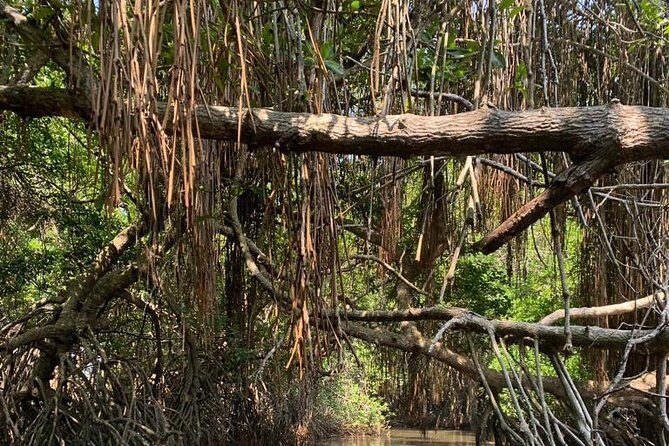
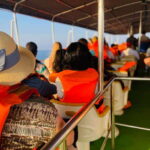
The tour is private in the sense that only your group participates on the boat. That changes the experience in a few real ways.
First, the guide can tailor the pace to you. When you can ask as many questions as you like, it’s easier to turn a few sightings into actual understanding. Second, you get a calmer soundscape. Mangrove boat rides are naturally gentle, and having fewer people on board helps keep it that way—more observation, less background chatter.
Third, it makes photos easier. With a smaller group, you’re not elbowing for angles or trying to time your shots around everyone else’s movement.
What you’ll learn: mangrove plants and the coastal job they do
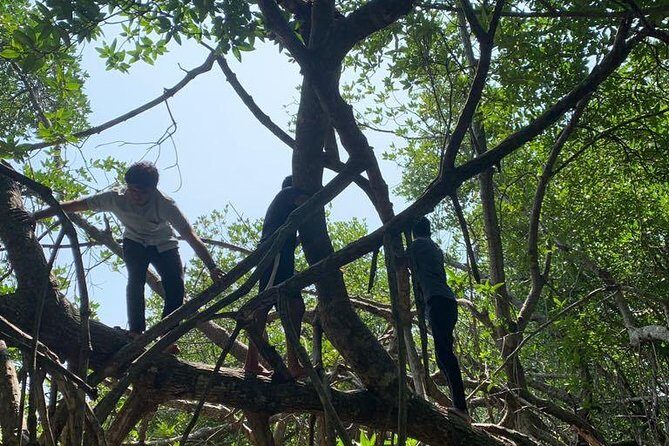
This trip isn’t just a nature scenic cruise. It’s structured around learning the role mangroves play in coastal ecosystems.
You’ll be guided through what makes these plants unusual—especially how they survive in a brackish environment where water levels shift. The key idea is that mangroves are part of the coastline’s living infrastructure. Their growth shapes the shoreline environment, and that affects what kinds of marine and coastal species can thrive nearby.
You’ll also get help identifying coastal wildlife you might spot on the water. The info you’re given isn’t framed as a checklist of rare species; it’s more about teaching you what to look for and how mangroves connect to fish and other creatures. If you enjoy learning in the moment—pointing, asking, comparing what you see to what you’ve been told—this format is a good match.
Wildlife and fish spotting: what to expect without overpromising
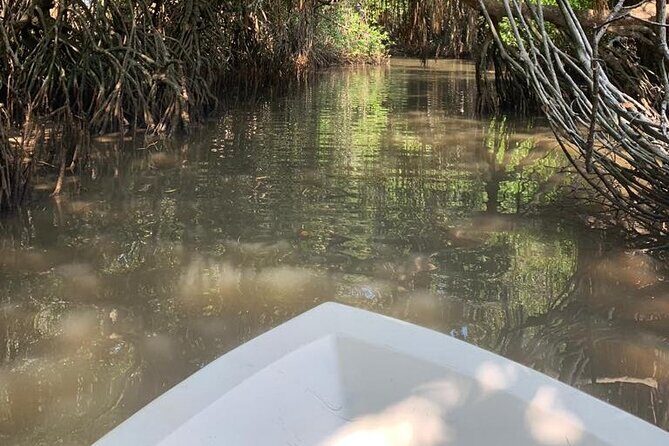
The water experience here includes the chance to identify fish species and other coastal wildlife. That’s a big part of the appeal: you’re not only looking at plants, you’re also watching the water for signs of life.
Still, mangroves are wild and conditions matter. Visibility, water movement, and the moment-to-moment activity of fish all play a role. So go with the right expectations: you’re here to learn and notice, not to guarantee specific sightings. If you keep your eyes on the edges of channels and where water meets roots, you’ll get more from the ride.


Stop 1: Bentota River and what makes it the main event
The experience centers on the Bentota River area, which makes sense because the mangroves you’re learning about are tied to this estuary zone. This is where you glide through those mangrove stands that form a real maze of roots and branches.
This stop is your whole trip. That’s why the one-hour timing matters. When the ride is run well, it feels like you’re using every minute to see the forest up close and connect it to the explanations you’re hearing. When it’s not run well, you might feel like you spent more time on open water than inside the mangroves.
If you’re worried about that, focus on asking early questions that force the guide to explain what you’re seeing right now. That way, even if time is tight, you’ll leave with real takeaway points.
Photography and the calm “zen” vibe
The ride is specifically described as serene and zen. That’s not marketing fluff you can ignore—it affects how you’ll actually enjoy the experience.
On a calm boat, your attention slows down. You stop scanning for what’s next and start noticing what’s already there: root textures, branch angles, water reflections, and the way the estuary opens to the wider sea view. It also helps with photos, because you’re not trying to shoot while everyone is rushing around.
If you bring a phone or camera, plan for natural light and steady framing. The exposed roots and branching structures can be very photogenic, especially when the boat angle changes slightly as you pass through different sections.
Price and value: is $25 per person fair?
At $25 per person for about one hour, the value depends on two things: what you care about (learning vs. long sightseeing) and who you’re going with.
I see good value here because the experience includes a private boat setup for your group and an explanation component focused on mangroves and coastal ecosystems. You’re not paying mainly for transport or a long itinerary. You’re paying for access to the estuary route and for help interpreting what you see—plus the flexibility to ask questions.
If you’re traveling with friends or family, check whether group discounts apply to your booking. That’s where the math can look even better, since the private boat model spreads the cost.
Best fit: who will enjoy Mangrove Adventure most
This is a strong choice if you want nature time without heavy effort. It suits people who like calm experiences, short tours, and hands-on learning from the water.
It’s also a good option if you enjoy coastal ecosystems as a concept. Mangroves can feel like a weird in-between environment, and this trip is built to explain that in a clear, on-the-water way. You’ll be looking for fish and wildlife, but the real payoff is understanding why mangroves matter to coastal life.
If you only care about being on the water for as long as possible, or you want a deep, hours-long safari-style experience, you might find the duration limiting. With this being around an hour, it’s more of a focused introduction than a long exploration.
A practical caution: quality can hinge on your run of the day
One important consideration: clear communication and enough time inside the mangroves are central to satisfaction. In an instance where the experience felt rushed—very little time in the mangroves and limited explanation—the ride didn’t deliver what the format promises.
You can protect yourself a bit by showing up on time and asking early. When you ask what you’re looking at and you request more specific explanations about the mangrove role in the ecosystem, you push the experience toward the learning goal rather than turning it into a quick loop.
When to book around your Sri Lanka schedule
You can book within the daily operating window of 7:00 AM to 4:00 PM. That flexibility makes it easier to fit into a beach-and-exploration day, especially if you want a nature activity that doesn’t swallow your whole schedule.
Because the tour also requires good weather, try to treat it like a plan for a day you’d be happy to adjust. If conditions are rough, operators can switch dates or refund in full, depending on what happens.
Should you book this mangrove boat trip?
If you want a calm, private boat ride where you learn what mangroves do for coastal ecosystems, this is an easy yes for most people. The short duration is a feature, not a flaw, if you’re looking for something focused and low-stress.
I’d skip it only if you’re expecting a long, deep mangrove expedition or you’re very sensitive to communication quality. If you go in with the right mindset—short ride, ask questions, notice the roots and wildlife—this tour is likely to feel like a smart, worthwhile slice of Bentota’s coastline.
FAQ
How long is the Mangrove Adventure boat trip?
It lasts about 1 hour.
Where does the tour start in Sri Lanka?
The meeting point is Gagabada Road, Aluthgama, Sri Lanka.
Is the boat shared with other groups?
No. This is described as private for your group only.
What areas do you explore during the trip?
You explore the mangrove forest around the Bentota River estuary by boat.
What time can I do this activity?
Operations are listed daily from 7:00 AM to 4:00 PM.
Do I need to bring a ticket?
You’ll receive a mobile ticket.
What if the weather is bad?
The experience requires good weather. If it’s canceled due to poor weather, you’ll be offered a different date or a full refund.
Can I get a full refund if I cancel?
Yes. You can cancel up to 24 hours in advance for a full refund. If you cancel within 24 hours, you won’t receive a refund.