REVIEW · ELLA SRI LANKA
Ella: Traditional Sri Lankan Cooking Class
Book on GetYourGuide →Operated by Ranjani · Bookable on GetYourGuide
Ella’s cooking class is the kind of meal lesson that sticks.
This hands-on session in Ella lets you cook traditional favorites with Ranjani in an open-air kitchen, then sit down and eat what you made—often served on banana leaves. I especially like the way the class blends technique (like making Sri Lankan staples) with the practical why behind the ingredients, from spices to coconut-based elements. And because it’s a small group (up to 8), you get more interaction than the big factory-style classes.
The main thing to keep in mind is that this is not a perfectly timed, assembly-line experience. The class runs about 2 hours on paper, but you might find it runs closer to 2.5 depending on the flow, weather, and how much everyone is learning.
In This Review
- Key Things That Make This Class Worth Your Time
- Entering the Chamathka Cooking Class Kitchen in Ella
- Small Group Cooking (Up to 8) and How Participation Really Works
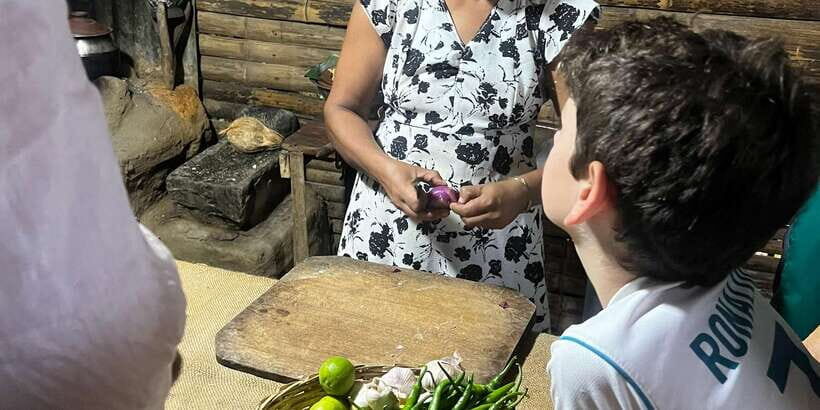
- The Ingredient Moment: Fresh Produce and the Spice Logic
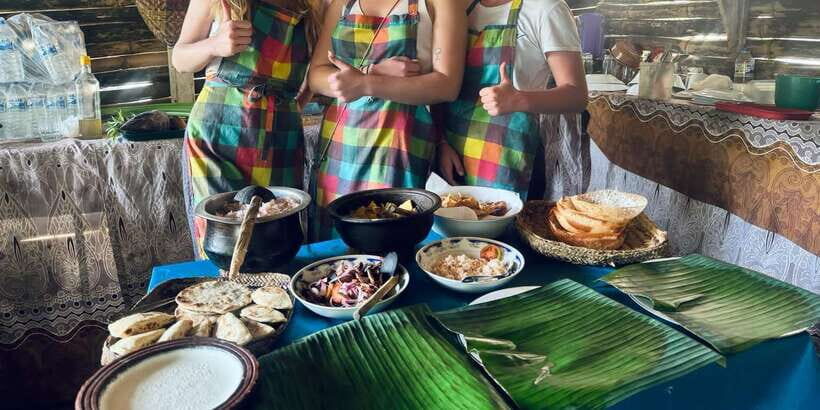
- What You’ll Cook: Hoppers, Rice and Curry, String Hoppers, and Honey Roti
- Open-Air Cooking: What It Feels Like in Ella
- Banana Leaves: Eating Your Meal Like Locals
- Price and Value: Is $19 for Two Hours Actually Fair?
- Timing Options: 11:00 AM and 5:00 PM
- Recipes on WhatsApp: Your Real Souvenir
- Who This Class Is Best For in Ella
- Should You Book This Ella Sri Lankan Cooking Class?
- FAQ
- How long is the Ella Traditional Sri Lankan Cooking Class?
- What is included in the price?
- What does the class cost?
- Where do I check in?
- What time does the class usually run?
- What languages are used during the class?
- How big is the group?
- How do I receive the recipes after class?
- Is transportation included?
Key Things That Make This Class Worth Your Time
- Up-close learning with Ranjani, including the health angle behind spices and ingredients
- Open-air kitchen comfort with greenery around you and better ventilation while you cook
- Sri Lankan staples in real life, from hoppers and rice & curry to string hoppers and honey roti
- Banana-leaf eating, which feels playful but also very practical
- Small group (max 8) so you’re not just watching from the sidelines
- Recipes sent via WhatsApp, so you can recreate it at home
Entering the Chamathka Cooking Class Kitchen in Ella
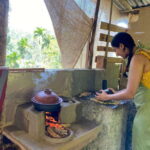
The easiest way to start is to check in at the Chamathka Cooking Class meeting point. From there, you’ll head into the cooking space where the whole setup makes sense for Ella’s climate. It’s open-air, so you get airflow while you’re chopping, stirring, and cooking—handy when you’re leaning over pots and smelling spices in every direction.
What I like about this kind of start is that you’re not rushed into a lesson that feels like a demo. You arrive, you’re greeted, and you begin with ingredients right away. Several recent sessions mention a warm welcome before cooking (like tea and biscuits), which helps everyone settle in before things get busy.
Also note the language setup. You’ll be supported in English and Singhalese, which matters when you’re trying to understand timing and technique (like when a spice mix should bloom, or how batter consistency changes a hopper).
Other Ella tours we've reviewed in Ella Sri Lanka


Small Group Cooking (Up to 8) and How Participation Really Works
This is a small-group class limited to 8 participants. That’s a big deal for value—at $19, you want your money to go toward doing, not just watching.
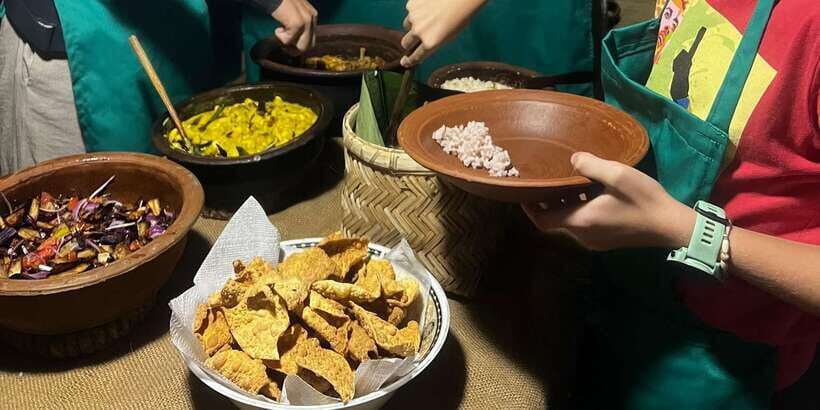
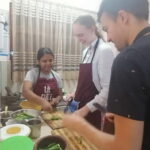
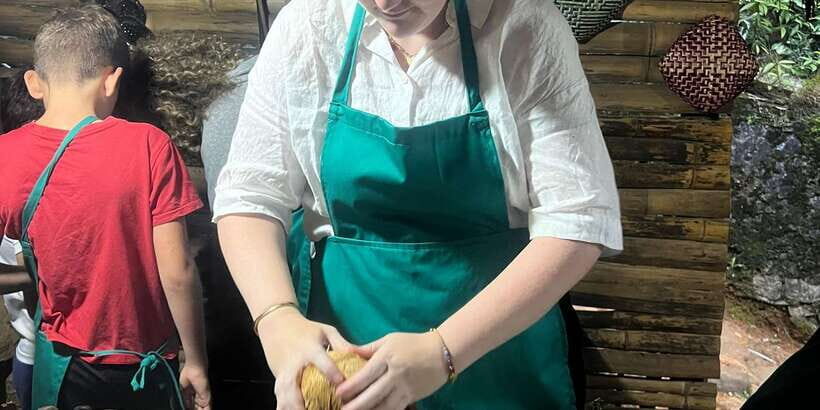
In practice, expect a shared kitchen rhythm. The teaching style is interactive, with Ranjani demonstrating key steps and inviting you to help with tasks along the way—chopping, mixing, seasoning, and handling parts of the cooking process. One description even notes that it can be organized around one main workstation where the host leads and you take turns helping, rather than everyone having their own separate station.
So if you’re the type who loves cooking solo at your own pace, you might feel slightly boxed in by a shared setup. If you’re more about learning technique and cooking together, this format is a plus. You’ll rotate through tasks, taste along the way, and learn how the dishes come together step by step.
One more detail: because it’s a real working kitchen, things can get crowded if the group is on the upper end. It’s not chaos, but it’s not a spacious cooking studio either. Going with the flow is the move.
The Ingredient Moment: Fresh Produce and the Spice Logic
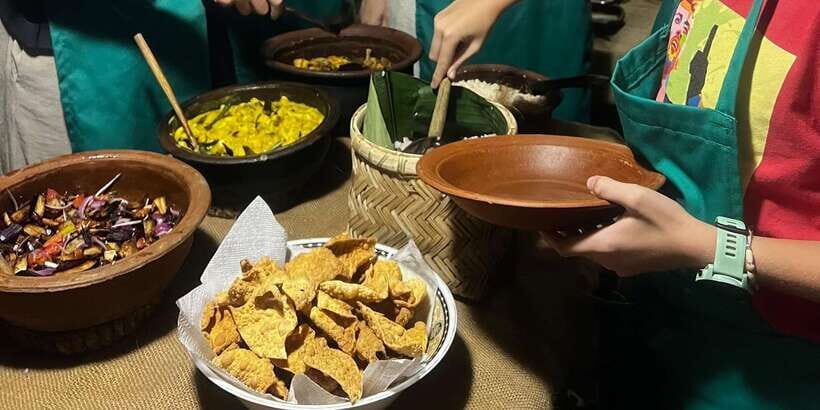
Before the pots start, you’ll be introduced to fresh ingredients. The class is built around the idea that Sri Lankan cooking isn’t just flavor—it’s also technique and ingredient behavior. You learn about things like spices and their uses, and you’ll often hear health-related explanations as ingredients are brought into the lesson.
That health talk isn’t just trivia. It helps you cook with intention. When you understand what each spice is doing, you can adjust future meals at home without guessing. For example, if you know why a spice is used in a certain way, you can decide whether to lean more aromatic or more warming in your own kitchen later.
The class also leans into Sri Lankan staples that show up repeatedly across the dishes:
- coconut-based elements (like coconut milk)
- spice mixes used in curries and sambols
- ingredients that add brightness and texture
And yes, this is the kind of lesson where old-school methods pop up. One guest mentioned traditional preparation tools (including older, manual equipment for coconut prep). It’s not about suffering. It’s about understanding texture and process, which transfers better to home cooking than shortcuts.
What You’ll Cook: Hoppers, Rice and Curry, String Hoppers, and Honey Roti
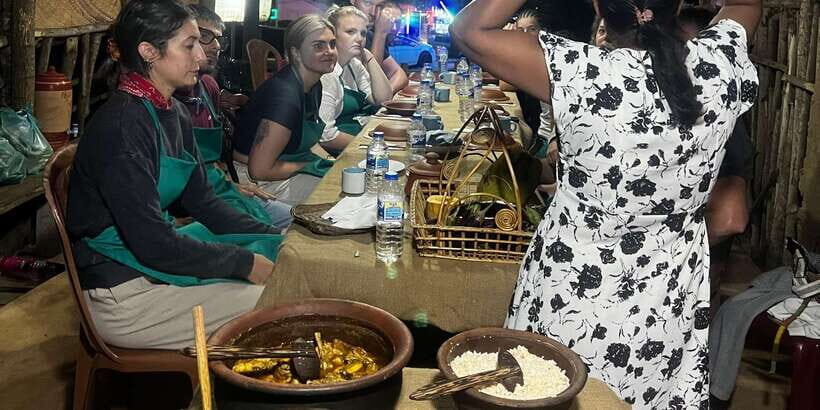
The menu can vary based on the flow and timing, but you should expect a group of classic dishes. The core list commonly includes Sri Lankan favorites such as:
- Hoppers (bowl-shaped pancakes)
- Rice and curry
- String hoppers
- Honey roti
From the dish list and the way classes are described, you’ll likely touch both curry-style meals and items that rely on specific batter or dough techniques. Hoppers and roti are where consistency matters. Rice and curry are where seasoning and balance matter. String hoppers are where texture matters.
In addition to the headline dishes, many sessions also mention a mix of sides and curries that round out the meal—things like:
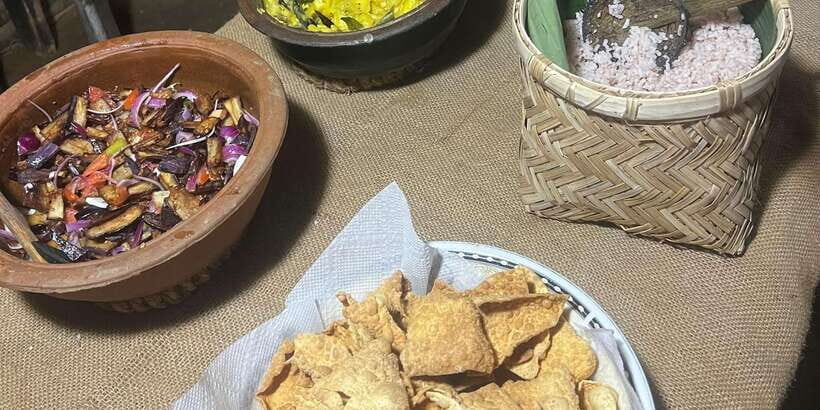
- dhal curry (often highlighted as a standout)
- chicken curry (when meat is included)
- aubergine salad
- coconut sambol
- papadam
Even if you don’t get the exact same lineup as someone else, the cooking logic should feel consistent: you’re learning how Sri Lankan meals build flavor in layers—spice, aromatics, coconut, acidity, and crunch.
Dietary flexibility is also part of the reality here. One vegan participant reported being able to eat all but one dish, with adjustments made for their diet. So if you have dietary needs, it’s worth telling the host clearly when you arrive (since the class is small and practical adjustments are easier than in a huge group setting).
Open-Air Cooking: What It Feels Like in Ella
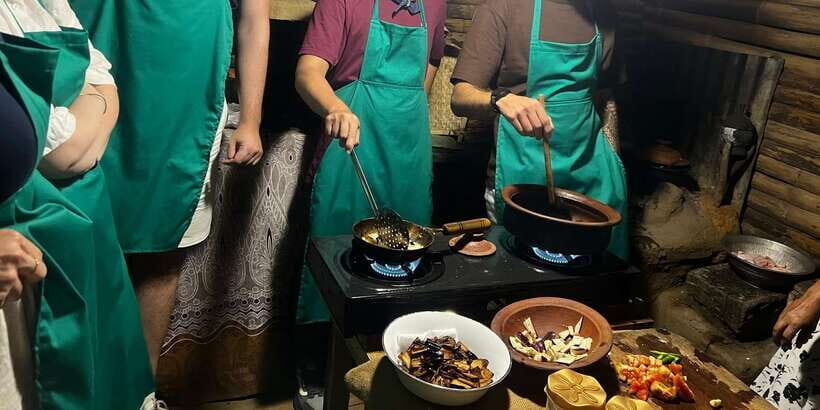
Cooking outdoors sounds simple until you’re holding a spoon and trying to learn new techniques in a real kitchen environment. Here, the open-air setup is actually useful. You get airflow, and the greenery around you helps the experience feel less like a classroom and more like someone’s home cooking space.
Rain or weather can change the pace. One review noted the evening got a little more difficult due to weather, but the host managed it and kept the energy up. Translation for you: bring a light layer just in case, and don’t expect everything to be as rigid as a clockwork city tour.
This setting also supports the biggest upside of the class: it feels authentic. You’re not learning cooking as a staged performance. You’re learning with real food prep and real kitchen habits, which is exactly why these lessons can be so rewarding.
Other Sri Lankan cooking classes we've reviewed in Ella Sri Lanka
Banana Leaves: Eating Your Meal Like Locals

When the meal is ready, you sit down and eat. Instead of plates, you’ll often get the dishes served on banana leaves. This is one of those details that’s both practical and memorable.
Practically, banana leaves give you a built-in serving surface and help keep the meal feeling grounded and local. Memorable-wise, it changes the whole experience from eating to sharing. You’re tearing, spooning, tasting, and adjusting as you go—like you’re part of the meal, not just the audience.
Also, you should expect a satisfying quantity of food. More than one guest said the portioning was generous—enough for seconds, and sometimes enough that people had leftovers to think about later. At this price, that matters. A good meal is part of the payment.
Price and Value: Is $19 for Two Hours Actually Fair?
At $19 per person for a 2-hour class, the value is strong—if what you want is hands-on cooking and real meals, not just a cookbook moment.
Here’s what you’re getting for your money:
- Fresh ingredients and guided preparation
- Instruction from Ranjani in English and Singhalese
- Cooking class structure plus a sit-down meal
- Bottled water included
- Small group experience (max 8)
- Recipes sent digitally via WhatsApp
What makes the price feel fair is that the class doesn’t treat you like a spectator. Even with a shared workstation format, you still take on tasks and learn technique. And the recipes sent afterward are a key part of the value. If you leave with actual instructions you can use, you’ve turned the class into repeatable skills rather than a one-time dinner.
The only caution is your time expectations. If you’re trying to cram this between other tightly scheduled Ella activities, build in a little buffer. The class is labeled as 2 hours, but some evenings can run closer to 2.5.
Timing Options: 11:00 AM and 5:00 PM
Classes are normally offered at 11:00 AM and 5:00 PM. The provider can be flexible if you contact them in advance, so if your day in Ella is tight, it’s smart to ask early.
Choosing between lunch and dinner comes down to your vibe:
- Morning class: great if you want to learn and then keep exploring Ella while you still feel energized.
- Evening class: ideal if you’d rather spend your afternoon sightseeing lightly and end with a warm, home-style meal.
Either way, the kitchen rhythm is the same: ingredients first, cooking in steps, then eating what you made.
Recipes on WhatsApp: Your Real Souvenir
The best souvenir is the one you can use. Here, you’ll get recipes sent through WhatsApp after class. That matters because Sri Lankan cooking includes specifics—spice timing, consistency in batters, and how sambol-like sides balance richer curry.
A few guests also mentioned getting recipe links the next day, and some noted cookbooks or PDF-style resources could be provided if you ask. Since the one guaranteed part is WhatsApp recipes, assume that’s your baseline and use it to recreate your meal at home.
If you plan to cook after your trip, take a minute during class to pay attention to the parts you usually forget later—like which spice goes in first, and what you’re looking for in texture. You’ll thank yourself when you’re trying to reproduce a hopper or dialing in a curry.
Who This Class Is Best For in Ella
This cooking class fits best if you want:
- hands-on cooking rather than a lecture
- authentic Sri Lankan food skills you can repeat
- a small-group experience with plenty of interaction
- a meal at the end that’s part of the learning, not an add-on
It’s also a good choice for rainy-day plans in Ella. One guest specifically called it a strong activity for bad weather, and that makes sense: you’re doing something indoors/outdoors under cover, focused on cooking, not sightseeing.
You might not love it if you want a super spaced-out kitchen where each person has their own workstation and you rarely share utensils or space. This is a shared cooking experience. Most people seem to enjoy that social energy, but it’s good to know the style up front.
Should You Book This Ella Sri Lankan Cooking Class?
I’d book it if you’re the type who remembers travel through food and wants more than a photo. For $19, you get guided instruction, a full meal, and recipes delivered afterward—plus you learn why the spices and ingredients work, not just what goes into the pot.
Also, if you’re short on time in Ella, the lesson hits a sweet spot: long enough to learn multiple dishes and cooking steps, short enough to still fit your day. Just don’t schedule it back-to-back with zero buffer. The cooking pace, the shared workstation flow, and the occasional weather tweak are part of the experience.
If your goal is to leave Ella knowing how to cook at least a few Sri Lankan staples—and not just eat them once—this is a very solid bet.
FAQ
How long is the Ella Traditional Sri Lankan Cooking Class?
The class is listed as 2 hours.
What is included in the price?
The experience includes an instructor, fresh ingredients, the cooking class, a meal, and bottled water.
What does the class cost?
It costs $19 per person.
Where do I check in?
Check in with staff at the Chamathka Cooking Class.
What time does the class usually run?
Classes normally take place at 11:00 AM and 5:00 PM, and the provider can be flexible if you contact them in advance.
What languages are used during the class?
The instructor uses English and Singhalese.
How big is the group?
It’s a small group limited to 8 participants.
How do I receive the recipes after class?
Recipes are sent digitally through WhatsApp.
Is transportation included?
No, transportation to the meeting point is not included.