REVIEW · NEGOMBO
Colombo City Tour from Negombo
Book on Viator →Operated by Taprobane Tours and Travels · Bookable on Viator
Colombo deserves a quick taste. This half-day private city tour is built for travelers who want the key sights without burning a full day on the road. You get a smooth southbound transfer into Colombo, then a tight circuit of landmark stops—fort-area architecture, memorials, parks, and major places of worship—so you get your bearings fast.
I especially like the flexible pickup time and the fact you’re not stuck on a rigid group schedule. Two other things I value: the trip is designed for efficiency (with short, photo-friendly pauses at big landmarks) and it’s done in a comfortable air-conditioned car with bottled water. One possible drawback to keep in mind: some spots can be quick drive-bys depending on positioning and traffic, so if you’re hoping for long stays everywhere, this may feel a bit fast.
Key Points
- Private, up-to-2 group means you can ask questions and set your pace.
- Air-conditioned car + bottled water makes the city heat feel more manageable.
- Multiple faith sites in one route: Hindu temple, Buddhist temple, mosque, and cathedral.
- Most entries are free, with one notable paid exception at Gangaramaya.
- Built for a quick Colombo visit without heavy planning on your side.
- Guide communication can vary, so having simple prompts ready helps.
In This Review
- How This Half-Day Colombo Trip from Negombo Feels in Real Life
- Pickup and Car Comfort: Why Those Details Matter
- Colombo Fort and the Memorial Stops: Old Power Meets National Pride
- Nelum Pokuna Theatre and Viharamahadevi Park: A Breather Between Sights
- Dutch Hospital Shopping Precinct: Colonial Bones, Modern Life
- Temples, Cathedral, and the Red Mosque: One Route, Many Faiths
- Gangaramaya Temple Entrance Fee: Plan for One Paid Stop
- The Real Value of Private Timing (and When It Can Feel Rushed)
- Communication and Guide Experience: How to Get the Most Out of It
- Price Check: Does $70 Per Group Pay Off?
- Who This Tour Fits Best (and Who Might Want Something Else)
- Should You Book the Colombo City Tour from Negombo?
- FAQ
- How long is the Colombo City Tour from Negombo?
- What’s included in the price?
- Is pickup included?
- How much is the Gangaramaya Temple entrance fee?
- What group size is this tour limited to?
- What happens if weather is poor?
How This Half-Day Colombo Trip from Negombo Feels in Real Life
This is the kind of tour that helps when you’re staying in Negombo but really want to see Colombo’s famous landmarks before you move on. Instead of guessing where to go, you ride in an air-conditioned vehicle, then step out for a series of stops that cover different “Colombo moods” in a single stretch.
The biggest advantage is time control. The whole experience runs about 4–5 hours, and you’re given short windows at each highlight. That means you can fit it neatly into a day with flights, early check-outs, or a busy itinerary. It’s also a smart choice if Colombo is on your list but you don’t want to manage transit, ticket lines, and routing yourself.
And because it’s private for up to 2 travelers, you’re not squeezed into a loud group rhythm. You can spend a little extra time at the place you care about most—temple photos, colonial-era streets, or memorials—without holding up ten strangers.
Pickup and Car Comfort: Why Those Details Matter
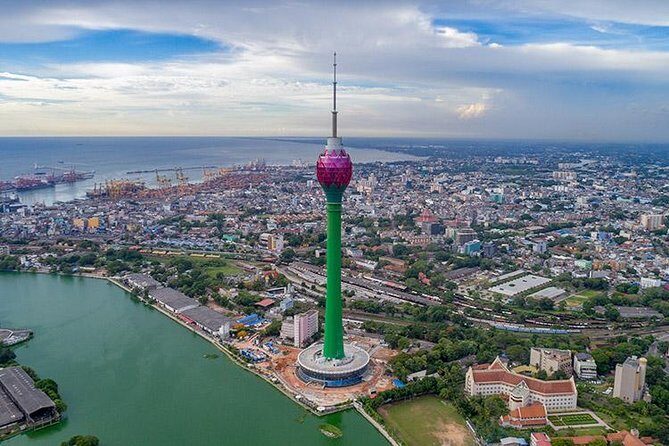
Pickup is flexible, which is more useful than it sounds. Colombo traffic can be unpredictable, and the ability to adapt your start time helps you avoid arriving at the busiest part of the day. If you’re planning around a hotel schedule (breakfast, check-out, baggage pickup), this flexibility can be the difference between a relaxed tour and a rushed one.
The car is air-conditioned, and bottled water is included. That’s not a luxury detail; in Colombo’s heat, it changes how long you can comfortably keep sightseeing. You’re doing multiple short walks and photo stops, and comfort matters when you’re moving between Fort-area buildings, parks, and lakeside temples.
One more practical note: this tour uses a mobile ticket. I like mobile tickets for city tours because there’s less scrambling at the start—especially when you’re trying to locate the right pickup point.
Other Colombo tours we've reviewed in Negombo


Colombo Fort and the Memorial Stops: Old Power Meets National Pride
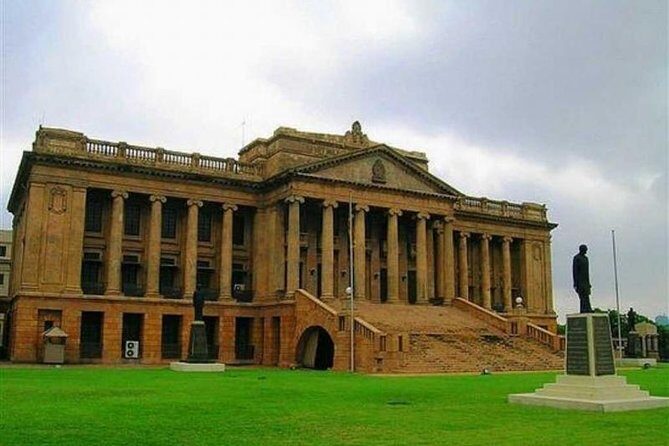
You start with a Fort-area landmark that’s all about Sri Lanka’s government presence: the Old Parliament Building, which houses the Presidential Secretariat. It sits in the Colombo Fort area facing the sea, and it’s close to other high-profile presidential sites. Even if you only spend a short time here, the setting helps you understand why this area is still treated like the city’s official center.
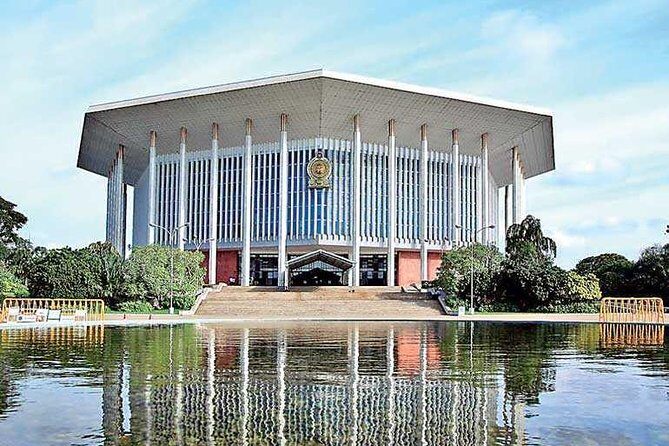
Next up is the Bandaranaike Memorial International Conference Hall. It’s a convention center built between 1970 and 1973, and it was gifted by the People’s Republic of China. This stop works well if you like modern-era architecture and want to see Colombo beyond the colonial postcards.
Then comes Independence Square, centered on the Independence Memorial Hall (also known as the Independence Commemoration Hall). It commemorates Sri Lanka’s independence from British rule. For a quick Colombo day, this is a meaningful pause: it’s national pride in a compact, photo-friendly setting, without needing a long museum visit.
What I like about this sequence is pacing. You move from government power (Old Parliament) to a signature public building (Conference Hall) to a national monument area (Independence Square). It gives you context quickly, before you head toward the softer side of Colombo—parks, lakeside temples, and places of worship.
Nelum Pokuna Theatre and Viharamahadevi Park: A Breather Between Sights
After the memorial zone, you’re introduced to a newer cultural landmark: the Nelum Pokuna Theatre. It’s described as newly built and shaped like a lotus flower, used for performing arts productions. Even if you’re not catching a show, it’s a nice visual reset from monuments and government buildings.
Then the tour moves to Viharamahadevi Park (formerly Victoria Park), right next to the National Museum area. It’s described as the oldest and largest park of the Port of Colombo. If you only have a few hours, a park stop is smart for two reasons: you get shade and you also start absorbing the city’s layout. This park is a good “reset button” before you jump into temple architecture and religious landmarks.
Timing here is short—think photo pause plus a quick walk—so don’t expect a long nature break. But for city touring, it does its job: stretch your legs, cool down, and let your eyes rest.
Dutch Hospital Shopping Precinct: Colonial Bones, Modern Life
Next you’ll see the Dutch Hospital Shopping Precinct. This old Colombo Fort building is considered the oldest structure in the area dating to Dutch colonial times, and it’s now a heritage building used as a shopping precinct.
I like this stop because it’s practical. You get something to look at, and you also have a chance to browse without committing to a full shopping detour. If you’re the kind of traveler who likes to bring home small, easy souvenirs—things like local crafts, simple gifts, or snacks for later—this is one of the easiest places to do it during a short tour.
Also, it’s a nice transition stop. After seeing memorials and a theatre, the Dutch Hospital area gives you street-level texture: old walls, new uses.
Temples, Cathedral, and the Red Mosque: One Route, Many Faiths
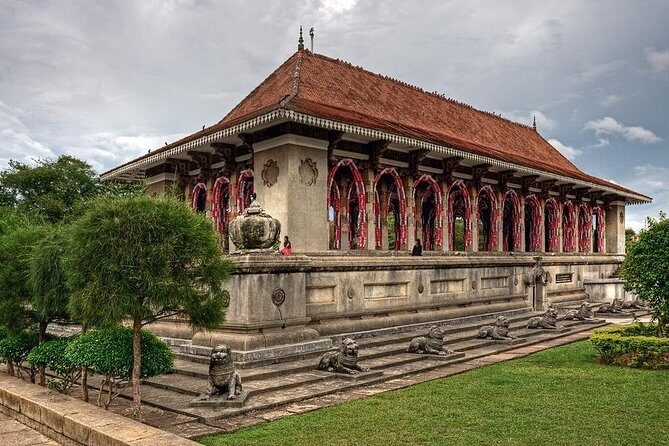
Colombo’s identity shows up fast when you hop between different worship sites. This tour does that well, with a route that includes Hindu, Buddhist, Muslim, and Christian landmarks.
You’ll visit Sri Ponnambalam Vanesar Kovil, a Hindu temple dedicated to Lord Shiva, built in 1915. It’s described as being built by Indian sculptors. This is a worthwhile stop if you enjoy carved detail and want to see how Colombo’s immigrant and cultural links show up in religious architecture.
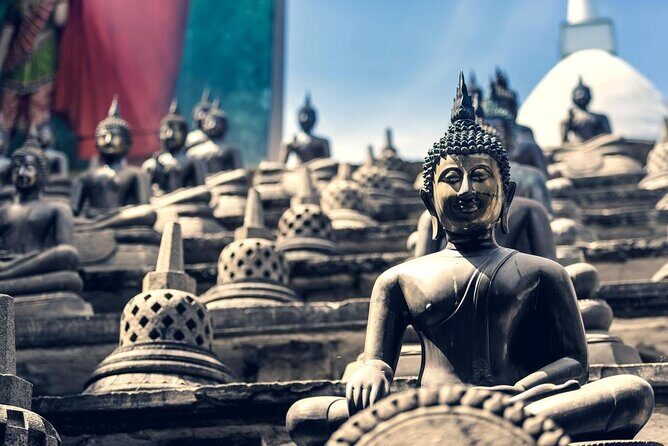
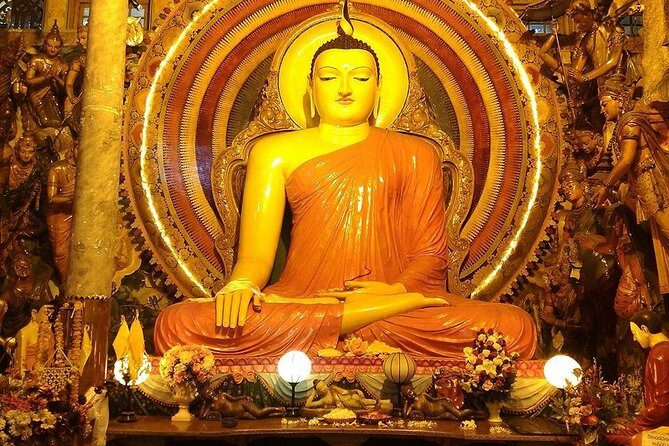
Then it’s on to Gangaramaya Temple at Beira Lake. It’s described as one of Colombo’s most important temples, with a mix of modern architecture and cultural essence, completed in the late 19th century. This is also the one place with an extra cost: Rs. 400 entrance fees are not included.
After that, you’ll stop at St Lucia’s Cathedral, the seat of the Archbishop of the Roman Catholic Archdiocese of Colombo. It’s located in Kotahena, and the cathedral is on a land area of 18,240 sq ft. It’s another great example of Colombo’s layered religious life—this time with a cathedral presence that feels distinctly Christian.
Finally, you’ll reach Jami-Ul-Alfar Mosque, commonly called the Red Mosque (also known by other local names). It’s described as a historic mosque in Pettah, located on Second Cross Street. This stop rounds out the route and gives you a strong visual contrast: different style, different materials, same city energy.
A practical tip: wear clothing that respects religious sites. Even if you’re only making short stops, you’ll feel more comfortable if you’re prepared.
Other Negombo tours we've reviewed in Negombo



Gangaramaya Temple Entrance Fee: Plan for One Paid Stop
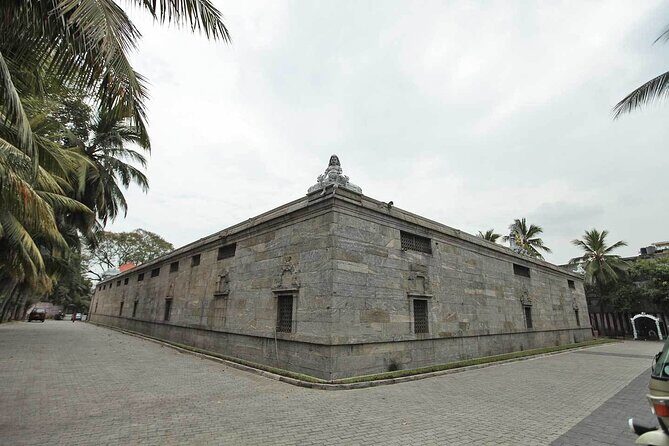
Because Gangaramaya is the only explicitly listed paid entry (Rs. 400 not included), I’d treat that as your budget anchor. Everything else in the route is listed as free admission for that stop.
This matters for value. When most sights are free, your total cost stays predictable. You’re not stuck with surprise ticket costs across multiple attractions—just one clear add-on.
Also, Gangaramaya tends to be the kind of place where you’ll want a little more time for photos and details. Since the stop is listed as about 1 hour, you should have enough time to look around without feeling rushed.
The Real Value of Private Timing (and When It Can Feel Rushed)
This tour is built around efficient sightseeing. That’s a win when you’re tight on time. It’s also something to consider if you’re the type who likes deep, slow exploration.
Stop times are generally short—many around 15–30 minutes, with one longer temple visit. If traffic or crowding slows things down, the guide may use drive-bys for positioning so you can still cover key landmarks within 4–5 hours.
That’s not automatically a bad thing. A drive-by can be a fast way to frame a landmark for a better photo angle, or to see a building from the right side. But if you specifically want to get out and wander at every single site, you’ll need to adjust expectations before you book.
Communication and Guide Experience: How to Get the Most Out of It
One downside that shows up in real-world touring is the guide’s English level and pickup accuracy. In at least one case, the guide did not find the travelers in the hotel foyer, which created extra back-and-forth.
To prevent this kind of snag, do two simple things:
- Make pickup easier by sharing a clear meeting point at your hotel (for example, where reception is and what landmark sign is nearby).
- Have a small list of priorities ready (temples vs. shopping vs. memorial photos). Even if English isn’t perfect, priorities help your guide move you toward the places you care about most.
On the bright side, the guide experience shown in other notes is strong. Names mentioned include Nishantha, who’s described as informative, courteous, and flexible—and that kind of attitude matters on a short tour. When someone can adapt timing and explain what you’re seeing, a fast route feels less like a checklist.
Price Check: Does $70 Per Group Pay Off?
$70 per group (up to 2 travelers) for 4–5 hours is not a bargain-bus price, but it’s also not “touritis expensive,” especially if it saves you the cost and hassle of independent transport.
Here’s the math that usually makes it feel worth it: if you’re traveling as a couple or with one friend, your effective cost per person can be around $35. For that, you get:
- Private air-conditioned car
- Bottled water
- Pickup from your hotel or airport area (pickup is offered)
- Access to multiple major sights, with most entries listed as free
- One guided circuit that prevents you from wasting time figuring out logistics
The main “cost” you pay is time and pace. You won’t get full, slow museum depth. But if your goal is Colombo highlights in a few hours, the pricing matches the format.
Who This Tour Fits Best (and Who Might Want Something Else)
This tour is a great match if:
- You’re based in Negombo and want Colombo without planning.
- You like a route that covers many landmark types: monuments, parks, and places of worship.
- You’re traveling as a small group of up to 2 and want a private pace.
You might consider a different option if:
- You hate short stops and want long time at fewer places.
- You want a deep dive into only one area (for example, only museums or only colonial buildings).
- You’re relying on the tour to serve as a long walking experience, since the format is built for quick viewing plus car transfers.
Should You Book the Colombo City Tour from Negombo?
If you want Colombo highlights without turning your day into a transit project, I’d book this. The mix of memorial landmarks, Viharamahadevi Park, Dutch Hospital, and major worship sites gives you a strong “first impression” of the capital. And with most entries free, you’re mostly paying for time, transport, and someone to handle the route.
Book especially if you value:
- Flexible pickup
- A private up-to-2 experience
- Comfort (air-conditioning + bottled water)
- A route that moves across the city fast, but still includes meaningful stops like Gangaramaya and Independence Square
If you do book, set yourself up for success: pick a clear meeting point for pickup, bring modest clothing for religious sites, and decide in advance what you’d rather spend extra minutes on.
FAQ
How long is the Colombo City Tour from Negombo?
It runs about 4 to 5 hours.
What’s included in the price?
You get an air-conditioned vehicle and bottled water. Admission fees are not included except where noted.
Is pickup included?
Yes. Pickup is offered, and the pickup time is flexible.
How much is the Gangaramaya Temple entrance fee?
Rs. 400 entrance fees for Gangaramaya Temple are not included.
What group size is this tour limited to?
The maximum is 2 travelers.
What happens if weather is poor?
The experience requires good weather. If it’s canceled due to poor weather, you’ll be offered a different date or a full refund.