REVIEW · KANDY
World Heritage Sigiriya and Dambulla Day Tour
Book on Viator →Operated by Aruna Tours Kandy · Bookable on Viator
This is the kind of Sri Lanka day trip that hits big sights without making you feel rushed or lost. You start from Kandy and spend the day working your way through world-famous cave temples and the fortress-rock views around Sigiriya—plus a few culture stops that break up the climbing and driving.
Two things I especially like: the guide work (Aruna’s English is clear, and he shares context that helps the sites make sense fast), and the smooth logistics (you get air-conditioned transport plus bottled water, and you avoid the hassle of piecing together rides). One thing to keep in mind: it’s a long day (about 10–12 hours) and the rocky highlights can mean stairs and uneven ground, so plan for a moderate fitness level.
In This Review
- Key highlights you can actually plan around
- Private Route From Kandy: What Makes This Day Trip Work
- Price that makes sense for small groups
- Expect about 10–12 hours
- Morning Temple Stop: Sri Muthumari Amman Kovil
- Aluvihara Rock Cave Temple: Small Time, Big Sacred Feel
- Ranweli Spice Garden and Nalanda Gedige: Breaks That Add Variety
- Ranweli Spice Garden (Free Admission)
- Nalanda Gedige (Free Admission)
- Dambulla Cave Temple: The 160-Meter Rock That Owns the View
- How to pace Dambulla
- Sigiriya Lion Rock: Climb for the Kingdom Story
- Sunset-style timing (Ask your guide)
- Admission costs
- Mapagala Fortress and Pidurangala Rock: Two More Ways to See the Same Area
- Mapagala Fortress (Free Admission)
- Pidurangala Rock (Time + Views)
- Practical note: add cushion time for climbing fatigue
- What’s Included (and Why Those Details Matter)
- Not Included: Entrance Fees and the Small Cost Stack
- Comfort, Fitness, and Staying Sane on a 10–12 Hour Day
- How Good Is the Value Really?
- Should You Book This Kandy to Sigiriya and Dambulla Tour?
- FAQ
- What time does the tour start?
- How long is the day trip?
- What does the $50 price include?
- Are entrance tickets included for the sites?
- Is this a private tour?
- What if I need to cancel?
Key highlights you can actually plan around
- Private tour for up to 3: you control your pace and photo stops without crowd pressure
- Aruna’s guiding style: clear English and practical site context that improves the visit
- Cave temples with serious visual payoffs: Dambulla’s painted interiors and rock setting
- Sigiriya timing matters: ask about planning for softer light when you climb
- Comfort for a long haul: air-conditioned vehicle and bottled water included
- Some stops are free: Ranweli Spice Garden, Nalanda Gedige, and Mapagala Fortress list free admission
Private Route From Kandy: What Makes This Day Trip Work
The big draw here is simple: you get a full heritage day that connects the Kandy area with Sigiriya and Dambulla in one shot. With private transport, you’re not stuck waiting on strangers, and you can keep the day flowing—temple stops, viewpoints, then more driving—without losing time.
You’ll also feel the difference in how the day is run. Aruna’s approach comes across as calm and organized: he doesn’t just drive you from point A to point B. Instead, he helps you understand what you’re seeing and keeps the rhythm steady, which matters a lot when you’re doing multiple high-demand sites in one day.
And yes, you’re spending real hours on the road. That’s the trade. But because the trip is private and you’re in an air-conditioned vehicle, the driving time feels more manageable than it does on shared transport.
Other Sigiriya tours we've reviewed in Kandy
Price that makes sense for small groups
At $50 per group (up to 3), this isn’t priced like a per-person sightseeing buffet. For a small family or a couple of friends, it can be a strong value because you’re paying once for the whole group experience—guide time, private vehicle, and the added stops.
Expect about 10–12 hours
Plan the day like a mini expedition. The start time is 7:00 am, and the total time is typically 10–12 hours. That early start helps you fit everything in and still have time to take photos and walk at a normal pace.
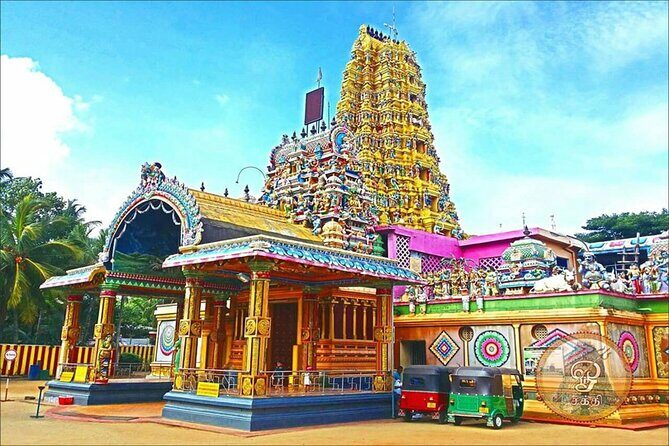
Morning Temple Stop: Sri Muthumari Amman Kovil
Your day opens with Sri Muthumari Amman Kovil, a temple with a documented timeline that gives you more than just a photo opportunity. The current temple building was constructed in 1874 and funded by the Nattukkottai Chettiar. That historical detail makes the place feel grounded in real local community roots.
What I like about this stop is the mixed cultural use. The temple is used by both Hindus and Buddhists, so it’s a reminder that Sri Lanka’s religious life often overlaps in meaningful ways. It also works as a warm-up stop—short, not too heavy, and a good way to start the day with a calm, human scale.
Keep in mind this stop is listed as about 15 minutes, and admission isn’t included. You’ll want to have cash or be ready to pay on-site for any items marked as not included.
Aluvihara Rock Cave Temple: Small Time, Big Sacred Feel
Next comes Aluvihara Rock Cave Temple, also known as Matale Alu Viharaya, in the Matale District area. It’s a sacred Buddhist cave temple set among hills, and the cave setting is part of the power here—you’re not just looking at a building, you’re visiting a place carved into the rock.
The duration is about 20 minutes. That’s not long, but cave temples tend to reward quick attention: you’ll want to look closely and then move on so you don’t feel like you rushed. If you’re the type who likes to take a moment and actually watch how the space feels, this is a good mid-morning pause.
Admission ticket costs aren’t included for this stop either, so plan for that. (If you’re keeping a tight budget, you’ll likely want to set aside spending money for the paid entrances across the day.)
Other Dambulla Cave Temple tours we've reviewed in Kandy
Ranweli Spice Garden and Nalanda Gedige: Breaks That Add Variety
After the early temples, the pace shifts into something lighter and more varied.
Ranweli Spice Garden (Free Admission)
At Ranweli Spice Garden, the focus is on Sri Lankan spices and their long story. Herbs and spices play a major role in Sri Lankan cuisine, so even if you’re not planning to cook, it helps you understand the flavors you’ll hear about everywhere in the country.
This stop is listed at about 1 hour, and admission is marked as free. That makes it a smart use of time—educational without feeling like another expense.
Nalanda Gedige (Free Admission)
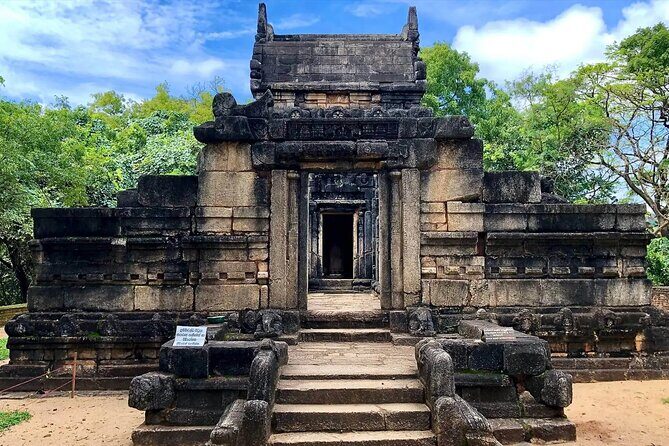
Then you’ll visit Nalanda Gedige, designed with features that resemble a Hindu temple, including a mandapa (entrance hall area) and a layout that moves you toward the holy center. The description highlights how it’s structured for movement and worship, and you’ll probably feel that when you’re walking through.
This one is shorter—about 20 minutes—and admission is also listed as free. So you’re not sacrificing budget to keep the day interesting.
Dambulla Cave Temple: The 160-Meter Rock That Owns the View

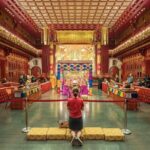
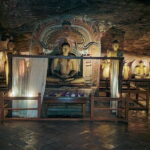
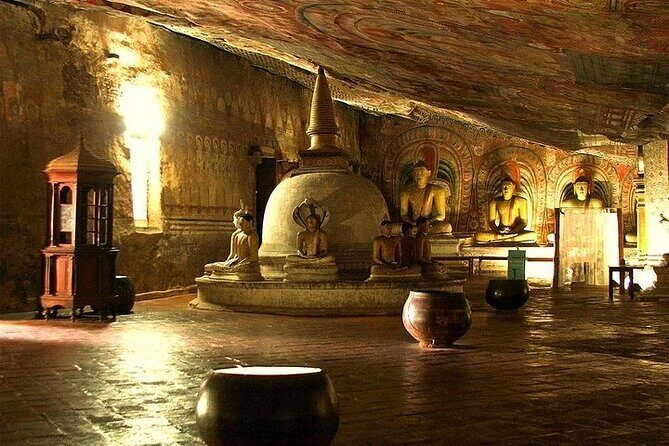
By the time you reach Dambulla Cave Temple, you’re in for the day’s clearest “major site” moment. Dambulla is described as Sri Lanka’s largest and best-preserved cave temple complex. The rock itself towers about 160 meters over the surrounding plains, which means you’re arriving to a dramatic setting before you even step into the caves.
You’ll also hear that there are more than 80 documented caves in the surrounding area. That detail matters because it explains why Dambulla feels expansive. Even if you’re only spending about 1.5 hours on-site, the place doesn’t feel tiny or cramped. It feels like part of a larger sacred landscape.
Admission isn’t included here, so build that cost into your day. Still, if you’re trying to prioritize your time, this is the kind of stop that pays off even for visitors who usually don’t care about cave temples.
How to pace Dambulla
In a half-day with multiple rock sites, the danger is moving too fast. I recommend you do the basics carefully:
- Spend enough time at the main painted areas to actually read the visual story
- Don’t feel like you must check every angle perfectly
- Take water breaks when you feel yourself rushing
The cave interiors can feel cooler than the bright outside sun, but you’ll still be walking and climbing on uneven ground.
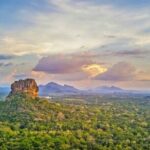
Sigiriya Lion Rock: Climb for the Kingdom Story
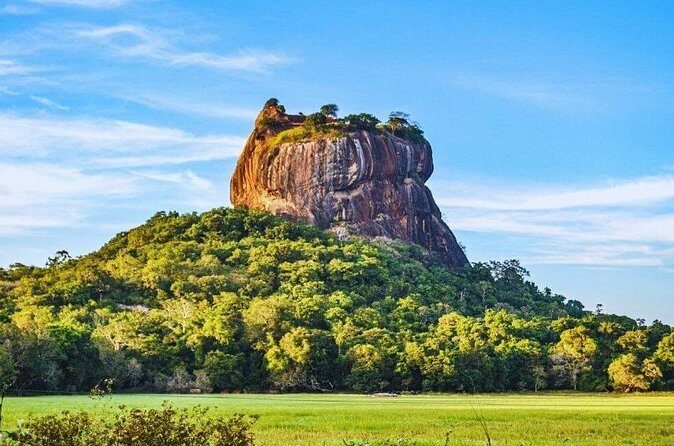
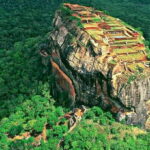
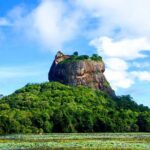
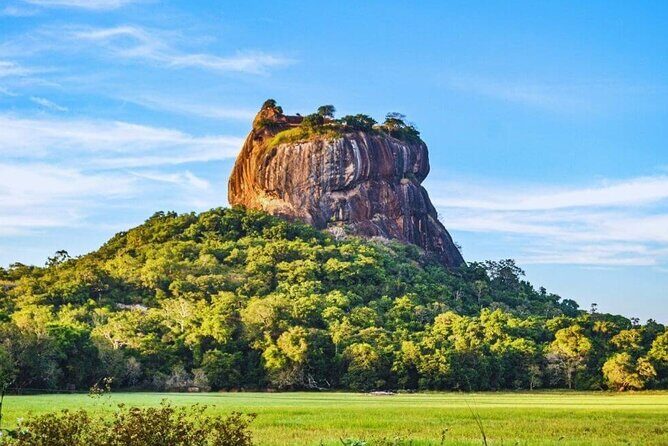
Then comes Sigiriya Lion Rock, the headline stop. The story here is tied to the Cūḷavaṃsa chronicle and the reign of King Kashyapa (AD 477–495). According to the account, the area began as a large forest, then became a hill after storms and landslides, and was selected as the new capital.
That historical thread helps your brain connect what you see: you’re not just climbing a rock for a view. You’re walking through a place that was chosen as a capital and rebuilt as a power center.
You’ll typically spend about 2.5 hours at Sigiriya. That’s a realistic window to climb, pause for photos, and soak in the scale without turning it into a speedrun.
Sunset-style timing (Ask your guide)
From experience with Aruna’s planning style, one of the best moments can be the light at the top. The guide is careful about timing, and people have specifically mentioned planning that made a sunset view possible from Sigiriya. Even if your exact timing depends on the day’s conditions, it’s smart to talk with Aruna about when you should start your climb so you’re not scrambling in harsh light at the end.
Admission costs
Admission isn’t included for Sigiriya, so expect to pay the site entry fees yourself. If you’re budget-conscious, this is one of the big-ticket items of the day.
Mapagala Fortress and Pidurangala Rock: Two More Ways to See the Same Area
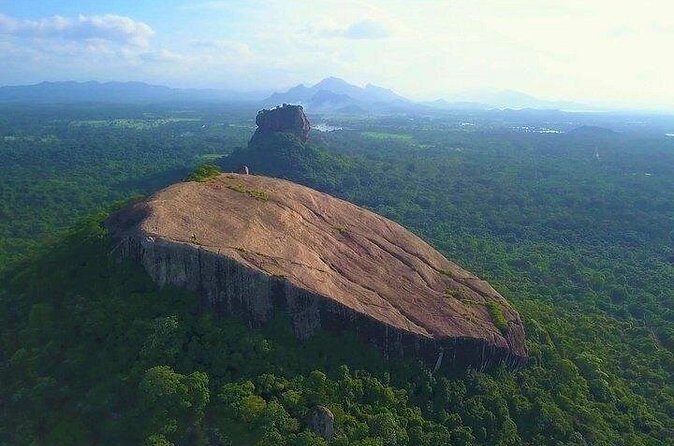
After Sigiriya, the day doesn’t just end with the main climb. You’ll add two more rock-and-history stops that expand the picture.
Mapagala Fortress (Free Admission)
Mapagala Fortress is listed as having been built using unshaped boulders, creating stone walls about 20 ft high. The description notes that each stone is broad and thick, with some stones around 10 ft high and about 4 ft wide. It’s also believed to have been built before the time of usage of metal.
This stop is only about 30 minutes, but it works well as a breather from the heavy climbs. It helps you see the area not just as a single famous rock, but as a broader defensive and settlement area. Admission is listed as free, which is a nice bonus.
Pidurangala Rock (Time + Views)
Then you’ll visit Pidurangala Rock, a Buddhist monastery site believed to go back to beyond the first and second century BC. That age range gives you a deeper sense of why multiple hills and rocks became spiritual and community centers in the region.
Pidurangala is listed at about 1.5 hours and admission isn’t included. This is usually where you slow down a bit and really look around, because you get another viewpoint angle on the Sigiriya area.
Practical note: add cushion time for climbing fatigue
By the time you reach these later stops, your legs may feel it. If you’re sensitive to steep or uneven paths, pace yourself and don’t try to outrun your energy. The day is packed, but it doesn’t have to be a grind.
What’s Included (and Why Those Details Matter)
This tour includes the stuff that makes long days easier to handle:
- Experienced guide
- Private transportation in an air-conditioned vehicle
- Bottled water
- Mobile ticket
Mobile tickets can save time and reduce confusion on-site, especially at busy heritage locations. Air-conditioning matters because it makes the driving segments more tolerable—especially in Sri Lanka’s heat.
The guide portion is a big deal too. Aruna’s English is described as strong, and he’s known for making sure you understand what you’re looking at. That’s not just pleasant—it changes how you experience each site.
Not Included: Entrance Fees and the Small Cost Stack
The tour lists that all fees and taxes aren’t included. That means you should expect to pay for admission where it’s marked Not Included:
- Sri Muthumari Amman Kovil
- Aluvihara Rock Cave Temple
- Dambulla Cave Temple
- Sigiriya Lion Rock
- Pidurangala Rock
Some stops are marked free on the provided details:
- Ranweli Spice Garden
- Nalanda Gedige
- Mapagala Fortress
So your budget isn’t totally unpredictable—you can see which stops cost money and which don’t. Still, entrance fees can add up across multiple heritage sites, so it’s smart to plan cashless access (card where accepted) and keep some budget reserved.
Comfort, Fitness, and Staying Sane on a 10–12 Hour Day
This is rated for moderate physical fitness. That doesn’t mean you must be a marathon climber. It does mean:
- you’ll do walking and climbing on uneven surfaces
- you’ll handle stairs and rocky steps at the key sites
- you’ll likely feel it more by the last half of the day
Two practical tips that will make this smoother:
1) Wear shoes you trust on rock and steps. Flip-flops sound fun until you’re gripping stone.
2) Keep a steady pace. If you go too fast early, you’ll lose quality later when you want to enjoy the views.
Also, for anyone comparing transport styles: car travel tends to be easier than longer tuk-tuk hops for this route. It’s not just comfort—it also reduces the “how long until we’re there” stress.
How Good Is the Value Really?
Let’s talk numbers in a grounded way. At $50 per group (up to 3), you’re paying for:
- a full-day private vehicle from Kandy
- an experienced guide
- multiple heritage stops across different themes
- bottled water and air-conditioning included
If you were doing this as separate taxis, separate tickets with multiple guides, or piecing together transport, the cost usually climbs fast. The real value here is that everything stays connected and timed, so you spend your time seeing instead of negotiating rides.
The best part is the small-group private structure. For couples or a family of three, it often feels like a custom day instead of a rigid schedule.
Should You Book This Kandy to Sigiriya and Dambulla Tour?
I’d book this if you want a guided, efficient day that still feels human and unrushed. It’s a strong choice for first-timers who want the signature heritage hits—Dambulla Cave Temple and Sigiriya Lion Rock—plus extra sites like Pidurangala and Mapagala Fortress that round out the region.
It’s also a good pick if you value English-speaking guidance and appreciate practical planning. Aruna’s style—safe driving, friendly help, and timing that can improve the experience (including the possibility of softer light near the top of Sigiriya)—is exactly the sort of detail that makes a big difference on a long day.
Skip it only if you really hate long days or you know you won’t handle stairs and uneven rock paths well. The route is packed, and the day starts early.
If that sounds okay, this is the kind of Sri Lanka day trip you can remember for the viewpoints—and for the way the story connects from stop to stop.
FAQ
What time does the tour start?
The tour starts at 7:00 am.
How long is the day trip?
It typically runs about 10 to 12 hours.
What does the $50 price include?
The price includes private transportation, an experienced guide, bottled water, and an air-conditioned vehicle, plus a mobile ticket.
Are entrance tickets included for the sites?
No. All fees and taxes are not included. Some stops are listed as free (Ranweli Spice Garden, Nalanda Gedige, and Mapagala Fortress), while others are listed as admission not included.
Is this a private tour?
Yes. It’s a private tour/activity, and only your group participates (up to 3 people).
What if I need to cancel?
You can cancel for a full refund if you cancel up to 24 hours in advance of the start time. If you cancel within 24 hours, the amount paid won’t be refunded.