REVIEW · NEGOMBO
Visit Negombo by Scooty – All Inclusive
Book on Viator →Operated by Capital Tour By Tuk Tuk · Bookable on Viator
Negombo moves fast, and this tour keeps up. I like the way it pairs the Negombo Fish Market right on the beach with the daily rhythm of fishermen, then ties it to the lagoon and canals around town. I also like the money side: snacks, bottled water, and lunch or dinner are included, which makes this feel like a bargain instead of a money-siphon.
You get a smooth, guided loop with private transportation, so you’re not stuck figuring out how to jump between waterfront views, churches, and inland temples. The route also spends real time at places like the Dutch Fort area and St. Mary’s Church, where the Portuguese-to-Dutch-to-Christian story of Negombo becomes obvious pretty quickly.
One thing to consider: the optional boat ride isn’t included, and it’s priced per booking (not per person). If you pick the Scooty option, also make sure you’re comfortable riding in local traffic for a few hours, even if your guide focuses on keeping things safe.
In This Review
- Key highlights to look for
- Negombo in four hours: why this route works
- Scooty, tuk tuk, van, or car: picking your ride
- Fish market on the beach: the real start of the day
- Lagoon time: Negombo’s water world in one stop
- Dutch Fort and the Portuguese-to-Dutch story you can walk through
- St. Mary’s Church on Grand Street and why Negombo is Little Rome
- Temples and the Dravidian style of Sri Muththu Mari Amman
- Hamilton Canal (Dutch Canal): water engineering near Negombo
- Angurukaramulla Temple and Negombo’s Catholic center
- Negombo Beach: a calm capstone near the airport
- Price and value: is $25 per person fair?
- Who should book this tour (and who might skip it)
- Should you book Negombo by Scooty with Capital Tour By Tuk Tuk?
- FAQ
- How long is the Negombo city tour?
- Is pickup included?
- What’s included in the price besides the tour itself?
- Are tickets included for specific stops?
- What isn’t included?
- Is this a private tour?
- Can I cancel for a full refund?
- What happens after I book?
- Is the tour suitable for most people?
Key highlights to look for

- Fish Market on the shoreline with admission included, plus a close look at what the day’s catch looks like up close
- Negombo Lagoon visit with your own ticket included and time to take in the estuary atmosphere
- Dutch Fort stop for the Portuguese/Dutch mix you can actually walk around
- St. Mary’s Church on Grand Street to see why Negombo earned the nickname Little Rome
- Angurukaramulla Temple in traditional Dravidian style, short but worth the quick detour
- Hamilton (Dutch) Canal and the British-era waterway story linking Puttalam to Colombo
Negombo in four hours: why this route works
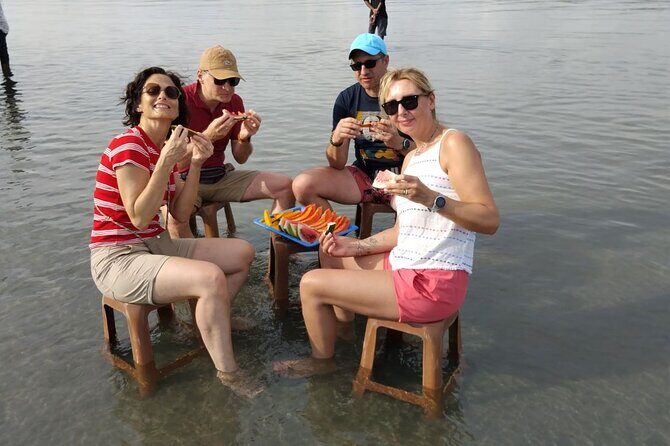
Negombo sits on Sri Lanka’s west coast, just north of Colombo, and it’s one of those places where the city feels layered. You’ll see the waterfront side by side with church buildings, then turn toward temples and canal scenery without needing a full day of planning.
This tour is designed around momentum. In about four hours, you rotate through major sights that each explain a different side of Negombo: daily food life (the fish market), water geography (lagoon and canal), colonial architecture (Dutch Fort), and the city’s Christian identity (St. Mary’s Church and other church sites). That mix is the main reason I think it’s good value: you don’t just “pass by landmarks.” You get short, guided blocks that add up to a real sense of place.
Also, the format matters. You’re in a private group and the transportation is handled for you, which keeps the day from turning into logistics. That’s a big deal when the stops are spread around the area and you’d rather spend your energy looking, not bargaining with transport.
Other Negombo tours we've reviewed in Negombo


Scooty, tuk tuk, van, or car: picking your ride
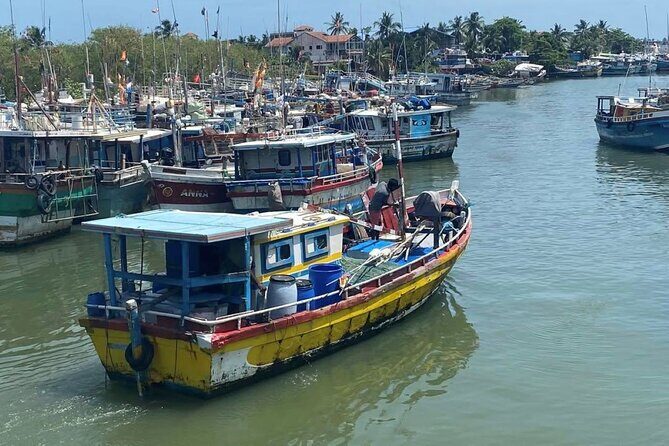
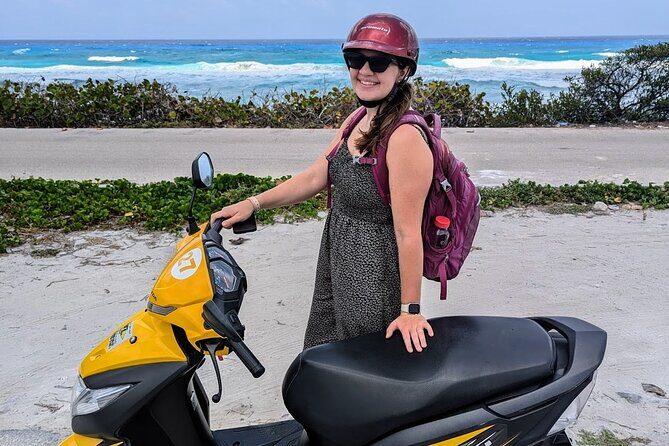
The experience is offered with Scooty, tuk tuk, van, or car, and that flexibility is useful if you’re traveling as a family or with different comfort levels. If you’re the type who enjoys street-level motion and close street views, the Scooty option tends to feel more like you’re part of local flow. If you want simpler handling and less focus on balancing, tuk tuk or car usually feels calmer.
From the practical side, you’re still on a guided schedule with set stop times (you’re not roaming freely). So whichever vehicle you choose, you’re trading a bit of independence for structure. I’d recommend thinking of it like this: the route gives you the best “first look” at Negombo, and your ride style controls how intensely you feel the street-level pace.
One helpful detail: you’re not just handed keys and left to figure it out. The guides focus on safety and comfort, and you’ll get local context as you move. That’s especially important for anyone who wants to understand what they’re seeing at fish market and around religious sites, not just take photos and move on.
Fish market on the beach: the real start of the day
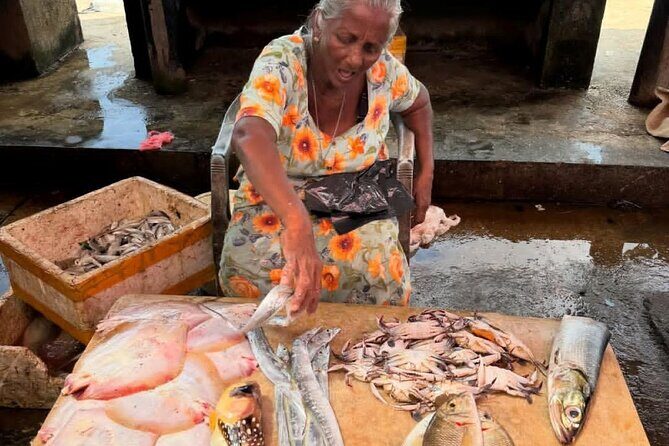
The Negombo Fish Market is right where the coast life happens. This isn’t a distant market you glance at from a distance. It’s active, focused, and built around the day’s catch.
Expect to see how fishermen handle the work: untangling nets, sorting boats, and dealing with fish quickly enough to match the market rhythm. The sights can include sun-drying fish and a mix of popular species such as shark, tuna, sardines, mackerel, and more. Even if you’re not a seafood person, it’s one of the fastest ways to understand Negombo’s economy and daily routine.
Admission is included for this stop, and the timing is short but purposeful. If you prefer slow travel, you might wish you had longer here. But as a first-time orientation, the market stop hits a sweet spot: enough time to watch processes, ask questions, and understand what makes Negombo’s fishing culture distinct.
Tip for your planning mindset: go with questions in your head. If you ask what a certain fish is used for, or how the day’s supply is decided, you’ll get more from this 30-minute block than from a longer stop where you don’t know what you’re looking at.
Lagoon time: Negombo’s water world in one stop
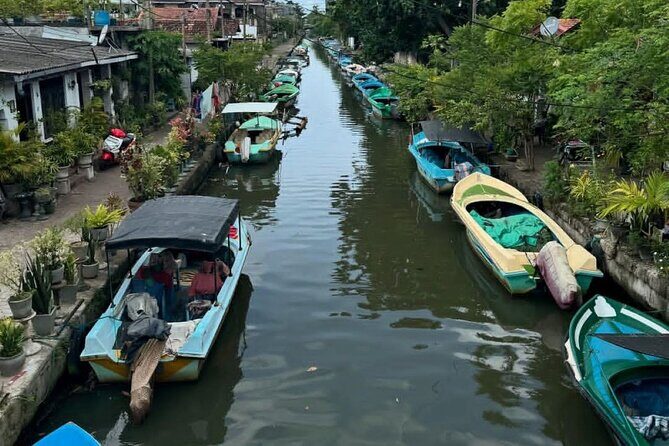
After the market energy, the lagoon stop changes the tempo. The Negombo Lagoon is a large estuarine system fed by smaller rivers and a canal, and it connects to the sea through a narrow northern channel near Negombo city.
What you should take away from this stop is geography and how it shapes daily life. Estuaries create brackish ecosystems that support fishing and water transport patterns, and Negombo’s lagoon is tied directly into that coastal identity.
This stop also includes admission, and it lasts around an hour. That timing works well because you get enough minutes to slow down and watch the water without feeling rushed. You’ll also be better positioned to appreciate the later canal stop, because the lagoon visit gives you a “big picture” of the water network.
If you’re photographing, try to avoid only shooting from one spot. Move a little and look for lines that show how water meets land. The lagoon is best understood as a system, not just scenery.
Dutch Fort and the Portuguese-to-Dutch story you can walk through
Negombo’s Dutch Fort stop is short, but it’s a strong anchor for the city’s colonial layers. The fort area was originally built by the Portuguese to defend Colombo. Later, the Dutch took control and rebuilt it around 1672, and you’ll notice it has a pentagonal design.
This is also one of those stops where the setting changes how you feel about the architecture. Along the waterfront, the fort is connected to a 17th-century legacy, and today it functions as a prison. That doesn’t ruin the visit; it just adds a real-world weight. It’s not a polished museum. It’s a working historical structure.
The stop is around 30 minutes, so don’t expect deep exploration at a museum pace. Instead, think of it as a guided orientation: you’ll understand what the fort was for, who fought over it, and why it matters to understanding how Negombo became what it is.
For many people, this is the moment when the tour becomes more than a “look at sights” loop. The guide’s context helps you connect the dots between the waterfront, the Christian footprint later in the route, and how European powers shaped the city’s built environment.





St. Mary’s Church on Grand Street and why Negombo is Little Rome
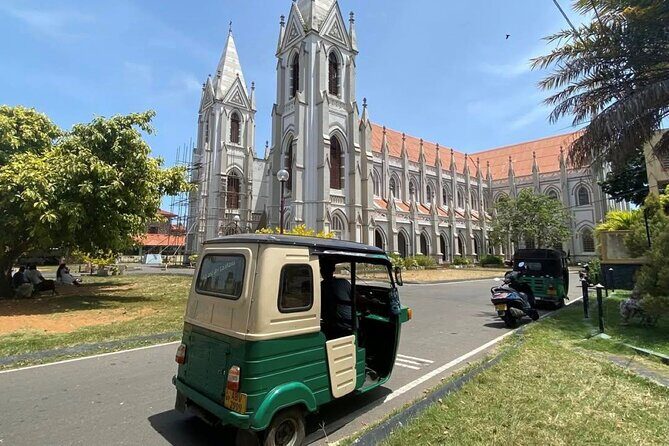
If you want evidence of Negombo’s Christian identity, St. Mary’s Church on Grand Street delivers it quickly. The Portuguese era helped shape Christianity in Negombo, and the city earned the nickname Little Rome because of its many churches and shrines.
St. Mary’s Church is tied to construction starting in 1874, and it’s a key landmark in the town’s religious story. The stop is about 30 minutes—enough time to see the building, take in the atmosphere, and absorb the main historical points from your guide.
This is also a good stop for respectful observation. Religious sites can be the most rewarding moments of a tour when you take them as living places, not photo backdrops. Dress and behavior matter here, and your guide will set the tone as you arrive.
If your travel style is more about understanding than sightseeing, I’d treat this stop as your “why this city feels different” moment. The earlier lagoon and market stops explain Negombo’s lifeblood. St. Mary’s explains its identity.
Temples and the Dravidian style of Sri Muththu Mari Amman

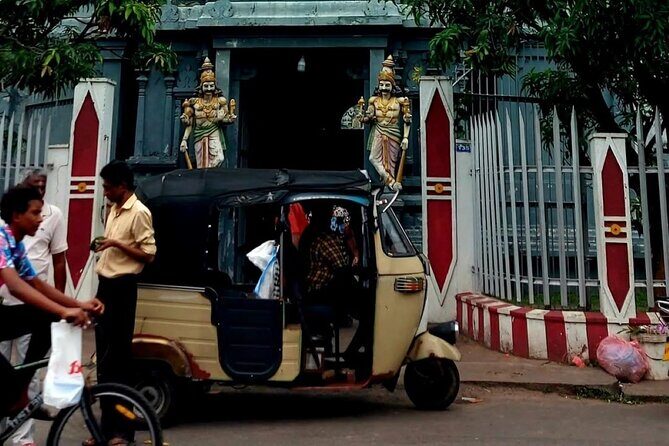
Next comes Sri Muththu Mari Amman Temple, a prominent Mariamman temple built in traditional Dravidian architectural style. This is one of those short stops—around 15 minutes—that still leaves an impression if you’re paying attention to details.
Even with limited time, you’ll get a sense that Negombo isn’t one-dimensional. It’s a coastal city with a strong Catholic presence, but it also holds major Tamil Hindu worship sites like this one, which shows up in the architecture and the way people move through the space.
The tour schedule keeps it brief, so don’t plan on long wandering. Instead, focus on the essentials your guide highlights: what the temple is known for and what the architectural style suggests.
If you’re interested in how different religious traditions coexist in one city, this stop adds balance to the tour. It prevents the day from becoming only a Christian landmark checklist.
Hamilton Canal (Dutch Canal): water engineering near Negombo
The Hamilton Canal, also called the Dutch Canal, adds a practical, almost engineering-focused layer to the route. This 14.5 km waterway connects Puttalam to Colombo through Negombo.
It was built by the British between 1802 and 1804 to drain saltwater from the Muthurajawela wetland. That kind of detail can sound dry on paper, but in a guided tour it helps you understand why the water system in the area works the way it does today.
This stop is short, but it’s valuable because it links geography to history. If you’ve already seen the lagoon, the canal becomes easier to picture. You stop thinking only about views and start seeing water management as part of Negombo’s story.
If you love learning how places function—how water, transport, and livelihoods connect—this is one of the stops that feels like a bonus. It’s not just pretty. It explains the logic of the region.
Angurukaramulla Temple and Negombo’s Catholic center
Angurukaramulla Temple is another religion-focused stop, but it’s tied to Negombo’s Catholic identity. Negombo is sometimes described as a major Catholic center in Sri Lanka, with over 90% of the population following Catholicism and more than 50 churches and shrines in the town. That context helps explain why Catholic worship sites show up repeatedly in the tour route.
This stop lasts about 30 minutes, which is enough time to appreciate the space and understand what it represents locally. The name might be less familiar than St. Mary’s for first-time visitors, but the tour uses it to show how deep and widespread the city’s Catholic footprint is.
If you’re someone who likes places that feel lived-in, you may enjoy this stop more than you expect. These spaces tend to carry a steady rhythm of prayer and community life, and a good guide helps you see what’s meaningful beyond the walls.
Negombo Beach: a calm capstone near the airport
The tour includes Negombo Beach, about 6 km from the international airport. This stop is shorter—around 30 minutes—but it works as a wind-down moment after the denser sights inland and around religious buildings.
Negombo Beach fits the city’s identity as a Christian fishing town with narrow streets, local boutiques, and a strong connection to both lagoon and traditional fishing. Even if you don’t spend much time walking, you get a feel for the coastal side of Negombo.
This stop is also practical. It’s close to the airport, so depending on your schedule, the beach visit can make your day feel less like a rushed transfer and more like a real arrival or departure moment.
Price and value: is $25 per person fair?
At $25 per person for roughly four hours, this is priced as a budget-friendly orientation tour, not a luxury private day. The big value is what comes with the price:
Included:
- Bottled water and snacks
- Private transportation
- Entrance fees (including Buddhist temple charges)
- Lunch or dinner
Also included are admission tickets for key stops like the fish market and the lagoon. That matters because it reduces the usual hassle of paying on the fly at each site.
What’s not included:
- A boat ride, priced per booking at $25
That last point is worth your attention. If you’re the type who wants a boat experience, check whether the boat ride is something you care about before you book. Since it’s per booking rather than per person, your total cost might change depending on how your group is set up.
Overall, if you want a guided “best of Negombo” loop with food included and you’re fine with short stops, the price looks fair. If your dream day revolves around lots of time on the water, factor in the boat ride cost early so you don’t get surprised later.
Who should book this tour (and who might skip it)
This tour is a strong fit if you want:
- A first visit to Negombo with a guided plan
- A mix of market life, lagoon geography, colonial architecture, and religious sites
- Included food and entrance fees so you can travel with fewer headaches
It’s also especially good for families and groups, since the tour is private and designed for one group only.
You might consider a different option if:
- You want a long, slow, unstructured beach day
- You’re only interested in one theme (only history, only religion, or only ocean time)
- You feel uncomfortable riding a Scooty for part of the day, even with safety-focused guidance
Should you book Negombo by Scooty with Capital Tour By Tuk Tuk?
If you want an efficient, guided sampler that still feels local—market work, lagoon water, churches, temples, and canal history—this is an easy yes. The biggest reason is the value equation: you get transportation, key admissions, and food baked into the cost.
One more reason I like it: guide interaction matters here. In the real-world experience of the route, the guides are the difference between seeing stops and understanding them. I’d particularly look for a guide like Romal, whose approach is described as friendly and strong on local life and food value.
If you’re planning meals, keep your timing flexible and hungry. The tour includes lunch or dinner and snacks, so you’ll likely skip the need to hunt for a meal between scattered stops.
Book this if you want Negombo in one tidy loop—and you’re happy to let someone else handle the jump between fish market, lagoon, fort, church, temple, canal, and beach.
FAQ
How long is the Negombo city tour?
It runs about 4 hours.
Is pickup included?
Yes, pickup is offered.
What’s included in the price besides the tour itself?
You get bottled water, snacks, private transportation, entrance fees (including Buddhist temple charges), and lunch or dinner.
Are tickets included for specific stops?
Admission tickets are included for the fish market and the lagoon.
What isn’t included?
A boat ride is not included. It costs $25 per booking.
Is this a private tour?
Yes. It’s a private tour/activity, and only your group participates.
Can I cancel for a full refund?
Yes. You can cancel for a full refund if you cancel at least 24 hours before the experience starts.
What happens after I book?
Confirmation is received at the time of booking, and you get a mobile ticket.
Is the tour suitable for most people?
The tour notes that most travelers can participate.